Skip to Content
Tier
Tier Your gaming journal
Get
Best games

Best Arcade games of 1989

The 9 best Arcade games released in 1989, ranked from 1,990 critic and player ratings.

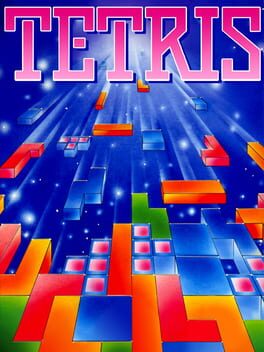
The best Arcade game of 1989 is Tetris (1989), with a critic score of 86/100 — updated October 2026.

How this ranking is built

  • Games are ranked on the aggregated critic score out of 100 imported from IGDB and Metacritic, never on Tier's own grades.
  • A game only enters the ranking with at least 30 external ratings, so a single enthusiastic review never outranks a proven classic.
  • Community grades from F to S are shown next to every game, and only stated as a fact above 5 Tier ratings.
  • Release window covered: 1989.
  • 9 games are listed on this page, carrying 1,990 ratings between them.
  • Rankings are recomputed hourly; this one was last rebuilt on 12 October 2026.

Top 9
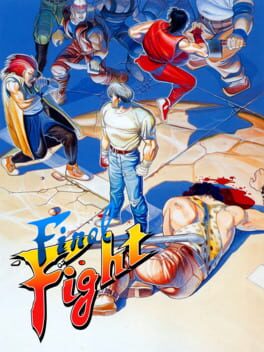
03 Final Fight Final Fight 1989 · 150 ratings Final Fight is a side-scrolling beat-'em-up produced by Capcom. Final Fight can be played by up to two players simultaneously. Before the game begins, the player chooses between the three main characters: Haggar, Cody, and Guy. Each has his own fighting style and attributes. Health gauges are displayed for both player and enemy characters. The controls for Final Fight consist of an eight-way joystick and two buttons for attacking and jumping respectively. Pressing the attack button repeatedly when attacking an enemy or multiple enemies will cause the player character to perform a combo. The final blow of the combo can be changed to a throw if the player moves the joystick in the opposite direction just before landing it. The player can also perform a jump attack. Pressing the attack and jump buttons simultaneously allows the player to perform a special attack that strikes all surrounding enemies, but will drain a small portion of the player's health. Enemies can be grabbed simply by walking into one of them. When an enemy is grabbed, the player can perform a grab attack by pressing the attack button or perform a throw by tilting the joystick left or right. A thrown enemy can be tossed at another for additional damage. Items such as weapons, health recovery items, and items awarding extra points can be picked up by standing over one and pressing the attack button. Weapons have limited uses and will disappear if the player is disarmed by an enemy too much or when the player moves to a new area. Final Fight consists of six stages or "rounds", as well as two bonus rounds. Each round takes place in a different section of Metro City such as the Slums and the Subway, with most rounds featuring more than one level. At the end of each round the player will face a boss character unique to that round. 79 /100
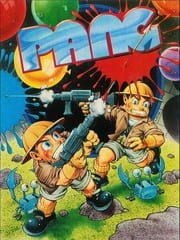
04 Pang Pang 1989 · 48 ratings Pang, originally released in Japan as Pomping World and in North America as Buster Bros., is a 1989 arcade action game developed by Mitchell Corporation. Its core gameplay is similar to the 1983 Japanese MSX game Cannon Ball, also released that year for the ZX Spectrum as Bubble Buster. Players embark on a round-the-world quest to destroy bouncing balloons that are threatening landmarks and cities across the globe. The game features 50 stages set in 17 locations, including Mt. Fuji, Mt. Keirin, the Temple of the Emerald Buddha, Angkor Wat, Ayers Rock, the Taj Mahal, Leningrad, Paris, London, Barcelona, Athens, Egypt, Kenya, New York, Maya ruins, Antarctica, and Easter Island. Later versions added additional locations. Each stage includes a background depicting local landmarks, along with a unique arrangement of blocks, some destructible, some permanent, and some hidden with bonus items. Stages begin with balloons of various sizes; the largest balloons split into smaller ones three times before disappearing after the fourth hit. Players start with a single harpoon, though special weapons can drop when balloons are popped. At certain points, food items worth bonus points may also appear. Contact with any balloon results in the loss of a life. In two-player mode, if both players touch a balloon at the same time, only Player 1 loses a life. Similarly, when both reach a bonus or weapon simultaneously, only Player 1 collects it. Players begin with three to five lives depending on dip switch settings, with extra lives awarded upon reaching specific score thresholds. A stage is cleared when all balloons are destroyed, and the game concludes after all stages are completed, ending with the heroes driving their jeep into the sunset on an Easter Island beach. 77 /100
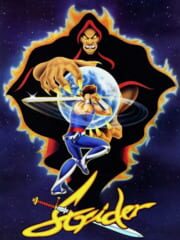
07 Strider (1989) Strider (1989) 1989 · 52 ratings The controls of Strider consist of an eight-way joystick and two action buttons for attacking and jumping. The player controls Hiryu himself, whose main weapon is a tonfa-like plasma sword known as "Cypher". He can perform numerous acrobatic feats depending on the joystick/button combination used. Pressing the jump button while Hiryu is standing still will cause him to do a regular vertical jump, while pressing the jump button while pushing the joystick left or right will enable him to do a cartwheel jump. Hiryu can also slide under or through certain obstacles and enemies by first crouching down and then pressing the jump button. As well as his sliding move, both jumps can also be used to destroy weaker opponents. Hiryu is able to latch onto certain platforms, and climb across walls and ceilings using a metallic hook. While running down a sloped surface, Hiryu can gain enough momentum to allow him to do a longer cartwheel jump than usual. Numerous power-ups can be obtained from item boxes carried by certain enemies. These includes an extension to Hiryu's attack range that lasts for one hundred slashes, two types of health aids (represented by the kanji used to write Hiryu's name: 飛 and 飛竜), a max health extension (represented by the kanji 竜, the second character in Hiryu's name), an extra life, and a power-up that not only makes Hiryu invulnerable to attack but also increases his own attack abilities via shadow images of himself for 15 seconds.[3] Hiryu can also summon robotic companions known collectively as "options" that help him fight enemies. These consist of up to two mushroom-like droids, a saber-toothed tiger and a hawk, known individually as Option A, B and C respectively. The game has five stages: the Kazakh Soviet Socialist Republic (called "St. Petersburg" during the arcade game's attract sequence), the Siberian Wilderness, the Aerial Battleship Balrog (געלראב), the Amazonian Jungle, and the Grandmaster's lair itself, the Third Moon. Each of the stages is divided into a number of smaller sections, each with their own time limit and checkpoint location. The player has a three-point health gauge (which can be increased to five points with the health extensions. Hiryu will lose a life when either his health gauge is fully depleted, by moving him off the screen entirely (like falling into a bottomless pit) or when the game's timer reaches zero. It's Game Over when all of Hiryu's lives are lost, but the player can be given the opportunity to continue. 67 /100
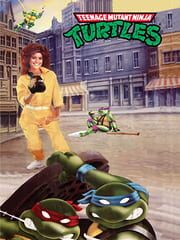
09 Teenage Mutant Ninja Turtles Teenage Mutant Ninja Turtles 1989 · 112 ratings NOTE: This is the original 4-Player Arcade release, not the NES Title. The player chooses from one of the four Ninja Turtles: Leonardo, Michelangelo, Donatello, and Raphael. After Shredder kidnaps the Turtles' friend April O'Neil and their mentor Splinter, they must give chase, save their comrades, and defeat the evil Shredder. The player chooses from one of the four Ninja Turtles: Leonardo, Michelangelo, Donatello, and Raphael. Depending on the version of the game, the characters are either, chosen at the start of the game or assigned by control panel. After Shredder kidnaps the Turtles' friend April O'Neil and their mentor Splinter, they must give chase, save their comrades, and defeat the evil Shredder. Up to four players (two in some versions) can take control of any of the Turtles. Donatello has slower attacks but a longer range, Michelangelo and Raphael have faster attacks but a shorter range, and Leonardo is a well-rounded Turtle with average range and speed. The eight-way joystick controls the movements of the Turtle, the jump button makes them jump and the attack button makes them hit in front of them using their weapon. In addition to this, some combinations are possible. The Turtles can throw Foot soldiers overhead, and by pressing the jump and attack buttons, a special attack is performed. Raphael rolls along the ground and finishes with a kick, while the other Turtles do a sweeping jump attack with their weapons. Turtles can also spring off the wall in certain areas. Enemies can be defeated more quickly by slamming them into walls or solid objects. Many objects such as traffic cones, parking meters, fire hydrants and exploding oil drums can be hit or damaged with attacks in order to help defeat nearby enemies. In the attract mode, the game showed the first part of the cartoon opening, along with a portion of the Teenage Mutant Ninja Turtles theme song. Most of the enemies the Turtles face are the Foot Soldiers, all color-coded to indicate their attack patterns and weapon of choices. Some enemies, such as the standard purple-clad Foot Soldiers and Roadkill Rodney robots, have the ability to restrain the Turtles' mobility and drain their health, leaving the player open to attack for other enemies. The bosses in the game include Rocksteady and Bebop (individually at first in that order, and later the two of them together), Baxter Stockman, Granitor, General Traag, Krang, and Shredder himself. 45 /100
What is the best Arcade game of 1989?

Tetris (1989) currently tops the ranking with a score of 86/100 across 943 ratings. Ranking updated October 2026.

How is this ranking built?

Games are ranked on their aggregated critic score out of 100, with a minimum vote threshold so a single glowing review never outranks a proven classic; the Tier community's own F-to-S grades are shown alongside each game.