

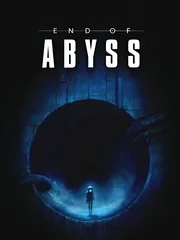

A metroidvania that cannot trust its own map is not a flawed metroidvania — it is a broken contract with the player, and End of Abyss signed that contract on October 1, 2026, then tore it up within the first few hours of play.
What Changed on Launch Day
End of Abyss, developed by Section 9 Interactive and published by Epic Games Publishing, arrived simultaneously on PlayStation 5, Xbox Series X|S, and PC via the Epic Games Store on October 1, 2026. That triple-platform, same-day release is itself a statement of confidence from a studio founded by three former members of Tarsier Studios, a team with a pedigree in narrative-driven design, not shooters. The pitch was ambitious: a third-person metroidvania where players shoot monsters, solve environmental puzzles, and unlock upgrades, wrapped in a brutalist sci-fi compound and steeped in body horror. Early impressions leaned into comparisons with Metroid and Little Nightmares — a combination that, on paper, should have been enough to carry the genre forward.
The One Bug That Breaks the Genre's First Rule
Metroidvanias live and die on a single promise: the map tells the truth. End of Abyss breaks that promise in a very specific way — a documented bug causes doors to appear locked even after they have been opened, or even when the player is already holding the key. This is not cosmetic. It is the equivalent of a navigation app that occasionally invents a wall. One review put it plainly:
"End of Abyss betrays its genre and the player alike with one particular area lacking in polish: those all-important maps sometimes lie to you."
The same review also praised the moments when the systems worked as intended: "When I was rolling right along, finding major and minor upgrades, unlocking crucial shortcuts, and taking on hordes of enemies in nail-biting combat, I really loved it." That split verdict is the real story here — not a game that fails outright, but one whose floor and ceiling sit an unusually wide distance apart. Combat benefits from clever camera work and level design, yet some bosses lack differentiation, producing similar encounters back to back. Power balancing is uneven too, with early sections pitched harder than what follows, and enemy encounters that repeat rather than escalate.
What It Means for Players Right Now
For anyone deciding whether to start this weekend, the calculus is straightforward: the atmosphere and exploration loop are strong enough to justify the brutalist-horror premise, but the map bug introduces a trust tax on every locked door you meet. In a genre built on backtracking, a single moment of doubting whether a door is actually sealed or just mislabeled compounds across dozens of hours. That is a different kind of friction than difficulty spikes, which players can at least read as intentional design. A map that lies is not difficulty — it is noise dressed as challenge.
| Element | Strength | Weakness |
|---|---|---|
| Exploration loop | Intricate world, many secrets and optional rewards | Map bug falsely flags locked doors |
| Combat | Tense, aided by camera work and level design | Some bosses lack differentiation |
| Difficulty curve | Rewarding once systems click | Uneven balancing, hard early sections |
| Platform reach | Simultaneous PS5, Xbox Series X|S, PC launch | No day-one patch confirmed in materials reviewed |
The platform breadth matters too. A simultaneous launch across three major platforms on October 1, 2026, from a studio this new, is a sign Epic Games Publishing is betting on volume to offset the rough edges — get it in front of enough players fast enough that word of mouth about the atmosphere outruns word of mouth about the map. Whether that bet pays off depends entirely on how quickly the technical issues get addressed.
What to Watch Next
Section 9 Interactive's first commercial release is now a live test of whether a small studio built on Tarsier Studios' narrative instincts can also manage the operational demands of a live-service-adjacent launch. The open questions outnumber the answers at this stage, which is itself the signal worth tracking.
- Whether a patch targeting the map-door bug ships within the first weeks post-launch, and how fast
- Whether difficulty balancing is adjusted for early-game sections specifically, rather than a blanket nerf
- Whether boss variety improves through post-launch content or remains a structural limitation
- How End of Abyss's reception compares against other recent metroidvania launches once sales and player sentiment settle
- Whether Section 9 Interactive leans further into body-horror and brutalist atmosphere, or pivots toward smoothing mechanical friction in any sequel or DLC
The atmosphere Section 9 Interactive built is not in question — brutalist architecture paired with body horror is a combination few studios have attempted with this much commitment. What is in question is whether a three-person founding team, barely out of the gate as an independent studio, can close the gap between a world worth exploring and a map worth trusting. Right now, the numbers say they have built the former and not yet the latter.
Sources :



Comments 0