Skip to Content
Tier
Tier Your gaming journal
Get
Best games

Best Strategy games of 2014

The 13 best Strategy games released in 2014, ranked from 1,428 critic and player ratings.

The best Strategy game of 2014 is Rise of Nations: Extended Edition, with a critic score of 89/100 — updated November 2026.

How this ranking is built

  • Games are ranked on the aggregated critic score out of 100 imported from IGDB and Metacritic, never on Tier's own grades.
  • A game only enters the ranking with at least 30 external ratings, so a single enthusiastic review never outranks a proven classic.
  • Each game is ranked in one genre only, the one that defines it best, so the same title never tops two different genre charts.
  • Community grades from F to S are shown next to every game, and only stated as a fact above 5 Tier ratings.
  • Release window covered: 2014.
  • 13 games are listed on this page, carrying 1,428 ratings between them.
  • Rankings are recomputed hourly; this one was last rebuilt on 13 November 2026.

Top 13

Played them? Give your tier with the + next to each game. No account needed to try — create one to keep your tiers.

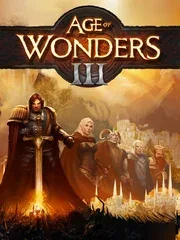
07 Age of Wonders III Age of Wonders III 2014 · 51 ratings · finished by 1% Age of Wonders III, like the previous games in the series is a turn-based strategy game set within a high fantasy universe where the player assumes the role of a political-military leader. Gameplay is 4X-based (explore, expand, exploit and exterminate) where players explore the world map, slowly building an empire through colonization, warfare and diplomacy with rival powers. However new to III is the greater addition of role-playing game features, where players must first choose and customize their leader, all options dependant on the player's chosen style of play. There are six available races in the initial release: humans, draconians, high elves, dwarves, orcs, and goblins, all that will determine the race of their empire with each having unique perks and abilities. The leader and empire is further shaped by the choice from skill sets based on traditional RPG classes along with further specializations and skills to select. Each leader class also has access to their own unique units with a distinct visual look based on their corresponding race, each to accommodate their own unique approach to strategy, both in combat and when managing their empire. On release there are six different classes a leader can be. The "Sorcerer" class emphasizes the use of magic for enchantments and summoning powerful units. The "Theocrat" derives from an organized religion based society including zealots followers and the use of holy spells and warriors. The "Rogue" favors less direct approaches to situations, employing stealth, thievery and manipulation aswell as dark magic in diplomacy and warfare. The "Archdruid" channels the power of nature, using it to their advantage by being very self-sufficient and being able to call upon wild creatures. The "Dreadnaught" leads a steampunk styled society, using large industry, machinery and gunpowder-based units like cannons and tanks. Finally the "Warlord" specializes in direct conflict and combat tactics, utilizing effective non-magic based units and abilities. Leaders themselves and separate recruitable hero units will be able to gain experience and level up, while also being able to gain new equipment and powers. Players can also develop their alignment between good and evil based on their player's actions and the cultures the player absorbs into their empire, rather than race like the previous games in the series. Cities themselves provide much of the resources, infrastructure and host to unit recruitment. Independent cities and units not immediately aligned to any player/leader are also present in the world map. Units that come from an unaffiliated city will fight to protect a city's domain, and they won't forget that they're tied to it. Many of these independent settlements aren't cities in the traditional sense, but can be alternative settlements, like a "Giant's Keep" for example. The player can conquer these holdings, which will provide units like a city, or they can absorb them through diplomatic means by paying tribute and diplomatic and/or alignment standing. Quests can also be given to players by independent forces and cities, including but not limited to clearing out wild units, searching for relics and even conquering cities and other holdings. Quests can grant the support of independent forces for player in addition to a reward such as gold or equipment, sometimes with the choice of either given to the player upon completion of the quest. As in the case of the first game in the series, Age of Wonders III offers a story-driven campaign that is playable from two sides, the human-centric Commonwealth Empire and the Court of the High Elves. In addition to the campaign; single-player scenarios, online multiplayer, random map generation and a map editor are also available. The graphics of Age of Wonders III will be presented in 3D instead of the isometric view the series has utilized up to this point. 80 /100
What is the best Strategy game of 2014?

Rise of Nations: Extended Edition currently tops the ranking with a score of 89/100 across 181 ratings. Ranking updated November 2026.

How is this ranking built?

Games are ranked on their aggregated critic score out of 100, with a minimum vote threshold so a single glowing review never outranks a proven classic; the Tier community's own F-to-S grades are shown alongside each game.