
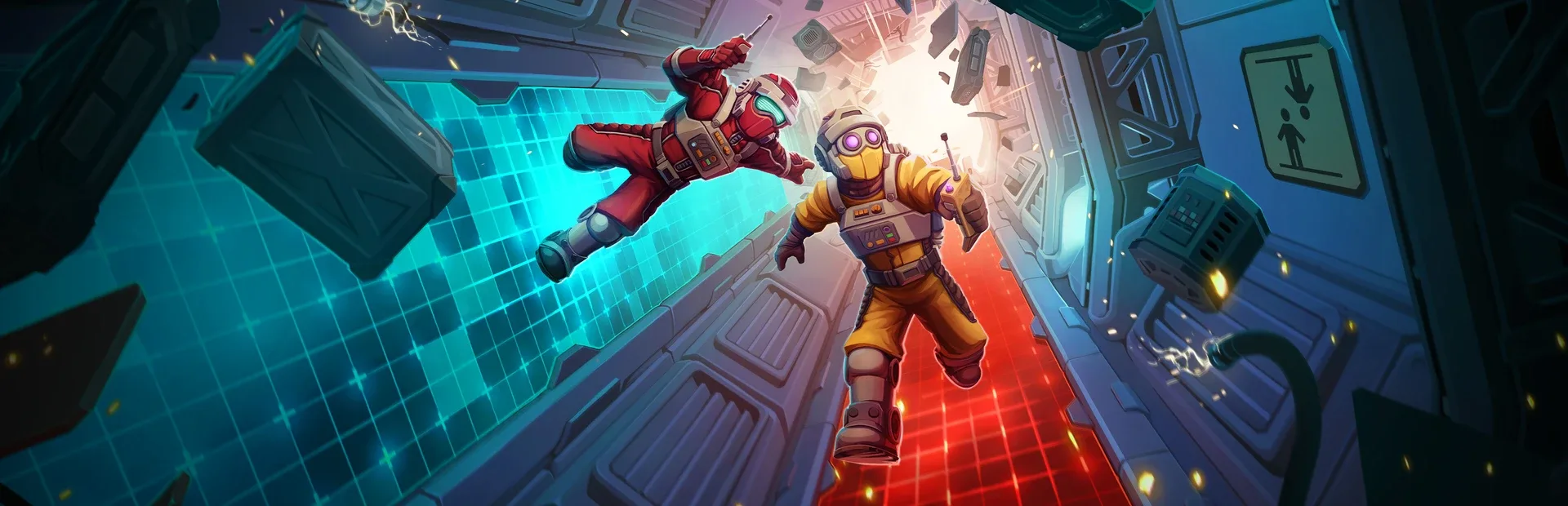

How many hours of puzzle-solving does $19.99 buy you in 2026? For We Were Here Tomorrow, the answer is roughly 15 hours — the longest runtime the series has ever shipped, and the number that frames everything else about this release.
What exactly launched on October 20, and for how much?
On October 20, 2026, Dutch studio Total Mayhem Games released We Were Here Tomorrow simultaneously on Steam, PlayStation 5, and Xbox Series X|S, with full crossplay between all three. The list price is €19.99 / $19.99 / £16.99, discounted by 10% for launch week. That price point sits well under most full-price co-op releases, and it matters because the game's pitch has always been short, sharp sessions built for exactly two people — now stretched to its longest form yet.
How much bigger is this than the five games before it?
The series started in 2017 and has now reached over 25 million players worldwide across five prior entries before this one. We Were Here Tomorrow is explicitly framed as the sixth game and the biggest, at roughly 15 hours of content. For a franchise historically associated with tight 2-3 hour puzzle boxes, that's a meaningful scale jump rather than an incremental one.
- 2017: Series debut, asymmetric two-player puzzle format established
- Five games released before this entry, reaching 25 million+ players
- Game six: We Were Here Tomorrow, ~15 hours, retro-futuristic 1980s setting
- First entry with voice acting in Japanese, Portuguese, Simplified Chinese, and Spanish
The localization expansion is worth isolating on its own: adding four new voiced languages is a cost signal, not just a feature list item. It suggests the studio is treating this release as the one meant to convert its installed base into a genuinely global audience rather than a niche-but-loyal one.
What actually changed in the puzzle design?
Two players are separated inside the Norček Industries facility, each seeing a different slice of the world, and must solve puzzles touching time, gravity, space, and cause-and-effect by talking through walkie-talkies and, new to this entry, proximity chat. The headline mechanical addition is temporal asymmetry: one player can be operating in the past while the other works in the future, with actions in one timeline altering the other player's present environment. That's a structurally different ask than previous entries, which mostly separated players spatially rather than temporally.
Creative Director Martín Mittner addressed the obvious balance risk directly:
"So maybe one player has more to do in one puzzle but over the course of the game we make sure that it gets balanced out so that both players have a lot to do."
That's a quantifiable design promise — balance measured across the full campaign rather than puzzle-by-puzzle — and it answers the most common asymmetric-co-op complaint: one partner carrying the other through long stretches. The studio also locked out mid-game character swaps, a decision aimed at forcing mastery of one role's toolset rather than letting players hedge between both.
Does the story investment show up anywhere measurable?
Yes, in the credits list. The narrative comes from award-winning author Claire North, with voice work from Sophie Okonedo, Connor Colquhoun, Boris Hiestand, and Elena Saurel. Pulling in a recognized novelist for a co-op puzzle game's script is not a cosmetic hire — it signals the studio wants the story layer evaluated on its own terms, not just as connective tissue between puzzle rooms.
| Metric | Value |
|---|---|
| Launch platforms | PC, PS5, Xbox Series X|S |
| Price | €19.99 / $19.99 / £16.99 (-10% launch) |
| Runtime | ~15 hours |
| Series entry number | 6th |
| Lifetime series players | 25 million+ (pre-launch) |
| New voiced languages | 4 |
Who is this for, and who should wait?
Anyone already inside that 25-million-player base has a clear reason to buy in: the runtime roughly doubles or triples prior entries while keeping the same per-copy price band, which on a pure hours-per-dollar basis makes We Were Here Tomorrow the series' best value proposition to date. The time-and-gravity mechanics and the no-swap role lock also raise the design ceiling, which rewards players who already trust their regular co-op partner's communication habits — since the whole system depends on describing what you see accurately over a walkie-talkie or proximity chat.
Players new to the series face a steeper ask: 15 hours is a real commitment for an unfamiliar asymmetric format, and the lack of mid-game swapping means a mismatched pair can get stuck in an uneven groove rather than trading roles to recover. The open variable is reception data that doesn't exist yet — no review scores, no player-retention numbers, no verdict on whether the temporal mechanic actually lands as advertised. Until that data surfaces, the safest read is this: the scale is confirmed, the price is confirmed, the mechanic is new, and the verdict is still unwritten.
Sources :


Comments 0