

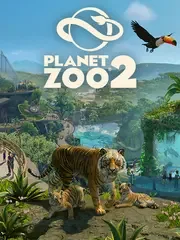

Over 130 animal species. That's the headline number tucked into the launch materials for Planet Zoo 2, and on its own it might not sound like much — plenty of simulation games bill themselves by species count. What makes the number land differently here is what's hiding inside it: for the first time in the series, that roster includes animals that swim and animals that fly, two categories the original game never touched.
The Number That Changes the Shape of the Game
Planet Zoo 2 released on October 13, 2026, for PC, PlayStation 5, and Xbox Series X|S. Buried in Frontier's own framing of the launch is the real pitch: this isn't just more animals, it's new categories of animal that the underlying simulation was never built to hold. Fully aquatic species and flying birds both arrive for the first time in the franchise's history, which means the engine had to grow two new skeletons — habitats for creatures that never touch solid ground, and airspace for creatures that spend half their lives above the enclosure roof.
From Dry Land to Deep Water
Fully aquatic animals need a home the old barns-and-paddocks toolkit couldn't provide, so Planet Zoo 2 introduces Aquariums: habitat types built specifically to house underwater species, complete with their own barriers and staff gates so keepers can do their jobs without the whole tank draining into the walkway. It's a small detail, but it's the kind of detail that decides whether an underwater enclosure feels like a real zoo exhibit or a fish tank bolted onto a theme park.
The social behavior underneath is just as important as the glass around it. Aquatic species can form shoals, which the game manages as group entities rather than tracking each fish as an individual — a sensible compromise that lets dozens of animals move together the way real shoals do, without asking your hardware to simulate a hundred separate brains at once.
Up in the Air: Aviaries That Breathe
Flying birds bring their own engineering headache, and the two headline species named so far — the Toco Toucan and the Secretary Bird — show the range the team is aiming for, one a rainforest glider and the other a ground-stalking hunter that still needs sky access. Both are housed in aviaries with dynamically generated roofs that adjust automatically based on wherever you place your boundaries and support poles. You can dial in mesh tension and sag, swap to glass, or choose other materials, and the roof reshapes itself around your layout rather than forcing you to build around a fixed template.
Beyond the Fences: Wildlife Reserves
The biggest structural departure from the original game, though, isn't a habitat type at all — it's the idea that your zoo doesn't have to be the end of the story. Wildlife Reserves let players release animals from their zoos into expansive, customizable natural ecosystems modeled on real places, including the rainforests of Sumatra and the Great Rift Valley. Animals sent there don't just vanish into a cutscene; they live out their lives in those environments, filling ecological niches, breeding, and contributing to wild population growth.
"Featuring some of the community's biggest requests, huge leaps forward in animal simulation, new Wildlife Reserves, flying birds AND fully aquatic animals, we can't wait to see what you create as you build a wilder world in Planet Zoo 2!"
That line from Frontier's own launch announcement is worth sitting with, because it frames Wildlife Reserves not as a side mode but as the conceptual bridge between the original game's closed-loop zoo management and something closer to a conservation simulator.
How the Two Games Actually Stack Up
Here's the comparison that matters if you're deciding whether this is a sequel worth the jump, or just a reskin with better water physics.
| Criterion | Original Planet Zoo | Planet Zoo 2 |
|---|---|---|
| Scope of animals | Land animals, traditional zoo management | 130+ species including fully aquatic animals and flying birds |
| Aquatic habitats | Not available | Dedicated Aquariums with barriers and staff gates |
| Aerial habitats | Not available | Dynamically-roofed aviaries (e.g. Toco Toucan, Secretary Bird) |
| Life beyond the zoo | Animals remain within zoo boundaries | Wildlife Reserves release animals into ecosystems like Sumatra and the Great Rift Valley |
| Platforms at launch | PC-era release, later ported | Windows PC, PS5, Xbox Series X|S simultaneously, plus GeForce NOW cloud play |
Three Ways to Play, One World
The mode structure should feel familiar to returning players, even if the content inside it has grown:
- Career mode — join the Fauna and Ecosystems Network to build a global network of zoos and Wildlife Reserves.
- Franchise mode — trade animals with other players across their own zoos.
- Sandbox mode — unlimited creative freedom, no network obligations attached.
Building itself keeps the series' signature mix of accessibility and depth: ready-to-place blueprints for players who want to get an exhibit open fast, piece-by-piece construction tools for players who want to sculpt every wall, plus scaling, flexi-colour, and pathing systems that have defined the franchise's reputation as a builder's playground as much as an animal sim.
Is the Water Worth Diving Into?
If you played the original and your main complaint was that the zoo felt sealed off from the wider world — animals bred, animals displayed, animals never leaving — Wildlife Reserves answer that directly. If your complaint was that the roster always felt landlocked, Aquariums and aviaries answer that too. The risk, as with any sequel that adds this many new systems at once, is whether the simulation holds together under the weight of shoals, dynamic roofs, and reserve ecosystems running at the same time. Frontier clearly thinks it does, and the fact that Planet Zoo 2 arrived on GeForce NOW the day before launch suggests a studio confident enough in performance to put it in front of hardware it doesn't control. Whether that confidence survives contact with a few hundred thousand custom-built aviaries is the question only the players can answer now.
Sources :




Comments 0