
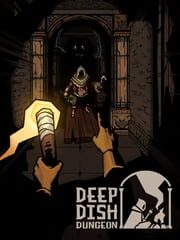

Picture the first twenty minutes: no glowing arrow, no minimap ping, no quest marker nudging you toward the next objective. Just a torch-lit corridor branching three ways, a foraged mushroom in your pocket, and the quiet dread of not knowing whether you are fourteen rooms from a feast or a death screen. That is the opening gambit of Deep Dish Dungeon, and on October 13, 2026, it became the bet the whole game is built on.
A Studio That Builds Rules, Then Breaks Them
Deep Dish Dungeon comes from Behold Studios, a developer whose catalog runs through Knights of Pen & Paper and Chroma Squad — titles built on unusual premises executed with a deliberate sense of humor rather than brute mechanical novelty. Raw Fury, the Swedish indie publisher behind the release, has built its own identity on backing games that take a structural gamble rather than iterate safely. Pairing the two was less a marriage of convenience than a continuation of pattern: a studio that likes rule-breaking, a publisher that likes funding it.
The Map That Isn't There
The defining design decision is subtraction, not addition. Deep Dish Dungeon ships with no map and no quest markers, a choice confirmed across launch coverage as deliberate rather than an oversight. Players are instead pushed toward a handcrafted dungeon filled with puzzles, varied enemies, and treasure, with the stated intent of rewarding curiosity and resourcefulness over checklist navigation. One reviewer framed the philosophy bluntly:
"Our Deep Dish Dungeon review: a map-free, hand-crafted survival dungeon with clever puzzles, Valheim-style cooking and 3-player co-op. Stiff combat."
That one sentence captures the whole shape of the game's reception: four things praised, one flagged. The marketing copy itself leaned into the same ethos, urging players to "Investigate every shadow, solve every puzzle, and open every door" — a framing that treats getting lost as the content, not a failure state around it.
Foraging, Cooking, and the Metroidvania Undercurrent
Underneath the exploration layer sits a crafting system built around foraging resources, assembling tools, and cooking meals that directly affect stats and progress. This is not cosmetic crafting bolted onto combat; it is positioned as a progression spine, comparable in tone to the Valheim-style cooking loop that reviewers kept returning to. Combined with handcrafted level design rather than procedural generation, and metroidvania-flavored gating, the game reads less like a roguelike dungeon crawler and more like a survival RPG wearing dungeon-crawler clothing. Co-op support — solo play or online multiplayer with up to two friends, for a maximum of three players total — extends that survival framing into a shared-resource, shared-risk structure rather than a competitive one.
What the Scorecards Actually Say
Early critical response landed in a narrow, consistent band, and the pattern across outlets is unusually aligned for a launch week:
| Outlet | Score | Strongest Praise | Main Reservation |
|---|---|---|---|
| DualShockers | 8.5/10 | World to explore, crafting system, sense of humor, level design | Combat simplicity |
| TheBigBois | 7.7/10 | Map-free design, handcrafted dungeon, puzzles, co-op | Stiff combat |
The gap between 8.5 and 7.7 is small enough to read as noise, but the shared complaint is not. Both outlets independently arrived at the same fault line: exploration and crafting carry the game, combat does not. DualShockers hedged its criticism as a matter of taste — "Combat is simple, but enjoyable" — while still naming it as the one system likely to turn some players away. TheBigBois used the harder word: stiff.
Where the Platform Bet Gets Interesting
Distribution-wise, Deep Dish Dungeon did not launch cautiously. It arrived day one on Xbox Game Pass, alongside Xbox Series X|S, Xbox on PC, Xbox Cloud, and PC via Steam — a simultaneous five-channel spread that lowers the cost of trying a game whose core hook (deliberately getting lost) is exactly the kind of friction that normally scares off a casual Game Pass scroll-and-quit audience. Day-one Game Pass placement effectively subsidizes the risk the design itself creates: if a player bounces off the no-map structure in the first hour, nothing was lost but time.
The Unresolved Ledger
What remains open is whether Behold Studios treats the combat criticism as a launch-week footnote or a roadmap item. Key questions sitting unanswered at launch include:
- Whether post-launch updates will address combat depth specifically, given it is the one recurring critical thread
- Whether accessibility options or optional guidance will be added for players who bounce off the total absence of markers
- Whether co-op support gets expanded beyond the current three-player cap
- Whether console availability extends past Xbox Series X|S
None of that changes the verdict forming in week one: a crafting-and-exploration loop strong enough to carry two respectable scores on its back, propped against a combat system that reviewers keep describing in the same deflating adjective. The dungeon has no map. Whether the combat gets one is the next thing worth tracking.
Sources :
Comments 0