
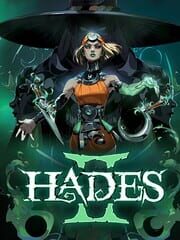
Most roguelikes get their week of launch-day coverage and then fade into patch notes. Hades II is doing the opposite. Three months after Supergiant Games brought the sequel to PS5 and Xbox Series X|S, the discourse around it hasn't cooled — it's deepened, with critics, academics, and marathon players still publishing fresh readings of a game that finished its console rollout back in April 2026.
The event
The console version of Hades II arrived on PS5 and Xbox Series X|S in mid-April, giving players who'd sat out the Early Access and PC 1.0 window their first crack at Melinoë's campaign against Chronos. A PS5-focused review published on April 13, 2026 confirmed the port held up: fast, smooth combat regardless of weapon choice, no framerate hitches even during chaotic boss fights, and a Crossroads hub redesigned around resource-gathering and the new Arcana card system.
What's unusual is what happened next. Instead of the conversation dying off after launch-week reviews, a second wave of long-form pieces kept arriving through May and June — an essay dissecting the game's narrative economy, an academic reading of its gender politics, and a marathon-length appreciation of its pacing. For a genre built on short, repeatable runs, that's a strange shelf life.
The details
- April 13, 2026 — PS5/Xbox Series X|S review confirms the console port matches the PC version's performance and adds no compromises to combat feel.
- April 17, 2026 — A narrative-design piece argues Supergiant deliberately skips exposition dumps, trusting players to piece together Melinoë's exile and her mentorship under Hecate through action rather than cutscenes.
- May 17 and May 29, 2026 — Two separate essays revisit the game's pacing and its handling of a female protagonist, the latter framing Melinoë's mastery of multiple combat styles as a deliberate break from genre stereotypes about who gets to fight up close versus at range.
Why it matters
A roguelike living this long in the critical conversation isn't an accident of scheduling — it's a symptom of how much narrative Supergiant actually stuffed into a genre that usually treats story as garnish. The recurring theme across every piece, whether it's a straightforward review or an academic reading, is that Hades II refuses to let failure feel like wasted time. Dying doesn't just reset your run; it deepens the story, with Hecate's post-death dialogue shifting to comment on your specific mistakes rather than repeating a generic taunt.
That design choice is why the discourse keeps regenerating. A game that treats every death as a new narrative beat gives critics fresh material every time they replay it for a follow-up piece, months after the review embargo lifted. It's also why the console launch mattered more than a typical port announcement would: it handed a whole new audience — people who don't touch Early Access builds on PC — a reason to have the same debates the PC crowd had been having since 2024.
Hades II doesn't waste time justifying its existence — it trusts the player to understand the world through action rather than exposition, and that trust is exactly what keeps people writing about it.
Reactions
The one genuine fault line in the coverage is whether the sequel actually surpasses the original. One reviewer's April piece pushed back directly on an earlier verdict from a colleague at the same outlet, arguing the sequel's stakes — averting a second apocalypse rather than escaping a family basement — land harder than Hades' original premise ever did. Others frame the improvement in mechanical terms: weapon builds are better balanced this time, and the Arcana card system gives runs a second layer of build variety that the first game's boon system alone couldn't match.
Not every take is pure praise. The academic essay published in late May stops short of calling the game revolutionary, arguing that giving a female lead the same combat toolkit as Zagreus is meaningful representation but not a rethink of the roguelike template itself — what it calls reform rather than reinvention.
Behind it
This is Supergiant Games' first-ever sequel, a studio that built its reputation on one-off, tightly authored games — Bastion, Transistor, Pyre — before Hades became a genre-defining hit. Choosing to follow that hit with a direct sequel, centered on Hades and Persephone's daughter Melinoë rather than returning to Zagreus, was itself a bet that the format could carry a second full campaign without repeating itself. The console arrival months after PC 1.0 suggests the studio prioritized finishing the story on its home platform before spreading resources across ports — a slower rollout than some sequels get, but one that seems to have paid off in port quality rather than rushed compromises.
Open questions
- Will Supergiant treat post-launch content the way it did with the original Hades, which kept receiving free story updates for years after its full release?
- Does the sustained critical attention translate into sales momentum on consoles, or is this mostly a conversation happening among people who already own the PC version?
- How will the studio's next project — whatever it is — be judged against a sequel this thoroughly dissected before its first anniversary on consoles even arrives?
Comments 0