
The pitch says tycoon sim with 300-plus vehicles, four continents, and a ranking system that carries you from junior clerk to Tycoon. The reality, three hours in, is a spreadsheet of unmet demand and a city council quietly docking your well-being score. That gap between promise and first playthrough is where this guide lives.
The Pitch Versus the Panel
Transport Fever 3 launched on September 29, 2026, on PC, Mac, Linux, PlayStation 5, and Xbox Series X|S. Urban Games built it; Paradox Interactive publishes it, a deal struck back in May 2026 with Urban Games keeping the IP. That structure matters for how the game plays: Paradox brought management-sim expertise from the Cities: Skylines side of its catalogue, and the tycoon-progression layer feels like the result.
"Transport Fever 3 is a perfect fit for the Paradox portfolio and we're incredibly impressed by what Urban Games has created in this series." — Mattias Rengstedt, CBO at Paradox Interactive
First Hours: Junior Status and the Habits That Stick
Every campaign starts you as a junior on the new ranking ladder. You climb toward Tycoon by growing total world population, and each rank unlocks bonuses. The system rewards patience over sprawl: a single profitable route does more for your rank than three half-built ones. The interface won't tell you this directly, so build the habit early.
- Pick one town and one industry pair before touching the vehicle menu.
- Set exact loading and unloading instructions at your first stops — undirected cargo will clog your network within the hour.
- Leave one difficulty slider alone: the cost toggle. Turning off all costs is tempting on turn one, but it erases the resource-management puzzle the campaign is built around.
- Check your municipal area boundaries before laying track. Pollution and deforestation penalties are tied to those zones, not to city limits.
- Choose Tycoon mode over Sandbox for your first save. Sandbox removes restrictions; it also removes the decision pressure that makes the ranking system mean anything.
The Mid-Game Wall: Six Ratings, One Bottleneck
Somewhere around your third or fourth connected city, growth stalls. This is the wall built into the design: cities evaluate their well-being across six ratings, shaped directly by your infrastructure choices, and a network that looks efficient on paper can still be failing half of them. The fix isn't more vehicles — it's auditing which of the eighteen growth levels your town is stuck between and which service it's missing to cross the threshold, whether that's passenger frequency, goods variety, or pollution exposure from a line you routed through a residential municipal area.
| Environment | Status in Transport Fever 3 |
|---|---|
| Temperate | Returning, baseline difficulty |
| Desert | Returning, resource-scarcity focus |
| Tropical | Returning, distinct industry chains |
| Sub-Arctic | New to the series, unique challenges |
The sub-arctic environment is the one worth planning a dedicated save around. It's new, untested by the community at scale, and likely to expose whatever the mid-game wall looks like under harsher conditions.
Late Game: From Metropolis to Modded Network
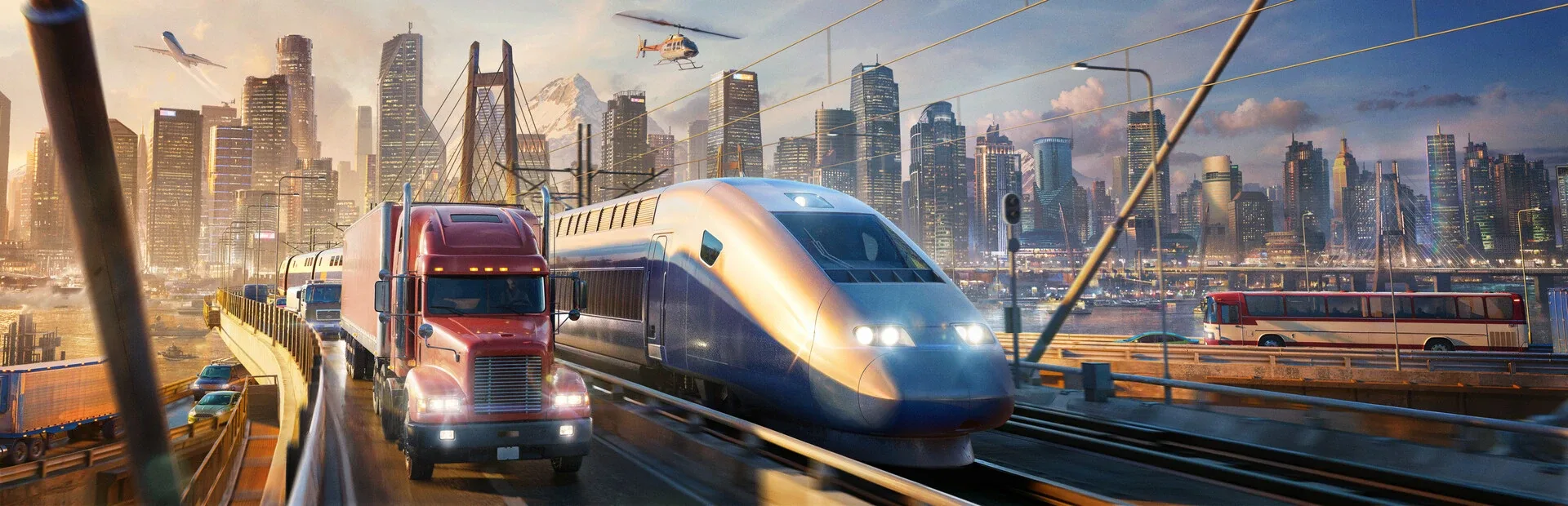
Push past the wall and your town climbs through the eighteen growth tiers toward metropolis status, at which point the fleet variety starts to matter. Over 300 authentic vehicles — trains, buses, trams, trucks, ships, planes, and for the first time in the series, helicopters — give late-game players genuinely different network shapes to build instead of just bigger versions of the same one. Helicopters in particular open short, high-value passenger hops that weren't possible in Transport Fever 2.
Once a metropolis network is humming, the Campaign mode's missions — built around historic events — become a useful stress test, and the in-game mod browser turns into the real endgame. Cross-platform mod support was a deliberate late addition to the pitch, and it signals where Urban Games expects the game's shelf life to come from: not the base 300 vehicles, but whatever the community adds to them.
Why the Ranking System Is the Real Tutorial
Transport Fever 2 built a loyal base — a 90% rating on Steam across more than 22,000 reviews — without any of this scaffolding. Transport Fever 3's junior-to-Tycoon ladder, six-rating city model, and modular difficulty sliders exist because Paradox's management-sim audience expects legible progress, not just a sandbox. Basil Weber framed the publishing deal as putting the series "on an even stronger track to reach its full potential." The ranking system is the clearest evidence of what that track actually looks like in practice.
Sources :





Comments 0