
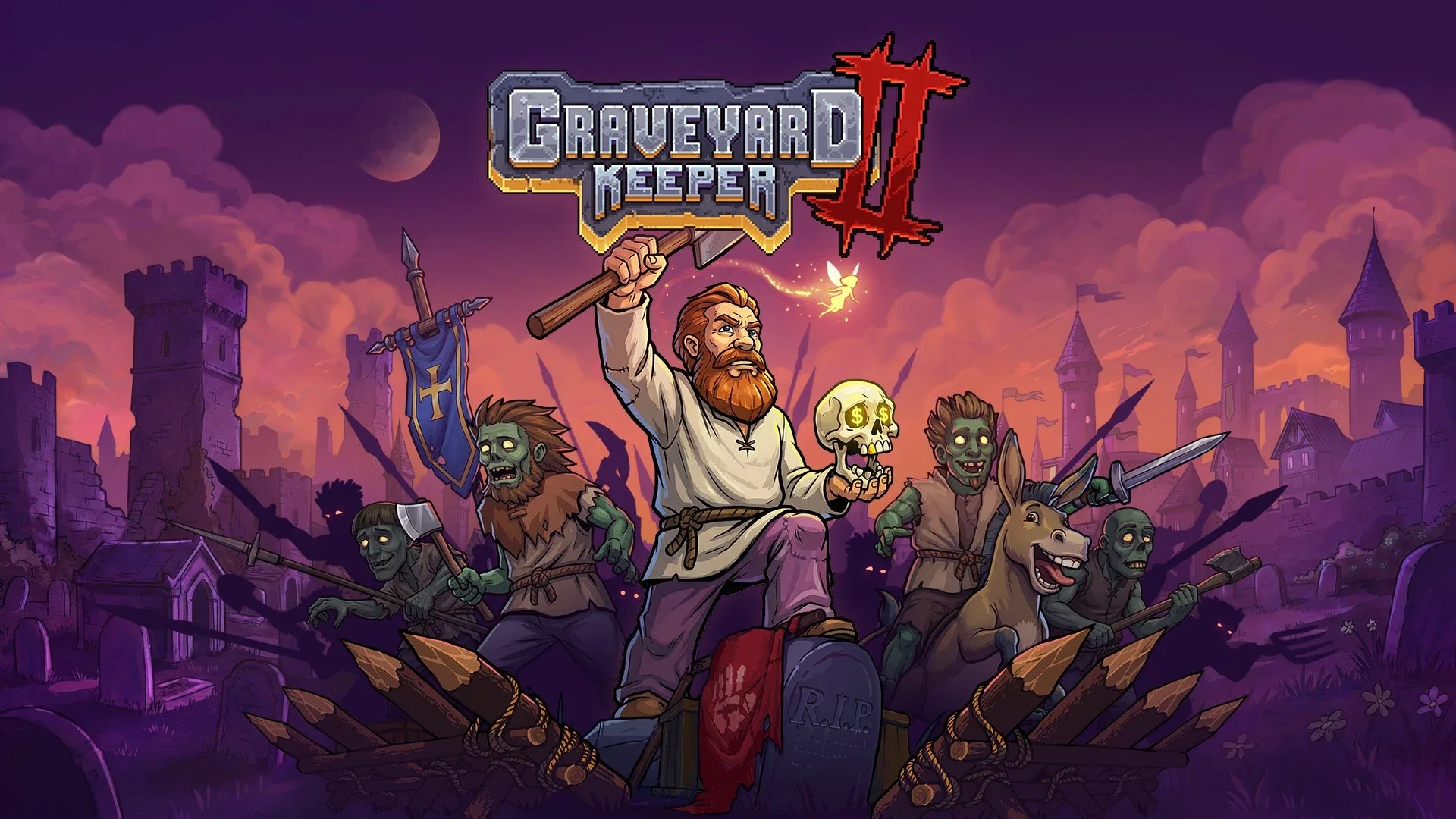
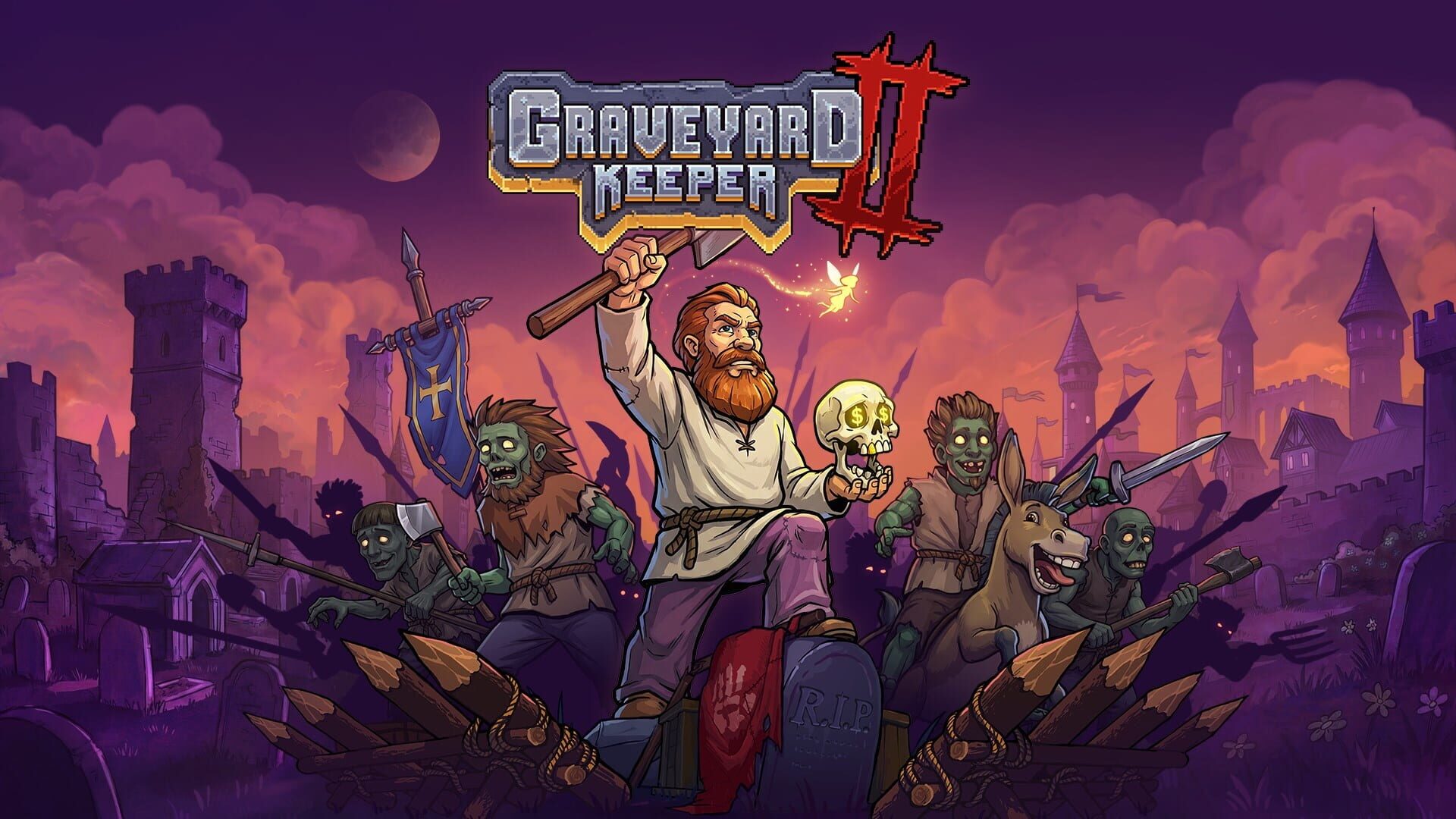
In 2018, the original Graveyard Keeper asked players to embalm corpses, sell grave plots, and quietly build a four-million-unit cult hit out of dark humor and spreadsheet-grade crafting. Eight years later, the sequel drops a conveyor belt, a zombie-powered generator, and an actual army into that same graveyard. The pitch has changed from macabre side hustle to industrial management sim with a combat layer. The question is whether the foundation underneath grew to match.
What exactly shipped on September 22, 2026?
Graveyard Keeper 2 launched simultaneously across PC, PlayStation 5, Xbox Series X|S, Nintendo Switch, and Nintendo Switch 2 on September 22, 2026. That's a six-platform day-one release for a studio that built its reputation on scrappier, single-platform launches — a sign tinyBuild wanted this one to land everywhere at once rather than staggering ports the way the first game eventually did. On PlayStation 5 it's priced at £15.99, positioning it closer to a premium indie than a budget curiosity.
Why does a graveyard sim now need a factory floor?
Because the original's ceiling was labor, and the sequel's answer is automation. Lazy Bear Games built the sequel around conveyor belts and zombie-operated factory stations that run semi-automated production lines, powered by a factory power system generated by zombie carousels. That's a structural admission: manually walking a corpse through six crafting stations was charming once and tedious at scale. Automation doesn't remove the original's density — it just moves the bottleneck from the player's clicks to the player's planning.
Why hand players an undead army instead of just more bodies?
Because town restoration needed stakes, and a passive sim doesn't have any. The zombie army can be sent into battle to reclaim parts of the town, with checkpoint capture mechanics and defensive fortifications like barricades and archer towers. Players can hire mercenaries or field their own zombies, and winning battles unlocks new areas and resources — which then feed back into the graveyard and factory loops. tinyBuild framed the whole structure bluntly in its reveal:
"Restore the town, manage the graveyard, automate production, lead your undead army into battle and turn the zombie problem into a thriving business."That's four verbs doing the work of one genre, which is either ambition or overreach depending on execution.
How do these systems actually connect?
They're deliberately interdependent rather than parallel. The intended loop looks like this:
- Graveyard work generates corpses, and corpse quality determines grave value and zombie strength.
- Stronger zombies staff the factory and fight in the army.
- The factory's output funds and fuels town restoration.
- Restored town sections open new battle zones and new resources, which loop back into the graveyard.
Layered on top is a personal-management track — energy, food, sleep, and insanity — that gates how much productive graveyard work a player can squeeze into a day. It's a lot of plumbing for a pixel-art sim to hold together, and the game still runs a complex tech tree underneath all of it for crafting and upgrades.
Does the sequel actually fix what frustrated people about the original?
Not entirely, and that's the honest read. The visuals are sharper — the game keeps the original's top-down pixel art style but enhances it — and the systems are genuinely deeper. But the tutorialization hasn't caught up to the ambition. One review summary described it as
"a complex and charmingly framed parallel to Stardew Valley, whose poorly explained but complicated mechanics, and lack of pressure, contrive to make it feel like less than the sum of its parts."That's a specific failure mode: not that the systems are bad, but that nothing teaches you how they interlock before you're three mechanics deep.
Who is this game actually built for?
Returning players more than newcomers, at least for now. The steep learning curve, paired with brief tutorials, is the kind of friction that rewards four-million-unit franchise familiarity and punishes cold starts. That's a defensible bet for a sequel — Lazy Bear Games knows its base skews toward players who finished the first game's notoriously obtuse late-game crafting chains and wanted more, not less, complexity.
| System | Original Graveyard Keeper | Graveyard Keeper 2 |
|---|---|---|
| Production | Manual station-by-station crafting | Conveyor belts, zombie-operated factory stations |
| Conflict | Largely passive | Checkpoint battles, mercenaries, fortifications |
| Scope | Graveyard-centric | Graveyard, factory, and town restoration combined |
| Labor | Player-driven | Zombie workforce, power generated by zombie carousels |
The bones here are familiar — dark humor, corpse economics, a grim medieval skin over a management sim. What's new is the scaffolding wrapped around them: automation to scale the labor, combat to give the town stakes, and a tech tree dense enough to keep veteran players busy well past launch week. Whether that scaffolding reads as generous or overwhelming will likely depend on how much patience a given player brought in from the first game — and whether Lazy Bear Games patches in better onboarding before that patience runs out.
Sources :


Comments 0