
Meilleurs jeux
Meilleurs jeux Arcade de 1991
Les 14 meilleurs jeux Arcade sortis en 1991, classés à partir de 1,408 notes de la critique et des joueurs.
Le meilleur jeu Arcade de 1991 est Street Fighter II: The World Warrior (1991), avec un score critique de 84/100 — mis à jour en septembre 2026.
Comment ce classement est construit
- Les jeux sont classés sur le score presse agrégé sur 100 importé d'IGDB et Metacritic, jamais sur les grades propres à Tier.
- Un jeu n'entre au classement qu'à partir de 30 notes externes : une seule critique enthousiaste ne dépassera jamais un classique confirmé.
- Les grades de la communauté, de F à S, s'affichent à côté de chaque jeu et ne sont énoncés comme un fait qu'au-delà de 5 notes Tier.
- Fenêtre de sortie couverte : 1991.
- 14 jeux figurent sur cette page, pour 1,408 notes au total.
- Les classements sont recalculés toutes les heures ; celui-ci a été reconstruit le 29 septembre 2026.
Top 14
01
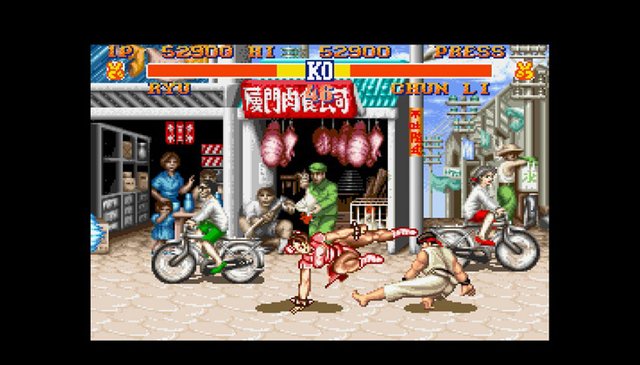 Street Fighter II: The World Warrior (1991)
84
/100
02
Street Fighter II: The World Warrior (1991)
84
/100
02
 B
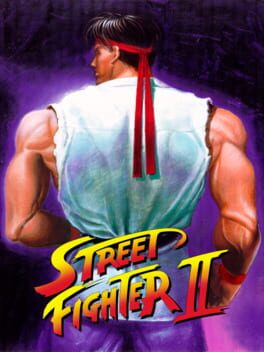
Street Fighter II
A sequel to Street Fighter, Street Fighter II improved upon the many concepts introduced in the first game, including the use of command-based special moves and a six-button configuration, while offering players a selection of multiple playable characters, each with their own unique fighting style and special moves. Street Fighter II is credited for starting the fighting game boom during the 1990s. Its success led to the production of several updated versions, each offering additional features and characters over previous versions, as well as many home versions. Some of the home versions of the Street Fighter II games have sold millions of copies, with the SNES port of the first Street Fighter II being Capcom's best-selling consumer game of all-time as of 2008. Street Fighter II follows several of the conventions and rules already established by its original 1987 predecessor. The player engages opponents in one-on-one close quarter combat in a series of best-two-out-of-three matches. The objective of each round is to deplete the opponent's vitality before the timer runs out. If both opponents knock each other out at the same time or the timer runs out with both fighters having an equal amount of vitality left, a "double KO" or "draw game" is declared and additional rounds will be played until sudden death. In the first Street Fighter II, a match could last up to ten rounds if there was no clear winner; this was reduced to four rounds in Champion Edition and onward. If there is no clear winner by the end of the final round, then either the computer-controlled opponent will win by default in a single-player match or both fighters will lose in a 2-player match. After every third match in the single player mode, the player will participate in a "bonus game" for additional points. The bonus games includes (in order) a car-breaking event; a barrel breaking bonus game where the barrels are dropped off from a conveyor belt above the player; and a drum-breaking bonus game where drums are flammable and piled over each other. The bonus games were removed from the arcade version of Super Street Fighter II Turbo. Like in the original, the game's controls uses a configuration of an eight-directional joystick and six attack buttons. The player uses the joystick to jump, crouch and move the character towards or away from the opponent, as well as to guard the character from an opponent's attacks. There are three punch buttons and three kick buttons of differing strength and speed (Light, Medium and Heavy). The player can perform a variety of basic moves in any position, including grabbing/throwing attacks, which were not featured in the original Street Fighter. Like in the original, the player can perform special moves by inputting a combination of directional and button-based commands. Street Fighter II differs from the original due to the selection of multiple playable characters, each with their distinct fighting styles and special moves. Additionally, the player can also "cancel" during animation by performing another move, allowing for a combination of several basic and special moves. Both of these features would be expanded upon in subsequent installments.
83
/100
03
B
Street Fighter II
A sequel to Street Fighter, Street Fighter II improved upon the many concepts introduced in the first game, including the use of command-based special moves and a six-button configuration, while offering players a selection of multiple playable characters, each with their own unique fighting style and special moves. Street Fighter II is credited for starting the fighting game boom during the 1990s. Its success led to the production of several updated versions, each offering additional features and characters over previous versions, as well as many home versions. Some of the home versions of the Street Fighter II games have sold millions of copies, with the SNES port of the first Street Fighter II being Capcom's best-selling consumer game of all-time as of 2008. Street Fighter II follows several of the conventions and rules already established by its original 1987 predecessor. The player engages opponents in one-on-one close quarter combat in a series of best-two-out-of-three matches. The objective of each round is to deplete the opponent's vitality before the timer runs out. If both opponents knock each other out at the same time or the timer runs out with both fighters having an equal amount of vitality left, a "double KO" or "draw game" is declared and additional rounds will be played until sudden death. In the first Street Fighter II, a match could last up to ten rounds if there was no clear winner; this was reduced to four rounds in Champion Edition and onward. If there is no clear winner by the end of the final round, then either the computer-controlled opponent will win by default in a single-player match or both fighters will lose in a 2-player match. After every third match in the single player mode, the player will participate in a "bonus game" for additional points. The bonus games includes (in order) a car-breaking event; a barrel breaking bonus game where the barrels are dropped off from a conveyor belt above the player; and a drum-breaking bonus game where drums are flammable and piled over each other. The bonus games were removed from the arcade version of Super Street Fighter II Turbo. Like in the original, the game's controls uses a configuration of an eight-directional joystick and six attack buttons. The player uses the joystick to jump, crouch and move the character towards or away from the opponent, as well as to guard the character from an opponent's attacks. There are three punch buttons and three kick buttons of differing strength and speed (Light, Medium and Heavy). The player can perform a variety of basic moves in any position, including grabbing/throwing attacks, which were not featured in the original Street Fighter. Like in the original, the player can perform special moves by inputting a combination of directional and button-based commands. Street Fighter II differs from the original due to the selection of multiple playable characters, each with their distinct fighting styles and special moves. Additionally, the player can also "cancel" during animation by performing another move, allowing for a combination of several basic and special moves. Both of these features would be expanded upon in subsequent installments.
83
/100
03
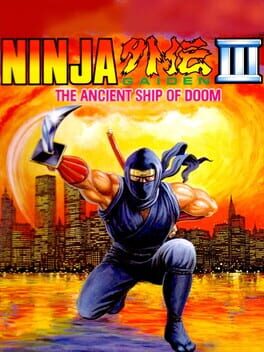 Ninja Gaiden III: The Ancient Ship of Doom (1991)
Thrilling new cinema screen! Follow the story of Ryu's epic adventure through Tecmo's movie-like Cinema Screen Animation. As you complete each level, a new part of the story unfolds. Exciting new powers and weapons! Over the years Ninja Ryu's fighting skills have improved to include fantastic new powers and weapons. Action-packed Ninja adventure! Can you get Ryu through his most challenging adventure as he battles the hideous ancient forces of darkness to save mankind? The Ultimate Ninja Challenge!
84
/100
Ninja Gaiden III: The Ancient Ship of Doom (1991)
Thrilling new cinema screen! Follow the story of Ryu's epic adventure through Tecmo's movie-like Cinema Screen Animation. As you complete each level, a new part of the story unfolds. Exciting new powers and weapons! Over the years Ninja Ryu's fighting skills have improved to include fantastic new powers and weapons. Action-packed Ninja adventure! Can you get Ryu through his most challenging adventure as he battles the hideous ancient forces of darkness to save mankind? The Ultimate Ninja Challenge!
84
/100
Street Fighter II: The World Warrior (1991)
84
/100
02
B
Street Fighter II
A sequel to Street Fighter, Street Fighter II improved upon the many concepts introduced in the first game, including the use of command-based special moves and a six-button configuration, while offering players a selection of multiple playable characters, each with their own unique fighting style and special moves. Street Fighter II is credited for starting the fighting game boom during the 1990s. Its success led to the production of several updated versions, each offering additional features and characters over previous versions, as well as many home versions. Some of the home versions of the Street Fighter II games have sold millions of copies, with the SNES port of the first Street Fighter II being Capcom's best-selling consumer game of all-time as of 2008. Street Fighter II follows several of the conventions and rules already established by its original 1987 predecessor. The player engages opponents in one-on-one close quarter combat in a series of best-two-out-of-three matches. The objective of each round is to deplete the opponent's vitality before the timer runs out. If both opponents knock each other out at the same time or the timer runs out with both fighters having an equal amount of vitality left, a "double KO" or "draw game" is declared and additional rounds will be played until sudden death. In the first Street Fighter II, a match could last up to ten rounds if there was no clear winner; this was reduced to four rounds in Champion Edition and onward. If there is no clear winner by the end of the final round, then either the computer-controlled opponent will win by default in a single-player match or both fighters will lose in a 2-player match. After every third match in the single player mode, the player will participate in a "bonus game" for additional points. The bonus games includes (in order) a car-breaking event; a barrel breaking bonus game where the barrels are dropped off from a conveyor belt above the player; and a drum-breaking bonus game where drums are flammable and piled over each other. The bonus games were removed from the arcade version of Super Street Fighter II Turbo. Like in the original, the game's controls uses a configuration of an eight-directional joystick and six attack buttons. The player uses the joystick to jump, crouch and move the character towards or away from the opponent, as well as to guard the character from an opponent's attacks. There are three punch buttons and three kick buttons of differing strength and speed (Light, Medium and Heavy). The player can perform a variety of basic moves in any position, including grabbing/throwing attacks, which were not featured in the original Street Fighter. Like in the original, the player can perform special moves by inputting a combination of directional and button-based commands. Street Fighter II differs from the original due to the selection of multiple playable characters, each with their distinct fighting styles and special moves. Additionally, the player can also "cancel" during animation by performing another move, allowing for a combination of several basic and special moves. Both of these features would be expanded upon in subsequent installments.
83
/100
03
Ninja Gaiden III: The Ancient Ship of Doom (1991)
Thrilling new cinema screen! Follow the story of Ryu's epic adventure through Tecmo's movie-like Cinema Screen Animation. As you complete each level, a new part of the story unfolds. Exciting new powers and weapons! Over the years Ninja Ryu's fighting skills have improved to include fantastic new powers and weapons. Action-packed Ninja adventure! Can you get Ryu through his most challenging adventure as he battles the hideous ancient forces of darkness to save mankind? The Ultimate Ninja Challenge!
84
/100
04
 Teenage Mutant Ninja Turtles III: The Manhattan Project
 is a side-scrolling beat-'em-up. The game features play mechanics similar to the previous game, Teenage Mutant Ninja Turtles II: The Arcade Game, but it is an original title for the NES without any preceding arcade version.
79
/100
05
Teenage Mutant Ninja Turtles III: The Manhattan Project
Teenage Mutant Ninja Turtles III: The Manhattan Project is a side-scrolling beat-'em-up. The game features play mechanics similar to the previous game, Teenage Mutant Ninja Turtles II: The Arcade Game, but it is an original title for the NES without any preceding arcade version.
79
/100
05
 Sunset Riders
 is a side-scrolling run and gun video game developed and released by Konami in 1991. It is set in the American Old West, where the players take control of bounty hunters who are seeking the rewards offered for various criminals. Each bad guy has a big reward on his head, and they're helped by hordes of bandits, gunslingers, and horse thieves, so pack loads of lead.
79
/100
06
Sunset Riders
Sunset Riders is a side-scrolling run and gun video game developed and released by Konami in 1991. It is set in the American Old West, where the players take control of bounty hunters who are seeking the rewards offered for various criminals. Each bad guy has a big reward on his head, and they're helped by hordes of bandits, gunslingers, and horse thieves, so pack loads of lead.
79
/100
06
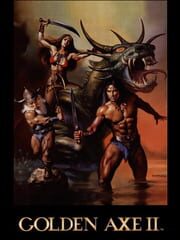 Golden Axe II (1991)
The Lord of Darkness, Dark Guld, has arisen again. Wielding the famous Golden Axe, he has destroyed entire countries with his evil clan, forcing the world into chaos. Once again, three brave warriors stand up to face the oppressors, and won’t rest until the Golden Axe is returned to its rightful place.
77
/100
07
Golden Axe II (1991)
The Lord of Darkness, Dark Guld, has arisen again. Wielding the famous Golden Axe, he has destroyed entire countries with his evil clan, forcing the world into chaos. Once again, three brave warriors stand up to face the oppressors, and won’t rest until the Golden Axe is returned to its rightful place.
77
/100
07
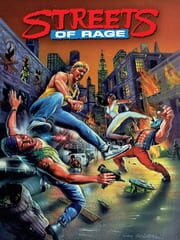 Streets of Rage
 is a side-scrolling beat 'em up video game developed and published by Sega in 1991 for Mega Drive/Genesis. It is the first installment of the Bare Knuckle/Streets of Rage series which was followed by Streets of Rage 2 and Streets of Rage 3.
76
/100
08
Streets of Rage
Streets of Rage is a side-scrolling beat 'em up video game developed and published by Sega in 1991 for Mega Drive/Genesis. It is the first installment of the Bare Knuckle/Streets of Rage series which was followed by Streets of Rage 2 and Streets of Rage 3.
76
/100
08
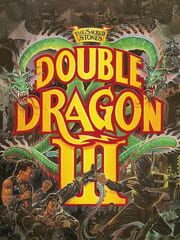 Double Dragon III: The Sacred Stones (1991)
Billy, Jimmy, and the whole Double Dragon gang fight for the Sacred Stones to save in the world in yet another beat-em-up.
73
/100
09
Double Dragon III: The Sacred Stones (1991)
Billy, Jimmy, and the whole Double Dragon gang fight for the Sacred Stones to save in the world in yet another beat-em-up.
73
/100
09
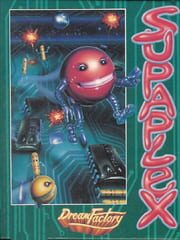 Supaplex
 is the first Boulder Dash-like game that is not fully grid-based: while the playing field is an obvious grid, the objects do not "snap" from one grid position to another, but can be halfway or "in between" grid positions. Supaplex introduces a number of new elements that were not present in Boulder Dash, including bugs, pieces of base that randomly cause a life threatening electrostatic discharges, Ports, which limit Murphy's movement to specific directions, and terminals, which set off yellow Utility Disks. Utility Disks are explosive floppy disks and come in three different colors: Orange Disks work like Zonks, but explode when hit or when falling. Yellow Disks do not fall yet may be pushed in any direction, and explode when the Terminal is used. Red Disks can be carried and dropped when convenient, exploding seconds after.
70
/100
10
Supaplex
Supaplex is the first Boulder Dash-like game that is not fully grid-based: while the playing field is an obvious grid, the objects do not "snap" from one grid position to another, but can be halfway or "in between" grid positions. Supaplex introduces a number of new elements that were not present in Boulder Dash, including bugs, pieces of base that randomly cause a life threatening electrostatic discharges, Ports, which limit Murphy's movement to specific directions, and terminals, which set off yellow Utility Disks. Utility Disks are explosive floppy disks and come in three different colors: Orange Disks work like Zonks, but explode when hit or when falling. Yellow Disks do not fall yet may be pushed in any direction, and explode when the Terminal is used. Red Disks can be carried and dropped when convenient, exploding seconds after.
70
/100
10
 Prehistorik
 is a side-view platform game. You control a neanderthal who must march through hostile pre-historic environments seeking food and keeping himself safe. Some food can be found in caves, but it mainly exists in living animal forms. These include fire-breathing Pyro-Tax dragons, the Turtosaurus, and the Bad Bat. Each of these must be clubbed to death, some taking up to 5 hits, and then walked over. Some other enemies are indestructible, with the monkeys who throw coconuts at you particularly fiendish. You will have to complete the level within the time limit, and avoid contact with these foes. However, bombs and improved weapons can be collected, as can extra lives, time bonuses and an improved jump.
70
/100
11
Prehistorik
Prehistorik is a side-view platform game. You control a neanderthal who must march through hostile pre-historic environments seeking food and keeping himself safe. Some food can be found in caves, but it mainly exists in living animal forms. These include fire-breathing Pyro-Tax dragons, the Turtosaurus, and the Bad Bat. Each of these must be clubbed to death, some taking up to 5 hits, and then walked over. Some other enemies are indestructible, with the monkeys who throw coconuts at you particularly fiendish. You will have to complete the level within the time limit, and avoid contact with these foes. However, bombs and improved weapons can be collected, as can extra lives, time bonuses and an improved jump.
70
/100
11
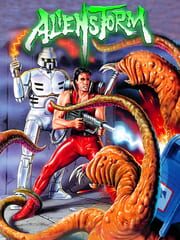 Alien Storm (1991)
68
/100
12
Alien Storm (1991)
68
/100
12
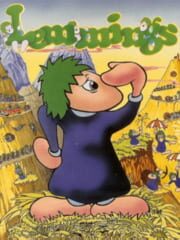 Lemmings
68
/100
13
Lemmings
68
/100
13
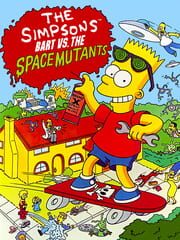 The Simpsons: Bart vs. the Space Mutants
59
/100
14
The Simpsons: Bart vs. the Space Mutants
59
/100
14
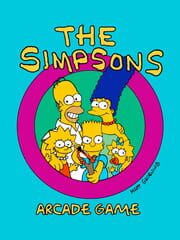 The Simpsons Arcade Game
58
/100
The Simpsons Arcade Game
58
/100
Teenage Mutant Ninja Turtles III: The Manhattan Project
Teenage Mutant Ninja Turtles III: The Manhattan Project is a side-scrolling beat-'em-up. The game features play mechanics similar to the previous game, Teenage Mutant Ninja Turtles II: The Arcade Game, but it is an original title for the NES without any preceding arcade version.
79
/100
05
Sunset Riders
Sunset Riders is a side-scrolling run and gun video game developed and released by Konami in 1991. It is set in the American Old West, where the players take control of bounty hunters who are seeking the rewards offered for various criminals. Each bad guy has a big reward on his head, and they're helped by hordes of bandits, gunslingers, and horse thieves, so pack loads of lead.
79
/100
06
Golden Axe II (1991)
The Lord of Darkness, Dark Guld, has arisen again. Wielding the famous Golden Axe, he has destroyed entire countries with his evil clan, forcing the world into chaos. Once again, three brave warriors stand up to face the oppressors, and won’t rest until the Golden Axe is returned to its rightful place.
77
/100
07
Streets of Rage
Streets of Rage is a side-scrolling beat 'em up video game developed and published by Sega in 1991 for Mega Drive/Genesis. It is the first installment of the Bare Knuckle/Streets of Rage series which was followed by Streets of Rage 2 and Streets of Rage 3.
76
/100
08
Double Dragon III: The Sacred Stones (1991)
Billy, Jimmy, and the whole Double Dragon gang fight for the Sacred Stones to save in the world in yet another beat-em-up.
73
/100
09
Supaplex
Supaplex is the first Boulder Dash-like game that is not fully grid-based: while the playing field is an obvious grid, the objects do not "snap" from one grid position to another, but can be halfway or "in between" grid positions. Supaplex introduces a number of new elements that were not present in Boulder Dash, including bugs, pieces of base that randomly cause a life threatening electrostatic discharges, Ports, which limit Murphy's movement to specific directions, and terminals, which set off yellow Utility Disks. Utility Disks are explosive floppy disks and come in three different colors: Orange Disks work like Zonks, but explode when hit or when falling. Yellow Disks do not fall yet may be pushed in any direction, and explode when the Terminal is used. Red Disks can be carried and dropped when convenient, exploding seconds after.
70
/100
10
Prehistorik
Prehistorik is a side-view platform game. You control a neanderthal who must march through hostile pre-historic environments seeking food and keeping himself safe. Some food can be found in caves, but it mainly exists in living animal forms. These include fire-breathing Pyro-Tax dragons, the Turtosaurus, and the Bad Bat. Each of these must be clubbed to death, some taking up to 5 hits, and then walked over. Some other enemies are indestructible, with the monkeys who throw coconuts at you particularly fiendish. You will have to complete the level within the time limit, and avoid contact with these foes. However, bombs and improved weapons can be collected, as can extra lives, time bonuses and an improved jump.
70
/100
11
Alien Storm (1991)
68
/100
12
Lemmings
68
/100
13
The Simpsons: Bart vs. the Space Mutants
59
/100
14
The Simpsons Arcade Game
58
/100
Frequently asked questions
Quel est le meilleur jeu Arcade de 1991 ?
Street Fighter II: The World Warrior (1991) domine actuellement le classement avec un score de 84/100 sur 103 notes. Classement mis à jour en septembre 2026.
Comment ce classement est-il construit ?
Les jeux sont classés sur leur score critique agrégé sur 100, avec un seuil minimum de votes pour qu'une seule critique dithyrambique ne passe jamais devant un classique confirmé ; les grades F à S de la communauté Tier sont affichés à côté de chaque jeu.