Best games
Best Arcade games of 1991
The 9 best Arcade games released in 1991, ranked from 1,520 critic and player ratings.
The best Arcade game of 1991 is Sonic the Hedgehog, with a critic score of 85/100 — updated September 2026.
How this ranking is built
- Games are ranked on the aggregated critic score out of 100 imported from IGDB and Metacritic, never on Tier's own grades.
- A game only enters the ranking with at least 30 external ratings, so a single enthusiastic review never outranks a proven classic.
- Community grades from F to S are shown next to every game, and only stated as a fact above 5 Tier ratings.
- Release window covered: 1991.
- 9 games are listed on this page, carrying 1,520 ratings between them.
- Rankings are recomputed hourly; this one was last rebuilt on 29 September 2026.
Top 9
01
 Sonic the Hedgehog
 is a 2D side-scrolling platformer developed by Sonic Team and published by Sega for the Genesis/Mega Drive. Players control Sonic the Hedgehog, who can run at near supersonic speeds and sets out on a quest to defeat Dr. Robotnik, a scientist who has imprisoned animals in robots and seeks the powerful Chaos Emeralds.
85
/100
02
Sonic the Hedgehog
Sonic the Hedgehog is a 2D side-scrolling platformer developed by Sonic Team and published by Sega for the Genesis/Mega Drive. Players control Sonic the Hedgehog, who can run at near supersonic speeds and sets out on a quest to defeat Dr. Robotnik, a scientist who has imprisoned animals in robots and seeks the powerful Chaos Emeralds.
85
/100
02
 B
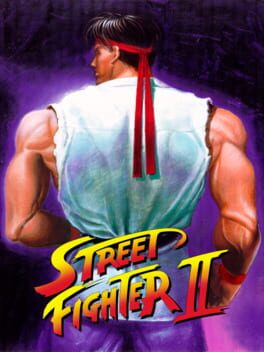
Street Fighter II
A sequel to Street Fighter, Street Fighter II improved upon the many concepts introduced in the first game, including the use of command-based special moves and a six-button configuration, while offering players a selection of multiple playable characters, each with their own unique fighting style and special moves. Street Fighter II is credited for starting the fighting game boom during the 1990s. Its success led to the production of several updated versions, each offering additional features and characters over previous versions, as well as many home versions. Some of the home versions of the Street Fighter II games have sold millions of copies, with the SNES port of the first Street Fighter II being Capcom's best-selling consumer game of all-time as of 2008. Street Fighter II follows several of the conventions and rules already established by its original 1987 predecessor. The player engages opponents in one-on-one close quarter combat in a series of best-two-out-of-three matches. The objective of each round is to deplete the opponent's vitality before the timer runs out. If both opponents knock each other out at the same time or the timer runs out with both fighters having an equal amount of vitality left, a "double KO" or "draw game" is declared and additional rounds will be played until sudden death. In the first Street Fighter II, a match could last up to ten rounds if there was no clear winner; this was reduced to four rounds in Champion Edition and onward. If there is no clear winner by the end of the final round, then either the computer-controlled opponent will win by default in a single-player match or both fighters will lose in a 2-player match. After every third match in the single player mode, the player will participate in a "bonus game" for additional points. The bonus games includes (in order) a car-breaking event; a barrel breaking bonus game where the barrels are dropped off from a conveyor belt above the player; and a drum-breaking bonus game where drums are flammable and piled over each other. The bonus games were removed from the arcade version of Super Street Fighter II Turbo. Like in the original, the game's controls uses a configuration of an eight-directional joystick and six attack buttons. The player uses the joystick to jump, crouch and move the character towards or away from the opponent, as well as to guard the character from an opponent's attacks. There are three punch buttons and three kick buttons of differing strength and speed (Light, Medium and Heavy). The player can perform a variety of basic moves in any position, including grabbing/throwing attacks, which were not featured in the original Street Fighter. Like in the original, the player can perform special moves by inputting a combination of directional and button-based commands. Street Fighter II differs from the original due to the selection of multiple playable characters, each with their distinct fighting styles and special moves. Additionally, the player can also "cancel" during animation by performing another move, allowing for a combination of several basic and special moves. Both of these features would be expanded upon in subsequent installments.
83
/100
03
B
Street Fighter II
A sequel to Street Fighter, Street Fighter II improved upon the many concepts introduced in the first game, including the use of command-based special moves and a six-button configuration, while offering players a selection of multiple playable characters, each with their own unique fighting style and special moves. Street Fighter II is credited for starting the fighting game boom during the 1990s. Its success led to the production of several updated versions, each offering additional features and characters over previous versions, as well as many home versions. Some of the home versions of the Street Fighter II games have sold millions of copies, with the SNES port of the first Street Fighter II being Capcom's best-selling consumer game of all-time as of 2008. Street Fighter II follows several of the conventions and rules already established by its original 1987 predecessor. The player engages opponents in one-on-one close quarter combat in a series of best-two-out-of-three matches. The objective of each round is to deplete the opponent's vitality before the timer runs out. If both opponents knock each other out at the same time or the timer runs out with both fighters having an equal amount of vitality left, a "double KO" or "draw game" is declared and additional rounds will be played until sudden death. In the first Street Fighter II, a match could last up to ten rounds if there was no clear winner; this was reduced to four rounds in Champion Edition and onward. If there is no clear winner by the end of the final round, then either the computer-controlled opponent will win by default in a single-player match or both fighters will lose in a 2-player match. After every third match in the single player mode, the player will participate in a "bonus game" for additional points. The bonus games includes (in order) a car-breaking event; a barrel breaking bonus game where the barrels are dropped off from a conveyor belt above the player; and a drum-breaking bonus game where drums are flammable and piled over each other. The bonus games were removed from the arcade version of Super Street Fighter II Turbo. Like in the original, the game's controls uses a configuration of an eight-directional joystick and six attack buttons. The player uses the joystick to jump, crouch and move the character towards or away from the opponent, as well as to guard the character from an opponent's attacks. There are three punch buttons and three kick buttons of differing strength and speed (Light, Medium and Heavy). The player can perform a variety of basic moves in any position, including grabbing/throwing attacks, which were not featured in the original Street Fighter. Like in the original, the player can perform special moves by inputting a combination of directional and button-based commands. Street Fighter II differs from the original due to the selection of multiple playable characters, each with their distinct fighting styles and special moves. Additionally, the player can also "cancel" during animation by performing another move, allowing for a combination of several basic and special moves. Both of these features would be expanded upon in subsequent installments.
83
/100
03
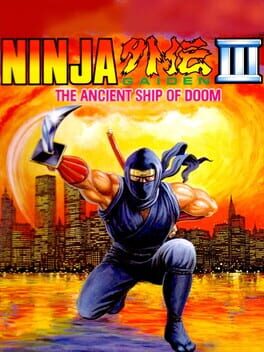 Ninja Gaiden III: The Ancient Ship of Doom (1991)
Thrilling new cinema screen! Follow the story of Ryu's epic adventure through Tecmo's movie-like Cinema Screen Animation. As you complete each level, a new part of the story unfolds. Exciting new powers and weapons! Over the years Ninja Ryu's fighting skills have improved to include fantastic new powers and weapons. Action-packed Ninja adventure! Can you get Ryu through his most challenging adventure as he battles the hideous ancient forces of darkness to save mankind? The Ultimate Ninja Challenge!
84
/100
Ninja Gaiden III: The Ancient Ship of Doom (1991)
Thrilling new cinema screen! Follow the story of Ryu's epic adventure through Tecmo's movie-like Cinema Screen Animation. As you complete each level, a new part of the story unfolds. Exciting new powers and weapons! Over the years Ninja Ryu's fighting skills have improved to include fantastic new powers and weapons. Action-packed Ninja adventure! Can you get Ryu through his most challenging adventure as he battles the hideous ancient forces of darkness to save mankind? The Ultimate Ninja Challenge!
84
/100
Sonic the Hedgehog
Sonic the Hedgehog is a 2D side-scrolling platformer developed by Sonic Team and published by Sega for the Genesis/Mega Drive. Players control Sonic the Hedgehog, who can run at near supersonic speeds and sets out on a quest to defeat Dr. Robotnik, a scientist who has imprisoned animals in robots and seeks the powerful Chaos Emeralds.
85
/100
02
B
Street Fighter II
A sequel to Street Fighter, Street Fighter II improved upon the many concepts introduced in the first game, including the use of command-based special moves and a six-button configuration, while offering players a selection of multiple playable characters, each with their own unique fighting style and special moves. Street Fighter II is credited for starting the fighting game boom during the 1990s. Its success led to the production of several updated versions, each offering additional features and characters over previous versions, as well as many home versions. Some of the home versions of the Street Fighter II games have sold millions of copies, with the SNES port of the first Street Fighter II being Capcom's best-selling consumer game of all-time as of 2008. Street Fighter II follows several of the conventions and rules already established by its original 1987 predecessor. The player engages opponents in one-on-one close quarter combat in a series of best-two-out-of-three matches. The objective of each round is to deplete the opponent's vitality before the timer runs out. If both opponents knock each other out at the same time or the timer runs out with both fighters having an equal amount of vitality left, a "double KO" or "draw game" is declared and additional rounds will be played until sudden death. In the first Street Fighter II, a match could last up to ten rounds if there was no clear winner; this was reduced to four rounds in Champion Edition and onward. If there is no clear winner by the end of the final round, then either the computer-controlled opponent will win by default in a single-player match or both fighters will lose in a 2-player match. After every third match in the single player mode, the player will participate in a "bonus game" for additional points. The bonus games includes (in order) a car-breaking event; a barrel breaking bonus game where the barrels are dropped off from a conveyor belt above the player; and a drum-breaking bonus game where drums are flammable and piled over each other. The bonus games were removed from the arcade version of Super Street Fighter II Turbo. Like in the original, the game's controls uses a configuration of an eight-directional joystick and six attack buttons. The player uses the joystick to jump, crouch and move the character towards or away from the opponent, as well as to guard the character from an opponent's attacks. There are three punch buttons and three kick buttons of differing strength and speed (Light, Medium and Heavy). The player can perform a variety of basic moves in any position, including grabbing/throwing attacks, which were not featured in the original Street Fighter. Like in the original, the player can perform special moves by inputting a combination of directional and button-based commands. Street Fighter II differs from the original due to the selection of multiple playable characters, each with their distinct fighting styles and special moves. Additionally, the player can also "cancel" during animation by performing another move, allowing for a combination of several basic and special moves. Both of these features would be expanded upon in subsequent installments.
83
/100
03
Ninja Gaiden III: The Ancient Ship of Doom (1991)
Thrilling new cinema screen! Follow the story of Ryu's epic adventure through Tecmo's movie-like Cinema Screen Animation. As you complete each level, a new part of the story unfolds. Exciting new powers and weapons! Over the years Ninja Ryu's fighting skills have improved to include fantastic new powers and weapons. Action-packed Ninja adventure! Can you get Ryu through his most challenging adventure as he battles the hideous ancient forces of darkness to save mankind? The Ultimate Ninja Challenge!
84
/100
04
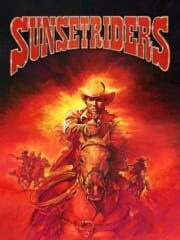 Sunset Riders
 is a side-scrolling run and gun video game developed and released by Konami in 1991. It is set in the American Old West, where the players take control of bounty hunters who are seeking the rewards offered for various criminals. Each bad guy has a big reward on his head, and they're helped by hordes of bandits, gunslingers, and horse thieves, so pack loads of lead.
79
/100
05
Sunset Riders
Sunset Riders is a side-scrolling run and gun video game developed and released by Konami in 1991. It is set in the American Old West, where the players take control of bounty hunters who are seeking the rewards offered for various criminals. Each bad guy has a big reward on his head, and they're helped by hordes of bandits, gunslingers, and horse thieves, so pack loads of lead.
79
/100
05
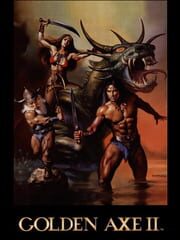 Golden Axe II (1991)
The Lord of Darkness, Dark Guld, has arisen again. Wielding the famous Golden Axe, he has destroyed entire countries with his evil clan, forcing the world into chaos. Once again, three brave warriors stand up to face the oppressors, and won’t rest until the Golden Axe is returned to its rightful place.
77
/100
06
Golden Axe II (1991)
The Lord of Darkness, Dark Guld, has arisen again. Wielding the famous Golden Axe, he has destroyed entire countries with his evil clan, forcing the world into chaos. Once again, three brave warriors stand up to face the oppressors, and won’t rest until the Golden Axe is returned to its rightful place.
77
/100
06
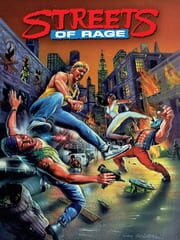 Streets of Rage
 is a side-scrolling beat 'em up video game developed and published by Sega in 1991 for Mega Drive/Genesis. It is the first installment of the Bare Knuckle/Streets of Rage series which was followed by Streets of Rage 2 and Streets of Rage 3.
76
/100
07
Streets of Rage
Streets of Rage is a side-scrolling beat 'em up video game developed and published by Sega in 1991 for Mega Drive/Genesis. It is the first installment of the Bare Knuckle/Streets of Rage series which was followed by Streets of Rage 2 and Streets of Rage 3.
76
/100
07
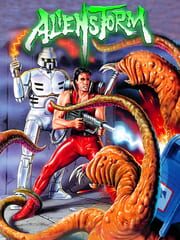 Alien Storm (1991)
Alien Storm is a side-scrolling beat 'em up. The game resembles Golden Axe, with a similar artistic style, three playable characters (a man, a woman, and a novelty character) and pick-up or power-up special attacks. The player (one player only on the Master System version, up to two players on the Mega Drive version, three on the arcade version) selects from the three different characters to embark upon a quest to save the Earth from an alien invasion. All of the Busters are playable from the beginning of the game. There are 6 missions to complete (8 in the Mega Drive version) with several stages, and each mission has the player blasting aliens, from the streets to the mother ship, where the mother of all aliens can be found. This task becomes increasingly difficult with each new mission, and the aliens are capable of hiding inside objects such as plants, postboxes, trashcans, drums, and other items. Each mission has an objective such as rescuing people or destroying an UFO. When dealing with a few aliens, flying heads will appear, which can be shot to collect life or energy. Energy is used specifically to power the energy based attacks of the player's weapon (such as flames or electricity) and to use the much more powerful special weapons. In a similar format as other early Sega arcade games, each character has unlimited usage of various short-range attacks, i.e. punches, kicks. Along with these standard attacks, each character has their own individual weapon (Garth's weapon that shoots lightning is replaced with a flame weapon in the Master System version). Special attacks are also included, and vary depending on the character chosen at the start of the game. For instance, Garth summons an U.S. Air Force starship that drops bombs across the street (in the Master System version he has Karen's special, a ballistic missile strike). Scooter will teleport out of his present location and leave a series of bombs that will blow up on the appearance of aliens, after which he will re-appear (in the Mega Drive version he just explodes, leaving his head, which his new body returns to retrieve). Karen calls down a nuclear missile, which incinerates every foe on the screen. However, a large amount of energy is depleted by using each character's special attack, and cannot be used if the energy of the player's character is too low. There are few bosses in the game. The arcade original only features a single boss that has three distinct forms. The Mega Drive port has two of these forms as two separate bosses. At the end of each mission, the side-scrolling gameplay shifts to either a shooting gallery perspective where the player must take out the aliens that pop out of various locations, similar to the bonus stages of Shinobi and Shadow Dancer, both also by Sega, or a running section that is similar to the side scrolling mode but plays like a horizontal shooter instead with projectile weapons.
68
/100
08
Alien Storm (1991)
Alien Storm is a side-scrolling beat 'em up. The game resembles Golden Axe, with a similar artistic style, three playable characters (a man, a woman, and a novelty character) and pick-up or power-up special attacks. The player (one player only on the Master System version, up to two players on the Mega Drive version, three on the arcade version) selects from the three different characters to embark upon a quest to save the Earth from an alien invasion. All of the Busters are playable from the beginning of the game. There are 6 missions to complete (8 in the Mega Drive version) with several stages, and each mission has the player blasting aliens, from the streets to the mother ship, where the mother of all aliens can be found. This task becomes increasingly difficult with each new mission, and the aliens are capable of hiding inside objects such as plants, postboxes, trashcans, drums, and other items. Each mission has an objective such as rescuing people or destroying an UFO. When dealing with a few aliens, flying heads will appear, which can be shot to collect life or energy. Energy is used specifically to power the energy based attacks of the player's weapon (such as flames or electricity) and to use the much more powerful special weapons. In a similar format as other early Sega arcade games, each character has unlimited usage of various short-range attacks, i.e. punches, kicks. Along with these standard attacks, each character has their own individual weapon (Garth's weapon that shoots lightning is replaced with a flame weapon in the Master System version). Special attacks are also included, and vary depending on the character chosen at the start of the game. For instance, Garth summons an U.S. Air Force starship that drops bombs across the street (in the Master System version he has Karen's special, a ballistic missile strike). Scooter will teleport out of his present location and leave a series of bombs that will blow up on the appearance of aliens, after which he will re-appear (in the Mega Drive version he just explodes, leaving his head, which his new body returns to retrieve). Karen calls down a nuclear missile, which incinerates every foe on the screen. However, a large amount of energy is depleted by using each character's special attack, and cannot be used if the energy of the player's character is too low. There are few bosses in the game. The arcade original only features a single boss that has three distinct forms. The Mega Drive port has two of these forms as two separate bosses. At the end of each mission, the side-scrolling gameplay shifts to either a shooting gallery perspective where the player must take out the aliens that pop out of various locations, similar to the bonus stages of Shinobi and Shadow Dancer, both also by Sega, or a running section that is similar to the side scrolling mode but plays like a horizontal shooter instead with projectile weapons.
68
/100
08
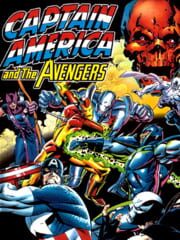 Captain America and The Avengers
Captain America and the Avengers is an arcade game released by Data East in 1991. It features the Marvel Comics characters The Avengers in a side-scrolling brawling and shooting adventure to defeat the evil Red Skull.
65
/100
09
Captain America and The Avengers
Captain America and the Avengers is an arcade game released by Data East in 1991. It features the Marvel Comics characters The Avengers in a side-scrolling brawling and shooting adventure to defeat the evil Red Skull.
65
/100
09
 The Simpsons Arcade Game
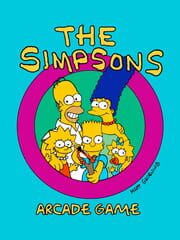
The Simpsons is basically a side-scrolling beat-em-up featuring the characters from The Simpsons TV show. The player can choose to play as each of the four Simpson characters. Homer, who punches and kicks; Marge, who swings her vacuum cleaner; Bart, who wields his skateboard; and Lisa, who uses a jump rope as a whip. Other weapons such as hammers and bowling balls are also available to use. The game's levels are Downtown Springfield, Krustyland, Springfield Discount Cemetery, Moe's Tavern, Springfield Gorge, Dreamland, the Channel 6 studio, and the Power Plant. Each level ends with a boss whose speed and strength will increase after taking a certain amount of damage. Between levels, the player can compete against the other characters in two mini-games to be first to complete a task (inflating a balloon and waking up their character).
58
/100
The Simpsons Arcade Game
The Simpsons is basically a side-scrolling beat-em-up featuring the characters from The Simpsons TV show. The player can choose to play as each of the four Simpson characters. Homer, who punches and kicks; Marge, who swings her vacuum cleaner; Bart, who wields his skateboard; and Lisa, who uses a jump rope as a whip. Other weapons such as hammers and bowling balls are also available to use. The game's levels are Downtown Springfield, Krustyland, Springfield Discount Cemetery, Moe's Tavern, Springfield Gorge, Dreamland, the Channel 6 studio, and the Power Plant. Each level ends with a boss whose speed and strength will increase after taking a certain amount of damage. Between levels, the player can compete against the other characters in two mini-games to be first to complete a task (inflating a balloon and waking up their character).
58
/100
Sunset Riders
Sunset Riders is a side-scrolling run and gun video game developed and released by Konami in 1991. It is set in the American Old West, where the players take control of bounty hunters who are seeking the rewards offered for various criminals. Each bad guy has a big reward on his head, and they're helped by hordes of bandits, gunslingers, and horse thieves, so pack loads of lead.
79
/100
05
Golden Axe II (1991)
The Lord of Darkness, Dark Guld, has arisen again. Wielding the famous Golden Axe, he has destroyed entire countries with his evil clan, forcing the world into chaos. Once again, three brave warriors stand up to face the oppressors, and won’t rest until the Golden Axe is returned to its rightful place.
77
/100
06
Streets of Rage
Streets of Rage is a side-scrolling beat 'em up video game developed and published by Sega in 1991 for Mega Drive/Genesis. It is the first installment of the Bare Knuckle/Streets of Rage series which was followed by Streets of Rage 2 and Streets of Rage 3.
76
/100
07
Alien Storm (1991)
Alien Storm is a side-scrolling beat 'em up. The game resembles Golden Axe, with a similar artistic style, three playable characters (a man, a woman, and a novelty character) and pick-up or power-up special attacks. The player (one player only on the Master System version, up to two players on the Mega Drive version, three on the arcade version) selects from the three different characters to embark upon a quest to save the Earth from an alien invasion. All of the Busters are playable from the beginning of the game. There are 6 missions to complete (8 in the Mega Drive version) with several stages, and each mission has the player blasting aliens, from the streets to the mother ship, where the mother of all aliens can be found. This task becomes increasingly difficult with each new mission, and the aliens are capable of hiding inside objects such as plants, postboxes, trashcans, drums, and other items. Each mission has an objective such as rescuing people or destroying an UFO. When dealing with a few aliens, flying heads will appear, which can be shot to collect life or energy. Energy is used specifically to power the energy based attacks of the player's weapon (such as flames or electricity) and to use the much more powerful special weapons. In a similar format as other early Sega arcade games, each character has unlimited usage of various short-range attacks, i.e. punches, kicks. Along with these standard attacks, each character has their own individual weapon (Garth's weapon that shoots lightning is replaced with a flame weapon in the Master System version). Special attacks are also included, and vary depending on the character chosen at the start of the game. For instance, Garth summons an U.S. Air Force starship that drops bombs across the street (in the Master System version he has Karen's special, a ballistic missile strike). Scooter will teleport out of his present location and leave a series of bombs that will blow up on the appearance of aliens, after which he will re-appear (in the Mega Drive version he just explodes, leaving his head, which his new body returns to retrieve). Karen calls down a nuclear missile, which incinerates every foe on the screen. However, a large amount of energy is depleted by using each character's special attack, and cannot be used if the energy of the player's character is too low. There are few bosses in the game. The arcade original only features a single boss that has three distinct forms. The Mega Drive port has two of these forms as two separate bosses. At the end of each mission, the side-scrolling gameplay shifts to either a shooting gallery perspective where the player must take out the aliens that pop out of various locations, similar to the bonus stages of Shinobi and Shadow Dancer, both also by Sega, or a running section that is similar to the side scrolling mode but plays like a horizontal shooter instead with projectile weapons.
68
/100
08
Captain America and The Avengers
Captain America and the Avengers is an arcade game released by Data East in 1991. It features the Marvel Comics characters The Avengers in a side-scrolling brawling and shooting adventure to defeat the evil Red Skull.
65
/100
09
The Simpsons Arcade Game
The Simpsons is basically a side-scrolling beat-em-up featuring the characters from The Simpsons TV show. The player can choose to play as each of the four Simpson characters. Homer, who punches and kicks; Marge, who swings her vacuum cleaner; Bart, who wields his skateboard; and Lisa, who uses a jump rope as a whip. Other weapons such as hammers and bowling balls are also available to use. The game's levels are Downtown Springfield, Krustyland, Springfield Discount Cemetery, Moe's Tavern, Springfield Gorge, Dreamland, the Channel 6 studio, and the Power Plant. Each level ends with a boss whose speed and strength will increase after taking a certain amount of damage. Between levels, the player can compete against the other characters in two mini-games to be first to complete a task (inflating a balloon and waking up their character).
58
/100
Frequently asked questions
What is the best Arcade game of 1991?
Sonic the Hedgehog currently tops the ranking with a score of 85/100 across 620 ratings. Ranking updated September 2026.
How is this ranking built?
Games are ranked on their aggregated critic score out of 100, with a minimum vote threshold so a single glowing review never outranks a proven classic; the Tier community's own F-to-S grades are shown alongside each game.