
Melhores jogos
Melhores jogos de RPG de 1998
Os 12 melhores jogos de RPG lançados em 1998, ordenados a partir de 4,320 avaliações da crítica e dos jogadores.
O melhor jogo de RPG de 1998 é The Legend of Zelda: Ocarina of Time, com uma pontuação da crítica de 92/100 — atualizado em setembro 2026.
Como é construído este ranking
- Os jogos são ordenados pela nota agregada da crítica em 100 importada do IGDB e do Metacritic, nunca pelas notas próprias do Tier.
- Um jogo só entra no ranking a partir de 30 avaliações externas, para que uma única crítica entusiasta nunca ultrapasse um clássico consagrado.
- Cada jogo é classificado num único género, o que melhor o define, para que o mesmo título nunca lidere dois rankings de géneros diferentes.
- As notas da comunidade, de F a S, aparecem ao lado de cada jogo e só são afirmadas como facto acima de 5 avaliações no Tier.
- Período de lançamento abrangido: 1998.
- 12 jogos aparecem nesta página, com 4,320 avaliações no total.
- Os rankings são recalculados de hora a hora; este foi reconstruído a 29 setembro 2026.
Top 12
01
 S
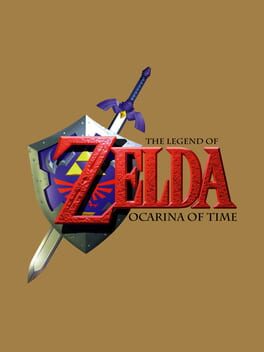
The Legend of Zelda: Ocarina of Time
The Legend of Zelda: Ocarina of Time is the fifth main installment of The Legend of Zelda series and the first to be released for the Nintendo 64. It was one of the most highly anticipated games of its age, and is listed among the greatest video games ever created by numerous websites and magazines. The gameplay of Ocarina of Time was revolutionary for its time, it has arguably made more of an impact on later games in the series than any of its predecessors even though they had the same cores of exploration, dungeons, puzzles and item usage. Among the gameplay mechanics, one of the most noteworthy is the time-traveling system. The game begins with the player controlling the child Link, but later on an adult Link becomes a playable character as well and each of them has certain unique abilities. Ocarina of Time also introduces the use of music to solve puzzles: as new songs are learned, they can be used to solve puzzles, gain access to new areas and warp to different locations. Dungeon exploration is somewhat more puzzle-oriented than in earlier games but they are not too complex.
92
/100
02
S
The Legend of Zelda: Ocarina of Time
The Legend of Zelda: Ocarina of Time is the fifth main installment of The Legend of Zelda series and the first to be released for the Nintendo 64. It was one of the most highly anticipated games of its age, and is listed among the greatest video games ever created by numerous websites and magazines. The gameplay of Ocarina of Time was revolutionary for its time, it has arguably made more of an impact on later games in the series than any of its predecessors even though they had the same cores of exploration, dungeons, puzzles and item usage. Among the gameplay mechanics, one of the most noteworthy is the time-traveling system. The game begins with the player controlling the child Link, but later on an adult Link becomes a playable character as well and each of them has certain unique abilities. Ocarina of Time also introduces the use of music to solve puzzles: as new songs are learned, they can be used to solve puzzles, gain access to new areas and warp to different locations. Dungeon exploration is somewhat more puzzle-oriented than in earlier games but they are not too complex.
92
/100
02
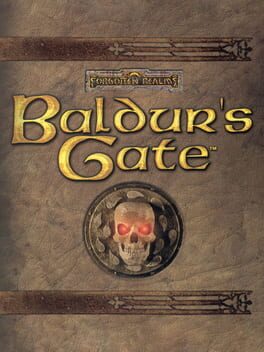 Baldur's Gate
 is a fantasy role-playing video game developed by BioWare and published in 1998 by Interplay Entertainment. It is the first game in the Baldur's Gate series and takes place in the Forgotten Realms, a high fantasy campaign setting, using a modified version of the Advanced Dungeons & Dragons (AD&D) 2nd edition rules. It was the first game to use the Infinity Engine for its graphics, with Interplay using the engine for other Forgotten Realms-licensed games, including the Icewind Dale series, as well as other licensed D&D campaign worlds such as Planescape: Torment. The game's story focuses on players controlling a protagonist of their own creation who finds themselves travelling across the Sword Coast alongside a party of companions, to unravel the mystery surrounding a sudden iron crisis affecting the region and attempting to discover the culprits behind it, all while uncovering dark secrets about their origins and dealing with attempts on their life.
91
/100
03
Baldur's Gate
Baldur's Gate is a fantasy role-playing video game developed by BioWare and published in 1998 by Interplay Entertainment. It is the first game in the Baldur's Gate series and takes place in the Forgotten Realms, a high fantasy campaign setting, using a modified version of the Advanced Dungeons & Dragons (AD&D) 2nd edition rules. It was the first game to use the Infinity Engine for its graphics, with Interplay using the engine for other Forgotten Realms-licensed games, including the Icewind Dale series, as well as other licensed D&D campaign worlds such as Planescape: Torment. The game's story focuses on players controlling a protagonist of their own creation who finds themselves travelling across the Sword Coast alongside a party of companions, to unravel the mystery surrounding a sudden iron crisis affecting the region and attempting to discover the culprits behind it, all while uncovering dark secrets about their origins and dealing with attempts on their life.
91
/100
03
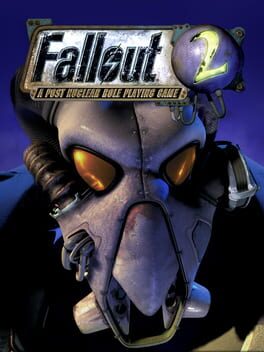 Fallout 2
A turn-based tactical Western RPG in which the Chosen One is tasked with exploring post-nuclear California to locate and retrieve the fabled Garden of Eden Creation Kit for their famine-stricken tribe, while coming into contact through branching dialogue trees with numerous tribes, factions and micro-civilizations, each with their own virtues, vices, socioeconomic situations and political agendas.
89
/100
Fallout 2
A turn-based tactical Western RPG in which the Chosen One is tasked with exploring post-nuclear California to locate and retrieve the fabled Garden of Eden Creation Kit for their famine-stricken tribe, while coming into contact through branching dialogue trees with numerous tribes, factions and micro-civilizations, each with their own virtues, vices, socioeconomic situations and political agendas.
89
/100
S
The Legend of Zelda: Ocarina of Time
The Legend of Zelda: Ocarina of Time is the fifth main installment of The Legend of Zelda series and the first to be released for the Nintendo 64. It was one of the most highly anticipated games of its age, and is listed among the greatest video games ever created by numerous websites and magazines. The gameplay of Ocarina of Time was revolutionary for its time, it has arguably made more of an impact on later games in the series than any of its predecessors even though they had the same cores of exploration, dungeons, puzzles and item usage. Among the gameplay mechanics, one of the most noteworthy is the time-traveling system. The game begins with the player controlling the child Link, but later on an adult Link becomes a playable character as well and each of them has certain unique abilities. Ocarina of Time also introduces the use of music to solve puzzles: as new songs are learned, they can be used to solve puzzles, gain access to new areas and warp to different locations. Dungeon exploration is somewhat more puzzle-oriented than in earlier games but they are not too complex.
92
/100
02
Baldur's Gate
Baldur's Gate is a fantasy role-playing video game developed by BioWare and published in 1998 by Interplay Entertainment. It is the first game in the Baldur's Gate series and takes place in the Forgotten Realms, a high fantasy campaign setting, using a modified version of the Advanced Dungeons & Dragons (AD&D) 2nd edition rules. It was the first game to use the Infinity Engine for its graphics, with Interplay using the engine for other Forgotten Realms-licensed games, including the Icewind Dale series, as well as other licensed D&D campaign worlds such as Planescape: Torment. The game's story focuses on players controlling a protagonist of their own creation who finds themselves travelling across the Sword Coast alongside a party of companions, to unravel the mystery surrounding a sudden iron crisis affecting the region and attempting to discover the culprits behind it, all while uncovering dark secrets about their origins and dealing with attempts on their life.
91
/100
03
Fallout 2
A turn-based tactical Western RPG in which the Chosen One is tasked with exploring post-nuclear California to locate and retrieve the fabled Garden of Eden Creation Kit for their famine-stricken tribe, while coming into contact through branching dialogue trees with numerous tribes, factions and micro-civilizations, each with their own virtues, vices, socioeconomic situations and political agendas.
89
/100
04
 Xenogears (1998)
Xenogears Blends Authentic RPG Gameplay with Exquisite Hand-Drawn and Computer-Generated Animation in a Grand Science Fiction Tale. An intricate storyline involving many human and non-human characters will prove to captivate audiences of all ages. Players can rotate the amazingly detailed 3D gameplay maps 360 degrees, and have the ability to navigate around the environment by jumping and climbing. In battle, mega-robots can be controlled, adding great variety to play. A new real-time combat system eliminates restrictive menus, using button commands to provide fast-paced, intuitive action. Players can wield dramatic magical spells or engage in real-time polygonal robot vs. robot battles. Combined with dynamic camera angles and intense lighting effects, Xenogears is an experience that won't be forgotten.
84
/100
05
Xenogears (1998)
Xenogears Blends Authentic RPG Gameplay with Exquisite Hand-Drawn and Computer-Generated Animation in a Grand Science Fiction Tale. An intricate storyline involving many human and non-human characters will prove to captivate audiences of all ages. Players can rotate the amazingly detailed 3D gameplay maps 360 degrees, and have the ability to navigate around the environment by jumping and climbing. In battle, mega-robots can be controlled, adding great variety to play. A new real-time combat system eliminates restrictive menus, using button commands to provide fast-paced, intuitive action. Players can wield dramatic magical spells or engage in real-time polygonal robot vs. robot battles. Combined with dynamic camera angles and intense lighting effects, Xenogears is an experience that won't be forgotten.
84
/100
05
 S
Might and Magic VI: The Mandate of Heaven
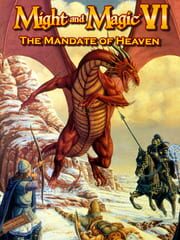
The Ironfist Dynasty is tottering on the brink of ruin. As endless calamities plague the kingdom of Enroth, evil doomsday cultists plan to overthrow child Prince Nicolai and claim the throne for their charismatic leader. Fear grips the land and the people wonder if their sovereign has lost the Mandate of Heaven - the divine right to rule. The enemies of reason are at the gate and only extraordinary heroes can stem the tide of darkness. Will you answer the call? From the depths of the deepest dungeons, to the intrigues of the royal court, you will lead a band of adventurers on a dangerous journey of amazing depth and intelligence. With a completely new 3D graphics engine and a non-linear adventure system, Might and Magic VI: The Mandate of Heaven brings a unique role-playing experience to life.
87
/100
06
S
Might and Magic VI: The Mandate of Heaven
The Ironfist Dynasty is tottering on the brink of ruin. As endless calamities plague the kingdom of Enroth, evil doomsday cultists plan to overthrow child Prince Nicolai and claim the throne for their charismatic leader. Fear grips the land and the people wonder if their sovereign has lost the Mandate of Heaven - the divine right to rule. The enemies of reason are at the gate and only extraordinary heroes can stem the tide of darkness. Will you answer the call? From the depths of the deepest dungeons, to the intrigues of the royal court, you will lead a band of adventurers on a dangerous journey of amazing depth and intelligence. With a completely new 3D graphics engine and a non-linear adventure system, Might and Magic VI: The Mandate of Heaven brings a unique role-playing experience to life.
87
/100
06
 The Adventures of Alundra
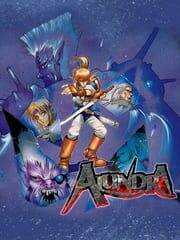
Between the worlds of light and dark lies the world of dreams. A world where the rule of reason loosens its grip. A place where an insidious evil is stealing minds and blackening the hearts of those from the world of light. Grab a weapon and become the dreamwalker Alundra as he struggles to purge the evil Id of an ancient world before it falls to ash. Explore dungeons, find weapons, solve challenging puzzles, and kick some serious monster butt as you weave between tense reality and nightmarish dreams to save the hapless masses. With a wide cast of characters and scores of challenging puzzles created by the people responsible for Landstalker on the Genesis. Alundra will rob you of precious sleep until you finish!
86
/100
07
The Adventures of Alundra
Between the worlds of light and dark lies the world of dreams. A world where the rule of reason loosens its grip. A place where an insidious evil is stealing minds and blackening the hearts of those from the world of light. Grab a weapon and become the dreamwalker Alundra as he struggles to purge the evil Id of an ancient world before it falls to ash. Explore dungeons, find weapons, solve challenging puzzles, and kick some serious monster butt as you weave between tense reality and nightmarish dreams to save the hapless masses. With a wide cast of characters and scores of challenging puzzles created by the people responsible for Landstalker on the Genesis. Alundra will rob you of precious sleep until you finish!
86
/100
07
 Suikoden II
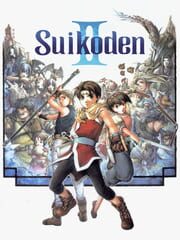
 is a role-playing game developed and published by Konami for the PlayStation. Set in a world of warring nations, the game follows a silent protagonist caught between the Kingdom of Highland and the City-States of Jowston. Gameplay combines turn-based party combat, one-on-one duels, and grid-based strategic army battles. Players can recruit over 100 characters, many of whom join the party or contribute to a home base that expands throughout the game. Save data from the original Suikoden can be imported to carry over certain characters and story details.
82
/100
08
Suikoden II
Suikoden II is a role-playing game developed and published by Konami for the PlayStation. Set in a world of warring nations, the game follows a silent protagonist caught between the Kingdom of Highland and the City-States of Jowston. Gameplay combines turn-based party combat, one-on-one duels, and grid-based strategic army battles. Players can recruit over 100 characters, many of whom join the party or contribute to a home base that expands throughout the game. Save data from the original Suikoden can be imported to carry over certain characters and story details.
82
/100
08
 Parasite Eve
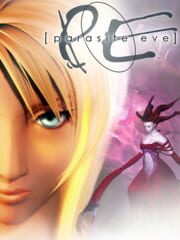
 is a survival horror role-playing video game developed and published by SquareSoft (now Square Enix) for the Sony PlayStation console. The game follows the story of Aya Brea, a rookie NYPD officer who becomes embroiled in a series of bizarre and deadly events related to a genetic mutation known as mitochondria. The game combines elements of horror, science fiction, and RPG gameplay, featuring real-time battles, exploration, puzzle-solving, and character development. The game's plot is inspired by the novel of the same name by Hideaki Sena, and its gameplay mechanics were influenced by the Final Fantasy series. Parasite Eve was critically acclaimed upon its release in 1998, and is widely regarded as a classic of the survival horror genre.
81
/100
09
Parasite Eve
Parasite Eve is a survival horror role-playing video game developed and published by SquareSoft (now Square Enix) for the Sony PlayStation console. The game follows the story of Aya Brea, a rookie NYPD officer who becomes embroiled in a series of bizarre and deadly events related to a genetic mutation known as mitochondria. The game combines elements of horror, science fiction, and RPG gameplay, featuring real-time battles, exploration, puzzle-solving, and character development. The game's plot is inspired by the novel of the same name by Hideaki Sena, and its gameplay mechanics were influenced by the Final Fantasy series. Parasite Eve was critically acclaimed upon its release in 1998, and is widely regarded as a classic of the survival horror genre.
81
/100
09
 Pokémon Yellow Version: Special Pikachu Edition
Pokémon Yellow is an enhanced version of Pokémon Red and Blue that allows you to start the game with your very own Pikachu following you around on-foot and collect the 3 other starters from strangers you meet around the region. However, your goal remains the same: catch them all and become the ultimate Pokémon Master.
80
/100
10
Pokémon Yellow Version: Special Pikachu Edition
Pokémon Yellow is an enhanced version of Pokémon Red and Blue that allows you to start the game with your very own Pikachu following you around on-foot and collect the 3 other starters from strangers you meet around the region. However, your goal remains the same: catch them all and become the ultimate Pokémon Master.
80
/100
10
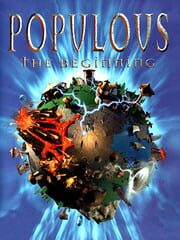 Populous: The Beginning
 is a strategy and god-style video game. It is the third entry in the Populous video game series, developed by Bullfrog Productions in 1998. The PC version of the game was released November 30, 1998 and a PlayStation version was later developed and released on April 2, 1999. Unlike earlier games in the series, which cast the player in the role of a god influencing loyal followers, The Beginning took a radical departure and placed the player in the role of a shaman, who directly leads her tribe against opponents. Throughout the twenty-five missions of the campaign, the player leads their tribe across a solar system, dominating enemy tribes and tapping new sources of magic, with the ultimate goal of the shaman attaining godhood herself. Populous: The Beginning was the first entry in the series to use true 3D computer graphics; Bullfrog waited four years after Populous II: Trials of the Olympian Gods so that the graphics technology could catch up to their vision for a new and different game in the series. The developers considered the addition of terrain deformation and manipulation, combined with "smart" villagers who automatically attended to tasks, to add an entirely new dimension to the series. The game's original title was Populous: The Third Coming before being changed prior to the beta release. Populous: The Beginning plays very differently from earlier titles and received mixed reviews. Reviewers positively noted the excellent graphics, while complaints were directed at the artificial intelligence and the indecision in game design between being a real time strategy title and a god game. GamePro's Peter Olafson wrote that Populous: The Beginning was not a bad game, in fact a good one; "but it's a different game—one without a quintessential quality that defined Populous."
75
/100
11
Populous: The Beginning
Populous: The Beginning is a strategy and god-style video game. It is the third entry in the Populous video game series, developed by Bullfrog Productions in 1998. The PC version of the game was released November 30, 1998 and a PlayStation version was later developed and released on April 2, 1999. Unlike earlier games in the series, which cast the player in the role of a god influencing loyal followers, The Beginning took a radical departure and placed the player in the role of a shaman, who directly leads her tribe against opponents. Throughout the twenty-five missions of the campaign, the player leads their tribe across a solar system, dominating enemy tribes and tapping new sources of magic, with the ultimate goal of the shaman attaining godhood herself. Populous: The Beginning was the first entry in the series to use true 3D computer graphics; Bullfrog waited four years after Populous II: Trials of the Olympian Gods so that the graphics technology could catch up to their vision for a new and different game in the series. The developers considered the addition of terrain deformation and manipulation, combined with "smart" villagers who automatically attended to tasks, to add an entirely new dimension to the series. The game's original title was Populous: The Third Coming before being changed prior to the beta release. Populous: The Beginning plays very differently from earlier titles and received mixed reviews. Reviewers positively noted the excellent graphics, while complaints were directed at the artificial intelligence and the indecision in game design between being a real time strategy title and a god game. GamePro's Peter Olafson wrote that Populous: The Beginning was not a bad game, in fact a good one; "but it's a different game—one without a quintessential quality that defined Populous."
75
/100
11
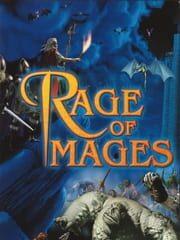 Rage of Mages
61
/100
12
Rage of Mages
61
/100
12
 Sonic Adventure
55
/100
Sonic Adventure
55
/100
Xenogears (1998)
Xenogears Blends Authentic RPG Gameplay with Exquisite Hand-Drawn and Computer-Generated Animation in a Grand Science Fiction Tale. An intricate storyline involving many human and non-human characters will prove to captivate audiences of all ages. Players can rotate the amazingly detailed 3D gameplay maps 360 degrees, and have the ability to navigate around the environment by jumping and climbing. In battle, mega-robots can be controlled, adding great variety to play. A new real-time combat system eliminates restrictive menus, using button commands to provide fast-paced, intuitive action. Players can wield dramatic magical spells or engage in real-time polygonal robot vs. robot battles. Combined with dynamic camera angles and intense lighting effects, Xenogears is an experience that won't be forgotten.
84
/100
05
S
Might and Magic VI: The Mandate of Heaven
The Ironfist Dynasty is tottering on the brink of ruin. As endless calamities plague the kingdom of Enroth, evil doomsday cultists plan to overthrow child Prince Nicolai and claim the throne for their charismatic leader. Fear grips the land and the people wonder if their sovereign has lost the Mandate of Heaven - the divine right to rule. The enemies of reason are at the gate and only extraordinary heroes can stem the tide of darkness. Will you answer the call? From the depths of the deepest dungeons, to the intrigues of the royal court, you will lead a band of adventurers on a dangerous journey of amazing depth and intelligence. With a completely new 3D graphics engine and a non-linear adventure system, Might and Magic VI: The Mandate of Heaven brings a unique role-playing experience to life.
87
/100
06
The Adventures of Alundra
Between the worlds of light and dark lies the world of dreams. A world where the rule of reason loosens its grip. A place where an insidious evil is stealing minds and blackening the hearts of those from the world of light. Grab a weapon and become the dreamwalker Alundra as he struggles to purge the evil Id of an ancient world before it falls to ash. Explore dungeons, find weapons, solve challenging puzzles, and kick some serious monster butt as you weave between tense reality and nightmarish dreams to save the hapless masses. With a wide cast of characters and scores of challenging puzzles created by the people responsible for Landstalker on the Genesis. Alundra will rob you of precious sleep until you finish!
86
/100
07
Suikoden II
Suikoden II is a role-playing game developed and published by Konami for the PlayStation. Set in a world of warring nations, the game follows a silent protagonist caught between the Kingdom of Highland and the City-States of Jowston. Gameplay combines turn-based party combat, one-on-one duels, and grid-based strategic army battles. Players can recruit over 100 characters, many of whom join the party or contribute to a home base that expands throughout the game. Save data from the original Suikoden can be imported to carry over certain characters and story details.
82
/100
08
Parasite Eve
Parasite Eve is a survival horror role-playing video game developed and published by SquareSoft (now Square Enix) for the Sony PlayStation console. The game follows the story of Aya Brea, a rookie NYPD officer who becomes embroiled in a series of bizarre and deadly events related to a genetic mutation known as mitochondria. The game combines elements of horror, science fiction, and RPG gameplay, featuring real-time battles, exploration, puzzle-solving, and character development. The game's plot is inspired by the novel of the same name by Hideaki Sena, and its gameplay mechanics were influenced by the Final Fantasy series. Parasite Eve was critically acclaimed upon its release in 1998, and is widely regarded as a classic of the survival horror genre.
81
/100
09
Pokémon Yellow Version: Special Pikachu Edition
Pokémon Yellow is an enhanced version of Pokémon Red and Blue that allows you to start the game with your very own Pikachu following you around on-foot and collect the 3 other starters from strangers you meet around the region. However, your goal remains the same: catch them all and become the ultimate Pokémon Master.
80
/100
10
Populous: The Beginning
Populous: The Beginning is a strategy and god-style video game. It is the third entry in the Populous video game series, developed by Bullfrog Productions in 1998. The PC version of the game was released November 30, 1998 and a PlayStation version was later developed and released on April 2, 1999. Unlike earlier games in the series, which cast the player in the role of a god influencing loyal followers, The Beginning took a radical departure and placed the player in the role of a shaman, who directly leads her tribe against opponents. Throughout the twenty-five missions of the campaign, the player leads their tribe across a solar system, dominating enemy tribes and tapping new sources of magic, with the ultimate goal of the shaman attaining godhood herself. Populous: The Beginning was the first entry in the series to use true 3D computer graphics; Bullfrog waited four years after Populous II: Trials of the Olympian Gods so that the graphics technology could catch up to their vision for a new and different game in the series. The developers considered the addition of terrain deformation and manipulation, combined with "smart" villagers who automatically attended to tasks, to add an entirely new dimension to the series. The game's original title was Populous: The Third Coming before being changed prior to the beta release. Populous: The Beginning plays very differently from earlier titles and received mixed reviews. Reviewers positively noted the excellent graphics, while complaints were directed at the artificial intelligence and the indecision in game design between being a real time strategy title and a god game. GamePro's Peter Olafson wrote that Populous: The Beginning was not a bad game, in fact a good one; "but it's a different game—one without a quintessential quality that defined Populous."
75
/100
11
Rage of Mages
61
/100
12
Sonic Adventure
55
/100
Frequently asked questions
Qual é o melhor jogo de RPG de 1998?
The Legend of Zelda: Ocarina of Time lidera atualmente a classificação com uma pontuação de 92/100 em 2,084 avaliações. Classificação atualizada em setembro 2026.
Como é construída esta classificação?
Os jogos são ordenados pela pontuação agregada da crítica em 100, com um limiar mínimo de votos para que uma única crítica entusiasta nunca ultrapasse um clássico consagrado; os grades de F a S da comunidade Tier são apresentados ao lado de cada jogo.