
Best games
Best Amiga games of 1988
The 8 best Amiga games released in 1988, ranked from 557 critic and player ratings.
The best Amiga game of 1988 is Wasteland, with a critic score of 100/100 — updated September 2026.
How this ranking is built
- Games are ranked on the aggregated critic score out of 100 imported from IGDB and Metacritic, never on Tier's own grades.
- A game only enters the ranking with at least 30 external ratings, so a single enthusiastic review never outranks a proven classic.
- Community grades from F to S are shown next to every game, and only stated as a fact above 5 Tier ratings.
- Release window covered: 1988.
- 8 games are listed on this page, carrying 557 ratings between them.
- Rankings are recomputed hourly; this one was last rebuilt on 29 September 2026.
Top 8
01
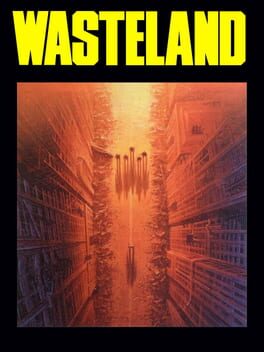 Wasteland
The game mechanics were based directly on those used in the tabletop role-playing games Tunnels and Trolls and Mercenaries, Spies and Private Eyes created by Wasteland developers Ken St. Andre and Michael Stackpole. Characters in Wasteland consequently have various statistics (strength, intelligence and luck among others) that allow them to use different skills and weapons. Experience is gained through battle and through use of skills. The game would generally let players advance with a variety of tactics: to get through a locked gate, a player could use his picklock skill, his climb skill, or his strength attribute; or he could force the gate with a crowbar - or a LAW rocket. The initial band of Desert Rangers encountered a number of NPCs as the game progressed who could be recruited into the party of up to seven. Unlike those of other computer RPGs of the time, these NPCs might temporarily refuse to give up an item or perform an action if ordered to do so. The game was also noted for its high and unforgiving difficulty level and for such combat prose as "reduced to a thin red paste" and "explodes like a blood sausage", which prompted an unofficial PG-13 sticker on the game packaging in the United States. Wasteland was one of the first games featuring a persistent world, where changes to the game world were stored and kept. Returning to areas later in the game, one would find them in the state one left them in, instead of being reset to their original state, as was common for games of the time. Since hard drives were still rare in home computers in 1988, this meant the original game disk had to be copied first, as the manual instructed one to do.
100
/100
02
Wasteland
The game mechanics were based directly on those used in the tabletop role-playing games Tunnels and Trolls and Mercenaries, Spies and Private Eyes created by Wasteland developers Ken St. Andre and Michael Stackpole. Characters in Wasteland consequently have various statistics (strength, intelligence and luck among others) that allow them to use different skills and weapons. Experience is gained through battle and through use of skills. The game would generally let players advance with a variety of tactics: to get through a locked gate, a player could use his picklock skill, his climb skill, or his strength attribute; or he could force the gate with a crowbar - or a LAW rocket. The initial band of Desert Rangers encountered a number of NPCs as the game progressed who could be recruited into the party of up to seven. Unlike those of other computer RPGs of the time, these NPCs might temporarily refuse to give up an item or perform an action if ordered to do so. The game was also noted for its high and unforgiving difficulty level and for such combat prose as "reduced to a thin red paste" and "explodes like a blood sausage", which prompted an unofficial PG-13 sticker on the game packaging in the United States. Wasteland was one of the first games featuring a persistent world, where changes to the game world were stored and kept. Returning to areas later in the game, one would find them in the state one left them in, instead of being reset to their original state, as was common for games of the time. Since hard drives were still rare in home computers in 1988, this meant the original game disk had to be copied first, as the manual instructed one to do.
100
/100
02
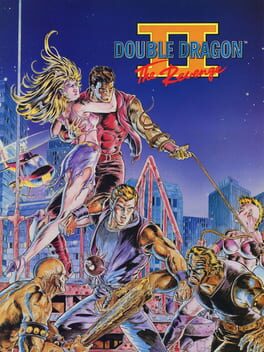 Double Dragon II: The Revenge
The original arcade version of "Double Dragon II" is essentially an improved version of the first game. The biggest change in the game's controls are in the replacement of the original's punch and kick buttons with two directional-based attack buttons (Left Attack and Right Attack) similar to Renegade. Pressing the attack button of the player's current direction will do a standard series of punches, while pressing the opposite attack button will perform a back kick. A few new moves are added as well, including a Hurricane Kick. Like in the original game, the arcade version of Double Dragon II is divided into four missions: a heliport, a lumber storehouse, a wheat field, and the new hideout of the boss. Each stage has its own boss character with his own theme. After defeating Willy (the final boss from the original game) in the fourth stage, the player will confront a double of their own character for the game's final battle. If two players reach the end together, then both will each to have to face their own clone for the final battle.
78
/100
03
Double Dragon II: The Revenge
The original arcade version of "Double Dragon II" is essentially an improved version of the first game. The biggest change in the game's controls are in the replacement of the original's punch and kick buttons with two directional-based attack buttons (Left Attack and Right Attack) similar to Renegade. Pressing the attack button of the player's current direction will do a standard series of punches, while pressing the opposite attack button will perform a back kick. A few new moves are added as well, including a Hurricane Kick. Like in the original game, the arcade version of Double Dragon II is divided into four missions: a heliport, a lumber storehouse, a wheat field, and the new hideout of the boss. Each stage has its own boss character with his own theme. After defeating Willy (the final boss from the original game) in the fourth stage, the player will confront a double of their own character for the game's final battle. If two players reach the end together, then both will each to have to face their own clone for the final battle.
78
/100
03
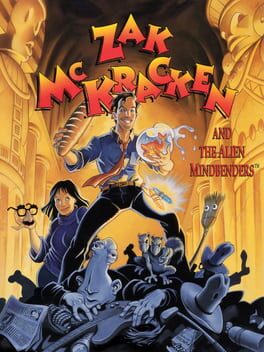 Zak McKracken and the Alien Mindbenders
Zak McKracken is a tabloid reporter (and not a very good one at that). After having a psychedelic dream one day, Zak realizes that something is wrong -- space aliens are dumbifying the general public through the telephone system. Zak must stop this, but he can't do it alone. After finding a strange crystal, Zak manages to get the help of the anthropologist Annie and her friends, Melissa and Leslie. The four unlikely heroes must now figure out a way to destroy the dumbifying devices and save the Earth. Zak McKracken and the Alien Mindbenders is a third-person puzzle-solving adventure similar in gameplay to Lucasfilm's breakthrough title Maniac Mansion. The player chooses verb commands (Open, Pick Up, Give, etc.; there are no Look or Talk commands) to interact with the game world. The game features up to four controllable protagonists; it is possible to switch between them at any time after they have been introduced, and also exchange inventory items if the characters are in the same location. The game can be described as a "globe-trotting" adventure, since the heroes are required to travel to different exotic countries and even leave the Earth for a while in order to complete it. Some of the puzzles are optional or can be solved in different ways. The FM Towns version has VGA graphics with 256 colors and higher-quality music and sound effects.
73
/100
Zak McKracken and the Alien Mindbenders
Zak McKracken is a tabloid reporter (and not a very good one at that). After having a psychedelic dream one day, Zak realizes that something is wrong -- space aliens are dumbifying the general public through the telephone system. Zak must stop this, but he can't do it alone. After finding a strange crystal, Zak manages to get the help of the anthropologist Annie and her friends, Melissa and Leslie. The four unlikely heroes must now figure out a way to destroy the dumbifying devices and save the Earth. Zak McKracken and the Alien Mindbenders is a third-person puzzle-solving adventure similar in gameplay to Lucasfilm's breakthrough title Maniac Mansion. The player chooses verb commands (Open, Pick Up, Give, etc.; there are no Look or Talk commands) to interact with the game world. The game features up to four controllable protagonists; it is possible to switch between them at any time after they have been introduced, and also exchange inventory items if the characters are in the same location. The game can be described as a "globe-trotting" adventure, since the heroes are required to travel to different exotic countries and even leave the Earth for a while in order to complete it. Some of the puzzles are optional or can be solved in different ways. The FM Towns version has VGA graphics with 256 colors and higher-quality music and sound effects.
73
/100
Wasteland
The game mechanics were based directly on those used in the tabletop role-playing games Tunnels and Trolls and Mercenaries, Spies and Private Eyes created by Wasteland developers Ken St. Andre and Michael Stackpole. Characters in Wasteland consequently have various statistics (strength, intelligence and luck among others) that allow them to use different skills and weapons. Experience is gained through battle and through use of skills. The game would generally let players advance with a variety of tactics: to get through a locked gate, a player could use his picklock skill, his climb skill, or his strength attribute; or he could force the gate with a crowbar - or a LAW rocket. The initial band of Desert Rangers encountered a number of NPCs as the game progressed who could be recruited into the party of up to seven. Unlike those of other computer RPGs of the time, these NPCs might temporarily refuse to give up an item or perform an action if ordered to do so. The game was also noted for its high and unforgiving difficulty level and for such combat prose as "reduced to a thin red paste" and "explodes like a blood sausage", which prompted an unofficial PG-13 sticker on the game packaging in the United States. Wasteland was one of the first games featuring a persistent world, where changes to the game world were stored and kept. Returning to areas later in the game, one would find them in the state one left them in, instead of being reset to their original state, as was common for games of the time. Since hard drives were still rare in home computers in 1988, this meant the original game disk had to be copied first, as the manual instructed one to do.
100
/100
02
Double Dragon II: The Revenge
The original arcade version of "Double Dragon II" is essentially an improved version of the first game. The biggest change in the game's controls are in the replacement of the original's punch and kick buttons with two directional-based attack buttons (Left Attack and Right Attack) similar to Renegade. Pressing the attack button of the player's current direction will do a standard series of punches, while pressing the opposite attack button will perform a back kick. A few new moves are added as well, including a Hurricane Kick. Like in the original game, the arcade version of Double Dragon II is divided into four missions: a heliport, a lumber storehouse, a wheat field, and the new hideout of the boss. Each stage has its own boss character with his own theme. After defeating Willy (the final boss from the original game) in the fourth stage, the player will confront a double of their own character for the game's final battle. If two players reach the end together, then both will each to have to face their own clone for the final battle.
78
/100
03
Zak McKracken and the Alien Mindbenders
Zak McKracken is a tabloid reporter (and not a very good one at that). After having a psychedelic dream one day, Zak realizes that something is wrong -- space aliens are dumbifying the general public through the telephone system. Zak must stop this, but he can't do it alone. After finding a strange crystal, Zak manages to get the help of the anthropologist Annie and her friends, Melissa and Leslie. The four unlikely heroes must now figure out a way to destroy the dumbifying devices and save the Earth. Zak McKracken and the Alien Mindbenders is a third-person puzzle-solving adventure similar in gameplay to Lucasfilm's breakthrough title Maniac Mansion. The player chooses verb commands (Open, Pick Up, Give, etc.; there are no Look or Talk commands) to interact with the game world. The game features up to four controllable protagonists; it is possible to switch between them at any time after they have been introduced, and also exchange inventory items if the characters are in the same location. The game can be described as a "globe-trotting" adventure, since the heroes are required to travel to different exotic countries and even leave the Earth for a while in order to complete it. Some of the puzzles are optional or can be solved in different ways. The FM Towns version has VGA graphics with 256 colors and higher-quality music and sound effects.
73
/100
04
 Battle Chess
 was developed by Interplay as their first project after severing ties with Electronic Arts. They designed it for the Amiga in 1988, and it was released on the majority of the other systems in the late 1980s and early 1990s as well. It was widely successful, and resulted in two follow-ups, many copy-cat games, and a remake for Steam on PC. The only significant criticism the game received was the weak chess AI, as it was not until the mid 1990s that chess ai began to consistently win against strong opponents.
71
/100
05
Battle Chess
Battle Chess was developed by Interplay as their first project after severing ties with Electronic Arts. They designed it for the Amiga in 1988, and it was released on the majority of the other systems in the late 1980s and early 1990s as well. It was widely successful, and resulted in two follow-ups, many copy-cat games, and a remake for Steam on PC. The only significant criticism the game received was the weak chess AI, as it was not until the mid 1990s that chess ai began to consistently win against strong opponents.
71
/100
05
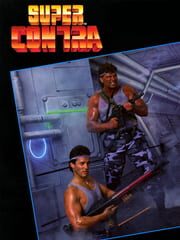 Super Contra (1988)
Super Contra is a Run and Gun-style action game produced by Konami, originally released as a coin-operated arcade game in 1988. It is the sequel to the original Contra and the second game in the Contra series released for the arcades. Like in the original game, the game centers on soldiers Bill Rizer and Lance Bean, who are once again assigned to protect the Earth from an army of alien invaders. The game features standard side-scrolling stages, as well as all new overhead stages in lieu of the original game's "3D" stages.
61
/100
06
Super Contra (1988)
Super Contra is a Run and Gun-style action game produced by Konami, originally released as a coin-operated arcade game in 1988. It is the sequel to the original Contra and the second game in the Contra series released for the arcades. Like in the original game, the game centers on soldiers Bill Rizer and Lance Bean, who are once again assigned to protect the Earth from an army of alien invaders. The game features standard side-scrolling stages, as well as all new overhead stages in lieu of the original game's "3D" stages.
61
/100
06
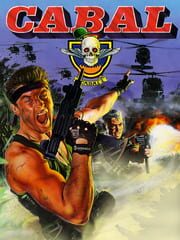 Cabal
Originating in the arcades, Cabal is a shooter where the protagonist runs back and forth along the bottom of the screen, ducking and dodging bullets and grenades from the enemy. The roll maneuver from the arcade was not implemented in the PC version. The player returns fire by moving a target around the screen which also moves the player character and may expose him to enemy fire.
54
/100
07
Cabal
Originating in the arcades, Cabal is a shooter where the protagonist runs back and forth along the bottom of the screen, ducking and dodging bullets and grenades from the enemy. The roll maneuver from the arcade was not implemented in the PC version. The player returns fire by moving a target around the screen which also moves the player character and may expose him to enemy fire.
54
/100
07
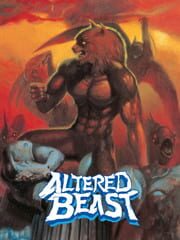 Altered Beast
The Sega Genesis/Mega Drive has different enemy layouts and input mechanics from the original arcade version.
50
/100
08
Altered Beast
The Sega Genesis/Mega Drive has different enemy layouts and input mechanics from the original arcade version.
50
/100
08
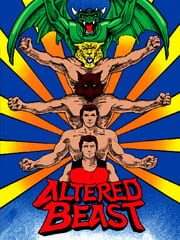 Altered Beast
 is a 1988 beat 'em up video game developed by Team Shinobi and published by Sega for arcades. Set in Ancient Greece, the game follows a Roman centurion who is resurrected by the Olympian god Zeus to rescue his daughter Athena from Neff, the demonic ruler of the underworld. By collecting three power-ups in a level, the player character can transform into one of five mythical beasts. In the original arcade, the end credits are interspersed with images of actors in costumes for the different characters and monsters of the game, implying the whole game was a film production.
45
/100
Altered Beast
Altered Beast is a 1988 beat 'em up video game developed by Team Shinobi and published by Sega for arcades. Set in Ancient Greece, the game follows a Roman centurion who is resurrected by the Olympian god Zeus to rescue his daughter Athena from Neff, the demonic ruler of the underworld. By collecting three power-ups in a level, the player character can transform into one of five mythical beasts. In the original arcade, the end credits are interspersed with images of actors in costumes for the different characters and monsters of the game, implying the whole game was a film production.
45
/100
Battle Chess
Battle Chess was developed by Interplay as their first project after severing ties with Electronic Arts. They designed it for the Amiga in 1988, and it was released on the majority of the other systems in the late 1980s and early 1990s as well. It was widely successful, and resulted in two follow-ups, many copy-cat games, and a remake for Steam on PC. The only significant criticism the game received was the weak chess AI, as it was not until the mid 1990s that chess ai began to consistently win against strong opponents.
71
/100
05
Super Contra (1988)
Super Contra is a Run and Gun-style action game produced by Konami, originally released as a coin-operated arcade game in 1988. It is the sequel to the original Contra and the second game in the Contra series released for the arcades. Like in the original game, the game centers on soldiers Bill Rizer and Lance Bean, who are once again assigned to protect the Earth from an army of alien invaders. The game features standard side-scrolling stages, as well as all new overhead stages in lieu of the original game's "3D" stages.
61
/100
06
Cabal
Originating in the arcades, Cabal is a shooter where the protagonist runs back and forth along the bottom of the screen, ducking and dodging bullets and grenades from the enemy. The roll maneuver from the arcade was not implemented in the PC version. The player returns fire by moving a target around the screen which also moves the player character and may expose him to enemy fire.
54
/100
07
Altered Beast
The Sega Genesis/Mega Drive has different enemy layouts and input mechanics from the original arcade version.
50
/100
08
Altered Beast
Altered Beast is a 1988 beat 'em up video game developed by Team Shinobi and published by Sega for arcades. Set in Ancient Greece, the game follows a Roman centurion who is resurrected by the Olympian god Zeus to rescue his daughter Athena from Neff, the demonic ruler of the underworld. By collecting three power-ups in a level, the player character can transform into one of five mythical beasts. In the original arcade, the end credits are interspersed with images of actors in costumes for the different characters and monsters of the game, implying the whole game was a film production.
45
/100
Frequently asked questions
What is the best Amiga game of 1988?
Wasteland currently tops the ranking with a score of 100/100 across 128 ratings. Ranking updated September 2026.
How is this ranking built?
Games are ranked on their aggregated critic score out of 100, with a minimum vote threshold so a single glowing review never outranks a proven classic; the Tier community's own F-to-S grades are shown alongside each game.