
Bästa spel
Bästa RPG-spelen på NES
De 11 bästa RPG-spelen på NES, rankade utifrån 1,534 betyg från kritiker och spelare.
Det bästa RPG-spelet på NES just nu är Ultima IV: Quest of the Avatar, med ett kritikerbetyg på 88/100 — uppdaterat september 2026.
Så byggs den här rankningen
- Spelen rankas efter det aggregerade kritikerbetyget av 100 som importeras från IGDB och Metacritic, aldrig efter Tiers egna betyg.
- Ett spel kommer in i rankningen först vid minst 30 externa betyg, så att en enda entusiastisk recension aldrig går om en beprövad klassiker.
- Varje spel rankas bara i en genre, den som definierar det bäst, så att samma titel aldrig toppar två olika genrelistor.
- Communityns betyg från F till S visas bredvid varje spel och anges först som ett faktum över 5 Tier-betyg.
- Täckt releaseperiod: 1970 till 2026.
- 11 spel finns på den här sidan, med 1,534 betyg totalt.
- Rankningarna räknas om varje timme; den här byggdes om 28 september 2026.
Topp 11
01
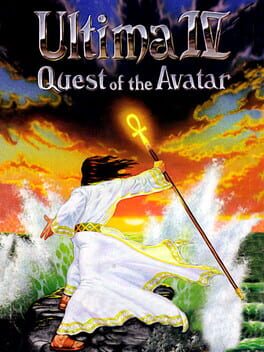 Ultima IV: Quest of the Avatar
Following the defeat of the evil triad in the previous three Ultima games, the world of Sosaria changed beyond recognition: continents rose and sank, and new cities were built, heralding the advent of a different civilization. Unified by the reign of the benevolent monarch Lord British, the new world was renamed Britannia. Lord British wished to base people's well-being on the ethical principles of Truth, Love, and Courage, proclaiming the Eight Virtues (Honesty, Compassion, Valor, Justice, Sacrifice, Honor, Spirituality, and Humility) as the ideal everyone should strive for. The person who could accomplish full understanding and realization of these virtues would serve as a spiritual leader and a moral example for the inhabitants of Britannia; he alone would be able to obtain holy artifacts, descend into the Stygian Abyss, and access the Codex of Ultimate Wisdom. This person is the Avatar. The fourth game in the Ultima series features an improved game engine, with color graphics and enhanced character interaction: the player can have conversations with non-playable characters by typing names of various topics. However, the main difference between Ultima IV and its predecessors in the series (as well as other role-playing games) lies in the game's objectives and the ways to fulfill them. Instead of building up a character by any means possible in order to face a villain in the end of the game, in Ultima IV the player is trying to become the Avatar, a role model for people. This means upholding the Eight Virtues, basically trying to become a better person. Making morally conscious decisions and helping other people is not done expecting a material reward, but because it is the actual goal of the game and the main focus of its gameplay. The game frowns on behavior typical of most other RPGs, such as backstabbing fleeing enemies or picking up everything that isn't nailed down even if it does not belong to the protagonist. This different approach established the game's reputation as the first "true" Ultima, influencing the design philosophy of later installments and the overall spirit of the series. Character creation is done by choosing responses to morally ambiguous questions. Each of the Eight Virtues corresponds to a character class; by determining the player's personal priorities in the virtues, the game assigns a class and a starting location for the Avatar. After emerging in Britannia, the player is free to explore it in various ways (on foot, moongate teleportation, on horseback, by ship, etc.). Certain items must be collected in any order to enter the Stygian Abyss and complete the game. The Avatar also has to reach the highest level in all virtues. This is achieved by various means: donating blood increases Sacrifice, not fleeing from combat increases Valor, etc. The process, however, is not irreversible: should the Avatar overpay a blind seller, he gains Compassion points; should he, on the other hand, cheat the seller by underpaying, his level in several virtues would decrease. These unorthodox features of the game co-exist with plenty of traditional RPG elements, such as dungeons to explore and hostile monsters to kill. Enemies are encountered on the world map as well as in dungeons; combat takes place on separate top-down screens, allowing player-controlled and enemy parties freely move on them. Characters accumulate experience points and level up, gaining higher amount of hit points and access to stronger magic spells. Like in the previous installments of the series, world map, town exploration and combat are presented from a top-down view, while the dungeons are pseudo-3D and are explored from first-person perspective. Ultima IV also introduces several new gameplay features to the series and role-playing games in general. A number of initially non-playable characters living in various areas of the game world are able to to join the party and fight alongside the hero, replacing traditional player-generated characters or mercenaries and adventurers available only in special locations. Additional new elements include buying and combining reagents in order to cast spells, puzzle rooms in dungeons, and others.
88
/100
02
Ultima IV: Quest of the Avatar
Following the defeat of the evil triad in the previous three Ultima games, the world of Sosaria changed beyond recognition: continents rose and sank, and new cities were built, heralding the advent of a different civilization. Unified by the reign of the benevolent monarch Lord British, the new world was renamed Britannia. Lord British wished to base people's well-being on the ethical principles of Truth, Love, and Courage, proclaiming the Eight Virtues (Honesty, Compassion, Valor, Justice, Sacrifice, Honor, Spirituality, and Humility) as the ideal everyone should strive for. The person who could accomplish full understanding and realization of these virtues would serve as a spiritual leader and a moral example for the inhabitants of Britannia; he alone would be able to obtain holy artifacts, descend into the Stygian Abyss, and access the Codex of Ultimate Wisdom. This person is the Avatar. The fourth game in the Ultima series features an improved game engine, with color graphics and enhanced character interaction: the player can have conversations with non-playable characters by typing names of various topics. However, the main difference between Ultima IV and its predecessors in the series (as well as other role-playing games) lies in the game's objectives and the ways to fulfill them. Instead of building up a character by any means possible in order to face a villain in the end of the game, in Ultima IV the player is trying to become the Avatar, a role model for people. This means upholding the Eight Virtues, basically trying to become a better person. Making morally conscious decisions and helping other people is not done expecting a material reward, but because it is the actual goal of the game and the main focus of its gameplay. The game frowns on behavior typical of most other RPGs, such as backstabbing fleeing enemies or picking up everything that isn't nailed down even if it does not belong to the protagonist. This different approach established the game's reputation as the first "true" Ultima, influencing the design philosophy of later installments and the overall spirit of the series. Character creation is done by choosing responses to morally ambiguous questions. Each of the Eight Virtues corresponds to a character class; by determining the player's personal priorities in the virtues, the game assigns a class and a starting location for the Avatar. After emerging in Britannia, the player is free to explore it in various ways (on foot, moongate teleportation, on horseback, by ship, etc.). Certain items must be collected in any order to enter the Stygian Abyss and complete the game. The Avatar also has to reach the highest level in all virtues. This is achieved by various means: donating blood increases Sacrifice, not fleeing from combat increases Valor, etc. The process, however, is not irreversible: should the Avatar overpay a blind seller, he gains Compassion points; should he, on the other hand, cheat the seller by underpaying, his level in several virtues would decrease. These unorthodox features of the game co-exist with plenty of traditional RPG elements, such as dungeons to explore and hostile monsters to kill. Enemies are encountered on the world map as well as in dungeons; combat takes place on separate top-down screens, allowing player-controlled and enemy parties freely move on them. Characters accumulate experience points and level up, gaining higher amount of hit points and access to stronger magic spells. Like in the previous installments of the series, world map, town exploration and combat are presented from a top-down view, while the dungeons are pseudo-3D and are explored from first-person perspective. Ultima IV also introduces several new gameplay features to the series and role-playing games in general. A number of initially non-playable characters living in various areas of the game world are able to to join the party and fight alongside the hero, replacing traditional player-generated characters or mercenaries and adventurers available only in special locations. Additional new elements include buying and combining reagents in order to cast spells, puzzle rooms in dungeons, and others.
88
/100
02
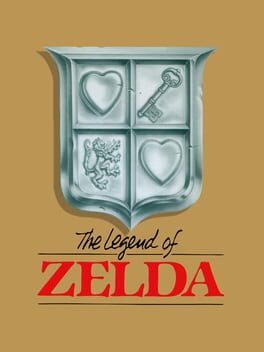 The Legend of Zelda
 is the first title in the Zelda series, it has marked the history of video games particularly for it's game mechanics and universe. The player controls Link and must make his way through the forests, graveyards, plains and deserts of the Otherworld to find the secret entrances to the eight dungeons and try to restore the broken Triforce. Among the game's mechanics, it was the first time we saw a continuous world that could be freely explored, power-ups that permanently enhanced the main character's abilities and a battery save feature that allowed players to keep their progress instead of having to start over. The gameplay balanced action sequences with discovery, secrets and exploration.
81
/100
03
The Legend of Zelda
The Legend of Zelda is the first title in the Zelda series, it has marked the history of video games particularly for it's game mechanics and universe. The player controls Link and must make his way through the forests, graveyards, plains and deserts of the Otherworld to find the secret entrances to the eight dungeons and try to restore the broken Triforce. Among the game's mechanics, it was the first time we saw a continuous world that could be freely explored, power-ups that permanently enhanced the main character's abilities and a battery save feature that allowed players to keep their progress instead of having to start over. The gameplay balanced action sequences with discovery, secrets and exploration.
81
/100
03
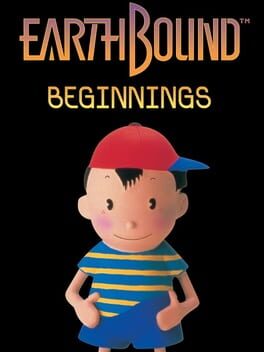 EarthBound Beginnings
 is the first installment in the EarthBound / Mother series. It was developed by Ape Inc., Nintendo Tokyo R&D Products, and Pax Softnica, and was published by Nintendo for the Famicom on July 27, 1989. Though officially translated into English under the name EarthBound in 1990 complete with a variety of updates and new content, the planned release of the North American localization was ultimately cancelled due to Nintendo of America ending support for the Nintendo Entertainment System. Despite this, the updates made to the game for the English localization was included in the Japanese Mother 1+2 rerelease for Game Boy Advance in 2003. The English version was finally released on the Wii U Virtual Console on June 14th, 2015, 25 years after its intended release date.
81
/100
EarthBound Beginnings
EarthBound Beginnings is the first installment in the EarthBound / Mother series. It was developed by Ape Inc., Nintendo Tokyo R&D Products, and Pax Softnica, and was published by Nintendo for the Famicom on July 27, 1989. Though officially translated into English under the name EarthBound in 1990 complete with a variety of updates and new content, the planned release of the North American localization was ultimately cancelled due to Nintendo of America ending support for the Nintendo Entertainment System. Despite this, the updates made to the game for the English localization was included in the Japanese Mother 1+2 rerelease for Game Boy Advance in 2003. The English version was finally released on the Wii U Virtual Console on June 14th, 2015, 25 years after its intended release date.
81
/100
Ultima IV: Quest of the Avatar
Following the defeat of the evil triad in the previous three Ultima games, the world of Sosaria changed beyond recognition: continents rose and sank, and new cities were built, heralding the advent of a different civilization. Unified by the reign of the benevolent monarch Lord British, the new world was renamed Britannia. Lord British wished to base people's well-being on the ethical principles of Truth, Love, and Courage, proclaiming the Eight Virtues (Honesty, Compassion, Valor, Justice, Sacrifice, Honor, Spirituality, and Humility) as the ideal everyone should strive for. The person who could accomplish full understanding and realization of these virtues would serve as a spiritual leader and a moral example for the inhabitants of Britannia; he alone would be able to obtain holy artifacts, descend into the Stygian Abyss, and access the Codex of Ultimate Wisdom. This person is the Avatar. The fourth game in the Ultima series features an improved game engine, with color graphics and enhanced character interaction: the player can have conversations with non-playable characters by typing names of various topics. However, the main difference between Ultima IV and its predecessors in the series (as well as other role-playing games) lies in the game's objectives and the ways to fulfill them. Instead of building up a character by any means possible in order to face a villain in the end of the game, in Ultima IV the player is trying to become the Avatar, a role model for people. This means upholding the Eight Virtues, basically trying to become a better person. Making morally conscious decisions and helping other people is not done expecting a material reward, but because it is the actual goal of the game and the main focus of its gameplay. The game frowns on behavior typical of most other RPGs, such as backstabbing fleeing enemies or picking up everything that isn't nailed down even if it does not belong to the protagonist. This different approach established the game's reputation as the first "true" Ultima, influencing the design philosophy of later installments and the overall spirit of the series. Character creation is done by choosing responses to morally ambiguous questions. Each of the Eight Virtues corresponds to a character class; by determining the player's personal priorities in the virtues, the game assigns a class and a starting location for the Avatar. After emerging in Britannia, the player is free to explore it in various ways (on foot, moongate teleportation, on horseback, by ship, etc.). Certain items must be collected in any order to enter the Stygian Abyss and complete the game. The Avatar also has to reach the highest level in all virtues. This is achieved by various means: donating blood increases Sacrifice, not fleeing from combat increases Valor, etc. The process, however, is not irreversible: should the Avatar overpay a blind seller, he gains Compassion points; should he, on the other hand, cheat the seller by underpaying, his level in several virtues would decrease. These unorthodox features of the game co-exist with plenty of traditional RPG elements, such as dungeons to explore and hostile monsters to kill. Enemies are encountered on the world map as well as in dungeons; combat takes place on separate top-down screens, allowing player-controlled and enemy parties freely move on them. Characters accumulate experience points and level up, gaining higher amount of hit points and access to stronger magic spells. Like in the previous installments of the series, world map, town exploration and combat are presented from a top-down view, while the dungeons are pseudo-3D and are explored from first-person perspective. Ultima IV also introduces several new gameplay features to the series and role-playing games in general. A number of initially non-playable characters living in various areas of the game world are able to to join the party and fight alongside the hero, replacing traditional player-generated characters or mercenaries and adventurers available only in special locations. Additional new elements include buying and combining reagents in order to cast spells, puzzle rooms in dungeons, and others.
88
/100
02
The Legend of Zelda
The Legend of Zelda is the first title in the Zelda series, it has marked the history of video games particularly for it's game mechanics and universe. The player controls Link and must make his way through the forests, graveyards, plains and deserts of the Otherworld to find the secret entrances to the eight dungeons and try to restore the broken Triforce. Among the game's mechanics, it was the first time we saw a continuous world that could be freely explored, power-ups that permanently enhanced the main character's abilities and a battery save feature that allowed players to keep their progress instead of having to start over. The gameplay balanced action sequences with discovery, secrets and exploration.
81
/100
03
EarthBound Beginnings
EarthBound Beginnings is the first installment in the EarthBound / Mother series. It was developed by Ape Inc., Nintendo Tokyo R&D Products, and Pax Softnica, and was published by Nintendo for the Famicom on July 27, 1989. Though officially translated into English under the name EarthBound in 1990 complete with a variety of updates and new content, the planned release of the North American localization was ultimately cancelled due to Nintendo of America ending support for the Nintendo Entertainment System. Despite this, the updates made to the game for the English localization was included in the Japanese Mother 1+2 rerelease for Game Boy Advance in 2003. The English version was finally released on the Wii U Virtual Console on June 14th, 2015, 25 years after its intended release date.
81
/100
04
 Earthbound Beginnings
The original Japanese version of EarthBound Beginnings, released only in Japan for the Famicom, had some gameplay, story and level layout differences from the later Western port. This original version was never released outside of Japan.
77
/100
05
Earthbound Beginnings
The original Japanese version of EarthBound Beginnings, released only in Japan for the Famicom, had some gameplay, story and level layout differences from the later Western port. This original version was never released outside of Japan.
77
/100
05
 Dragon Quest (1986)
All is darkness. The Dragonlord has captured the Princess and stolen Erdrick's powerful ball of light. You are Erdrick's heir. To you has fallen the most dangerous task— to rescue the King's daughter and recover the mystical ball of light. Your mission is deadly, but it is your fate. Prophets have foretold your coming. Three keepers await your journey, each ready to aid you with a mystic item of great power. Gather the three objects. Scribes will record your deeds. Use cunning and wisdom to choose your commands. Gain experience, weapons and armor as you battle your way through the world. Rest if you must. Search out the Dragonlord's lair and face your destiny. In this role-playing adventure, you are the Dragon Warrior!
75
/100
06
Dragon Quest (1986)
All is darkness. The Dragonlord has captured the Princess and stolen Erdrick's powerful ball of light. You are Erdrick's heir. To you has fallen the most dangerous task— to rescue the King's daughter and recover the mystical ball of light. Your mission is deadly, but it is your fate. Prophets have foretold your coming. Three keepers await your journey, each ready to aid you with a mystic item of great power. Gather the three objects. Scribes will record your deeds. Use cunning and wisdom to choose your commands. Gain experience, weapons and armor as you battle your way through the world. Rest if you must. Search out the Dragonlord's lair and face your destiny. In this role-playing adventure, you are the Dragon Warrior!
75
/100
06
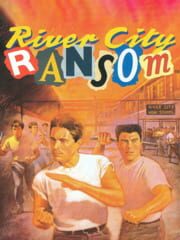 River City Ransom
Play as Alex and Ryan and cross River City to fight street gangs and save your girlfriend from the hands of a bad guy named "Slick." Improve your fighting experience by powering-up your characters in River City's shops, picking-up items for bonuses and using the trash bins and pipes you will find in its streets.
71
/100
07
River City Ransom
Play as Alex and Ryan and cross River City to fight street gangs and save your girlfriend from the hands of a bad guy named "Slick." Improve your fighting experience by powering-up your characters in River City's shops, picking-up items for bonuses and using the trash bins and pipes you will find in its streets.
71
/100
07
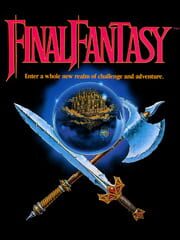 S
Final Fantasy (1987)
Final Fantasy, also known as FFI in re-releases, is the first role-playing game title in Square's flagship Final Fantasy series. The game puts players in control of four characters known as the Warriors of Light, and begins by asking the player to select the classes and names of each. The Warriors of Light can traverse the maps of dungeons and towns, which are connected by a world map, and will run into random encounters with enemies or fight bosses.
70
/100
08
S
Final Fantasy (1987)
Final Fantasy, also known as FFI in re-releases, is the first role-playing game title in Square's flagship Final Fantasy series. The game puts players in control of four characters known as the Warriors of Light, and begins by asking the player to select the classes and names of each. The Warriors of Light can traverse the maps of dungeons and towns, which are connected by a world map, and will run into random encounters with enemies or fight bosses.
70
/100
08
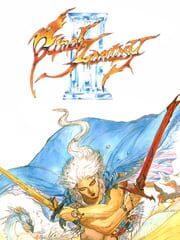 Final Fantasy III (1990)
Final Fantasy III is the third FF game for the Famicom. The turn-based battle engine has been improved: if the enemy is defeated, the next character will automatically switch to another enemy, and not hit the air, like in the previous two games. The game itself is, like the previous games, a top-down RPG where your characters travel in the overworld, sometimes entering cities and dungeons to buy equipment, rest and fight random encounters and bosses with turn-based combat. Final Fantasy III also introduces various series staples, such as the Job system and the Moogle species.
70
/100
09
Final Fantasy III (1990)
Final Fantasy III is the third FF game for the Famicom. The turn-based battle engine has been improved: if the enemy is defeated, the next character will automatically switch to another enemy, and not hit the air, like in the previous two games. The game itself is, like the previous games, a top-down RPG where your characters travel in the overworld, sometimes entering cities and dungeons to buy equipment, rest and fight random encounters and bosses with turn-based combat. Final Fantasy III also introduces various series staples, such as the Job system and the Moogle species.
70
/100
09
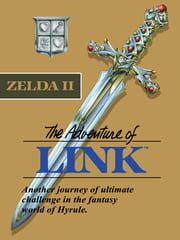 Zelda II: The Adventure of Link
 is the second major installment in The Legend of Zelda series and the direct sequel to the first game. Like its predecessor, it features dungeons that must be located in the overworld and searched for an item that will prove useful. However, the game presents many very important gameplay changes compared to the previous one, affecting especially the movements and the combat. Moving around the world map involves encounters with enemies that take place on a side-scrolling playfield rather than the top-down perspective for which the series became known.
66
/100
10
Zelda II: The Adventure of Link
Zelda II: The Adventure of Link is the second major installment in The Legend of Zelda series and the direct sequel to the first game. Like its predecessor, it features dungeons that must be located in the overworld and searched for an item that will prove useful. However, the game presents many very important gameplay changes compared to the previous one, affecting especially the movements and the combat. Moving around the world map involves encounters with enemies that take place on a side-scrolling playfield rather than the top-down perspective for which the series became known.
66
/100
10
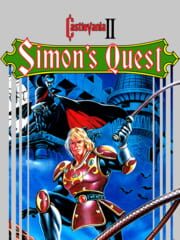 Castlevania II: Simon's Quest (1987)
Castlevania was a cakewalk compared to this bloody curse. You thought you had the Prince of Darkness defanged - eh, Simon Belmont? Well think again, 'cause according to a damsel in distress, evil Count Dracula has left a horrifying curse in his wake. And the only hope you have of ending the terror is to destroy his missing body parts! Talk about your frightening quest, searching a maze of mansions, graveyards and dark, eerie forests - each guarded by man-eating werewolves, fire-throwing zombies and other devilish demons. Your grim chances are kept alive in Transylvania, where cowardly villagers offer clues to the whereabouts of Dracula's remains. And where you'll purchase magic weapons, including silver knives and flame whips. But beware the night. For when the sun disappears, Dracula's curse grows deadlier. And your chances grow dimmer and dimmer.
62
/100
11
Castlevania II: Simon's Quest (1987)
Castlevania was a cakewalk compared to this bloody curse. You thought you had the Prince of Darkness defanged - eh, Simon Belmont? Well think again, 'cause according to a damsel in distress, evil Count Dracula has left a horrifying curse in his wake. And the only hope you have of ending the terror is to destroy his missing body parts! Talk about your frightening quest, searching a maze of mansions, graveyards and dark, eerie forests - each guarded by man-eating werewolves, fire-throwing zombies and other devilish demons. Your grim chances are kept alive in Transylvania, where cowardly villagers offer clues to the whereabouts of Dracula's remains. And where you'll purchase magic weapons, including silver knives and flame whips. But beware the night. For when the sun disappears, Dracula's curse grows deadlier. And your chances grow dimmer and dimmer.
62
/100
11
 Final Fantasy II
40
/100
Final Fantasy II
40
/100
Earthbound Beginnings
The original Japanese version of EarthBound Beginnings, released only in Japan for the Famicom, had some gameplay, story and level layout differences from the later Western port. This original version was never released outside of Japan.
77
/100
05
Dragon Quest (1986)
All is darkness. The Dragonlord has captured the Princess and stolen Erdrick's powerful ball of light. You are Erdrick's heir. To you has fallen the most dangerous task— to rescue the King's daughter and recover the mystical ball of light. Your mission is deadly, but it is your fate. Prophets have foretold your coming. Three keepers await your journey, each ready to aid you with a mystic item of great power. Gather the three objects. Scribes will record your deeds. Use cunning and wisdom to choose your commands. Gain experience, weapons and armor as you battle your way through the world. Rest if you must. Search out the Dragonlord's lair and face your destiny. In this role-playing adventure, you are the Dragon Warrior!
75
/100
06
River City Ransom
Play as Alex and Ryan and cross River City to fight street gangs and save your girlfriend from the hands of a bad guy named "Slick." Improve your fighting experience by powering-up your characters in River City's shops, picking-up items for bonuses and using the trash bins and pipes you will find in its streets.
71
/100
07
S
Final Fantasy (1987)
Final Fantasy, also known as FFI in re-releases, is the first role-playing game title in Square's flagship Final Fantasy series. The game puts players in control of four characters known as the Warriors of Light, and begins by asking the player to select the classes and names of each. The Warriors of Light can traverse the maps of dungeons and towns, which are connected by a world map, and will run into random encounters with enemies or fight bosses.
70
/100
08
Final Fantasy III (1990)
Final Fantasy III is the third FF game for the Famicom. The turn-based battle engine has been improved: if the enemy is defeated, the next character will automatically switch to another enemy, and not hit the air, like in the previous two games. The game itself is, like the previous games, a top-down RPG where your characters travel in the overworld, sometimes entering cities and dungeons to buy equipment, rest and fight random encounters and bosses with turn-based combat. Final Fantasy III also introduces various series staples, such as the Job system and the Moogle species.
70
/100
09
Zelda II: The Adventure of Link
Zelda II: The Adventure of Link is the second major installment in The Legend of Zelda series and the direct sequel to the first game. Like its predecessor, it features dungeons that must be located in the overworld and searched for an item that will prove useful. However, the game presents many very important gameplay changes compared to the previous one, affecting especially the movements and the combat. Moving around the world map involves encounters with enemies that take place on a side-scrolling playfield rather than the top-down perspective for which the series became known.
66
/100
10
Castlevania II: Simon's Quest (1987)
Castlevania was a cakewalk compared to this bloody curse. You thought you had the Prince of Darkness defanged - eh, Simon Belmont? Well think again, 'cause according to a damsel in distress, evil Count Dracula has left a horrifying curse in his wake. And the only hope you have of ending the terror is to destroy his missing body parts! Talk about your frightening quest, searching a maze of mansions, graveyards and dark, eerie forests - each guarded by man-eating werewolves, fire-throwing zombies and other devilish demons. Your grim chances are kept alive in Transylvania, where cowardly villagers offer clues to the whereabouts of Dracula's remains. And where you'll purchase magic weapons, including silver knives and flame whips. But beware the night. For when the sun disappears, Dracula's curse grows deadlier. And your chances grow dimmer and dimmer.
62
/100
11
Final Fantasy II
40
/100
Frequently asked questions
Vilket är det bästa RPG-spelet på NES?
Ultima IV: Quest of the Avatar toppar just nu rankningen med ett betyg på 88/100 från 38 omdömen. Rankningen uppdaterades september 2026.
Hur byggs den här rankningen?
Spelen rankas efter sitt sammanvägda kritikerbetyg av 100, med en lägsta röstgräns så att en enda lovordande recension aldrig går om en beprövad klassiker; Tier-communityts egna betyg från F till S visas bredvid varje spel.