
Melhores jogos
Melhores jogos de RPG em Wii
Os 21 melhores jogos de RPG em Wii, ordenados a partir de 7,275 avaliações da crítica e dos jogadores.
O melhor jogo de RPG em Wii neste momento é The Legend of Zelda: Twilight Princess, com uma pontuação da crítica de 98/100 — atualizado em setembro 2026.
Como é construído este ranking
- Os jogos são ordenados pela nota agregada da crítica em 100 importada do IGDB e do Metacritic, nunca pelas notas próprias do Tier.
- Um jogo só entra no ranking a partir de 80 avaliações externas, para que uma única crítica entusiasta nunca ultrapasse um clássico consagrado.
- Cada jogo é classificado num único género, o que melhor o define, para que o mesmo título nunca lidere dois rankings de géneros diferentes.
- As notas da comunidade, de F a S, aparecem ao lado de cada jogo e só são afirmadas como facto acima de 5 avaliações no Tier.
- Período de lançamento abrangido: de 1970 a 2026.
- 21 jogos aparecem nesta página, com 7,275 avaliações no total.
- Os rankings são recalculados de hora a hora; este foi reconstruído a 29 setembro 2026.
Top 21
01
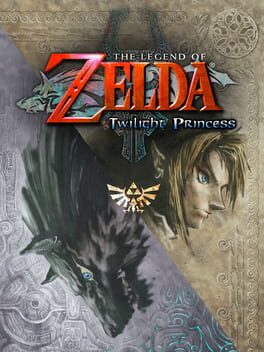 The Legend of Zelda: Twilight Princess
 was initially developed with the Nintendo GameCube in mind, but ended up receiving a Wii port when it was released to promote the new console. This version has motion control compatibility for the sword and pointer controls for the menus, the bow and the boomerang. This version of the game has a completely inverted map and locations when comparing with the GameCube release. The change in layout was meant to adapt Link's usually left-handed design to right-handed people, given the motion controls.
98
/100
02
The Legend of Zelda: Twilight Princess
The Legend of Zelda: Twilight Princess was initially developed with the Nintendo GameCube in mind, but ended up receiving a Wii port when it was released to promote the new console. This version has motion control compatibility for the sword and pointer controls for the menus, the bow and the boomerang. This version of the game has a completely inverted map and locations when comparing with the GameCube release. The change in layout was meant to adapt Link's usually left-handed design to right-handed people, given the motion controls.
98
/100
02
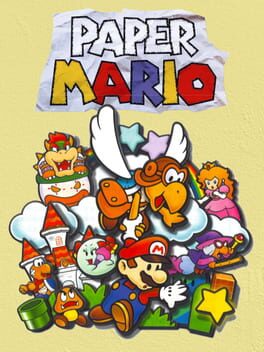 Paper Mario (2000)
Paper Mario, a turn-based JRPG entry in the Mario franchise with a paper-based aesthetic and platforming elements, sees the titular character working his way through the Mushroom Kingdom's diverse locales and biomes, meeting its inhabitants, fighthing unruly enemies and recruiting an array of companions in order to once again save Princess Peach from the clutches of the evil Koopa King Bowser.
93
/100
03
Paper Mario (2000)
Paper Mario, a turn-based JRPG entry in the Mario franchise with a paper-based aesthetic and platforming elements, sees the titular character working his way through the Mushroom Kingdom's diverse locales and biomes, meeting its inhabitants, fighthing unruly enemies and recruiting an array of companions in order to once again save Princess Peach from the clutches of the evil Koopa King Bowser.
93
/100
03
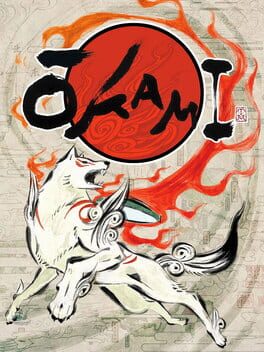 Okami
Set sometime in classical Japanese history, Ōkami combines several Japanese mythology and folklore to tell the story of how the land was saved from darkness by the Shinto sun goddess named Amaterasu, who took the form of a white wolf with celestial markings covering its fur. It features a distinct sumi-e-inspired cel-shaded visual style and the Celestial Brush, a gesture-system used to perform miracles.
93
/100
Okami
Set sometime in classical Japanese history, Ōkami combines several Japanese mythology and folklore to tell the story of how the land was saved from darkness by the Shinto sun goddess named Amaterasu, who took the form of a white wolf with celestial markings covering its fur. It features a distinct sumi-e-inspired cel-shaded visual style and the Celestial Brush, a gesture-system used to perform miracles.
93
/100
The Legend of Zelda: Twilight Princess
The Legend of Zelda: Twilight Princess was initially developed with the Nintendo GameCube in mind, but ended up receiving a Wii port when it was released to promote the new console. This version has motion control compatibility for the sword and pointer controls for the menus, the bow and the boomerang. This version of the game has a completely inverted map and locations when comparing with the GameCube release. The change in layout was meant to adapt Link's usually left-handed design to right-handed people, given the motion controls.
98
/100
02
Paper Mario (2000)
Paper Mario, a turn-based JRPG entry in the Mario franchise with a paper-based aesthetic and platforming elements, sees the titular character working his way through the Mushroom Kingdom's diverse locales and biomes, meeting its inhabitants, fighthing unruly enemies and recruiting an array of companions in order to once again save Princess Peach from the clutches of the evil Koopa King Bowser.
93
/100
03
Okami
Set sometime in classical Japanese history, Ōkami combines several Japanese mythology and folklore to tell the story of how the land was saved from darkness by the Shinto sun goddess named Amaterasu, who took the form of a white wolf with celestial markings covering its fur. It features a distinct sumi-e-inspired cel-shaded visual style and the Celestial Brush, a gesture-system used to perform miracles.
93
/100
04
 FINAL FANTASY VI
Final Fantasy VI is the sixth main installment in the Final Fantasy series, developed and published by Square. It was the final title in the series to feature two-dimensional graphics, and the first story that did not revolve around crystals. The game gives players up to fourteen playable characters, the largest cast in the series, and features the Active Time Battle pseudo-turn based menu command system. A party can consist of up to four characters, though some events require the player to assemble three different parties of up to four and switch between them. Each character has a unique command ability, such as Terra's Trance, Locke's Steal, Edgar's Tools or Sabin's Blitz, and can also learn Magic spells from earning AP from battles with magicite equipped. Each character's rare Desperation Attack will randomly activate after using the Attack command when at critical health.
92
/100
05
FINAL FANTASY VI
Final Fantasy VI is the sixth main installment in the Final Fantasy series, developed and published by Square. It was the final title in the series to feature two-dimensional graphics, and the first story that did not revolve around crystals. The game gives players up to fourteen playable characters, the largest cast in the series, and features the Active Time Battle pseudo-turn based menu command system. A party can consist of up to four characters, though some events require the player to assemble three different parties of up to four and switch between them. Each character has a unique command ability, such as Terra's Trance, Locke's Steal, Edgar's Tools or Sabin's Blitz, and can also learn Magic spells from earning AP from battles with magicite equipped. Each character's rare Desperation Attack will randomly activate after using the Attack command when at critical health.
92
/100
05
 S
The Legend of Zelda: Ocarina of Time
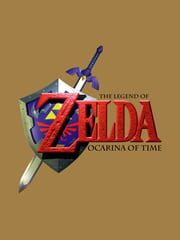
The Legend of Zelda: Ocarina of Time is the fifth main installment of The Legend of Zelda series and the first to be released for the Nintendo 64. It was one of the most highly anticipated games of its age, and is listed among the greatest video games ever created by numerous websites and magazines. The gameplay of Ocarina of Time was revolutionary for its time, it has arguably made more of an impact on later games in the series than any of its predecessors even though they had the same cores of exploration, dungeons, puzzles and item usage. Among the gameplay mechanics, one of the most noteworthy is the time-traveling system. The game begins with the player controlling the child Link, but later on an adult Link becomes a playable character as well and each of them has certain unique abilities. Ocarina of Time also introduces the use of music to solve puzzles: as new songs are learned, they can be used to solve puzzles, gain access to new areas and warp to different locations. Dungeon exploration is somewhat more puzzle-oriented than in earlier games but they are not too complex.
92
/100
06
S
The Legend of Zelda: Ocarina of Time
The Legend of Zelda: Ocarina of Time is the fifth main installment of The Legend of Zelda series and the first to be released for the Nintendo 64. It was one of the most highly anticipated games of its age, and is listed among the greatest video games ever created by numerous websites and magazines. The gameplay of Ocarina of Time was revolutionary for its time, it has arguably made more of an impact on later games in the series than any of its predecessors even though they had the same cores of exploration, dungeons, puzzles and item usage. Among the gameplay mechanics, one of the most noteworthy is the time-traveling system. The game begins with the player controlling the child Link, but later on an adult Link becomes a playable character as well and each of them has certain unique abilities. Ocarina of Time also introduces the use of music to solve puzzles: as new songs are learned, they can be used to solve puzzles, gain access to new areas and warp to different locations. Dungeon exploration is somewhat more puzzle-oriented than in earlier games but they are not too complex.
92
/100
06
 Super Mario RPG: Legend of the Seven Stars
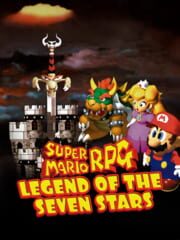
A JRPG entry in the Super Mario franchise in which Mario meets many unlikely allies in order to jump and fight his way through the Mushroom Kingdom and collect stars to repair the Star Road, the pathway that grants people's wishes, which was destroyed by Smithy, the otherworldly entity that hijacked Bowser's castle and threw the Kingdom into disarray.
90
/100
07
Super Mario RPG: Legend of the Seven Stars
A JRPG entry in the Super Mario franchise in which Mario meets many unlikely allies in order to jump and fight his way through the Mushroom Kingdom and collect stars to repair the Star Road, the pathway that grants people's wishes, which was destroyed by Smithy, the otherworldly entity that hijacked Bowser's castle and threw the Kingdom into disarray.
90
/100
07
 Xenoblade Chronicles
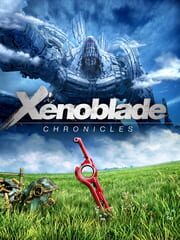
 follows Shulk and his band of friends as they search for answers about the mysterious "Monado" sword and defend their homeland from violent robotic creatures known as the Mechon. The game contains an open world design and strongly emphasizes exploration due to the world's large size. The game was very well received by critics, with many citing it as a great example of innovation and improvement in Japanese role-playing video games. The game has spawned a sub-series of the larger "Xeno" series, including Xenoblade Chronicles X (Wii U) and Xenoblade Chronicles 2 (Switch).
89
/100
08
Xenoblade Chronicles
Xenoblade Chronicles follows Shulk and his band of friends as they search for answers about the mysterious "Monado" sword and defend their homeland from violent robotic creatures known as the Mechon. The game contains an open world design and strongly emphasizes exploration due to the world's large size. The game was very well received by critics, with many citing it as a great example of innovation and improvement in Japanese role-playing video games. The game has spawned a sub-series of the larger "Xeno" series, including Xenoblade Chronicles X (Wii U) and Xenoblade Chronicles 2 (Switch).
89
/100
08
 FINAL FANTASY IV: THE AFTER YEARS
FINAL FANTASY IV is a 3D remake of the classic Japanese RPG that was first released for SNES as FINAL FANTASY II in the North America. Unlike the many subsequent ports (to Playstation, GameBoy Advance, etc.), this release is a full remake, programmed from scratch with real-time 3D graphics. The characters have a "super-deformed" touch. There is also voice acting during cut-scenes. A new option has been added to the menu, which allows the player to read a conversation between party members and receive advice from them. It also features many gameplay additions. The difficulty level has been increased, not only beyond the difficulty of the Western SNES release (which was reduced compared to Japanese original and subsequent ports), but even beyond the original difficulty. The party members are still bound by class, but they can now hunt for so-called "augments", which can be found or stolen from enemies and which grant the characters additional bonus abilities, resistances, spells that their class would normally not allow, etc. Beside those major changes, there are also plenty of minor additions. It is possible to obtain bonus items after exploring every corner and filling 100% of an area map; Rydia, the summoner girl, has a new monster summon who can be customized in various ways; there is a new quest involving the "naming" moogle of the original game, etc.
87
/100
09
FINAL FANTASY IV: THE AFTER YEARS
FINAL FANTASY IV is a 3D remake of the classic Japanese RPG that was first released for SNES as FINAL FANTASY II in the North America. Unlike the many subsequent ports (to Playstation, GameBoy Advance, etc.), this release is a full remake, programmed from scratch with real-time 3D graphics. The characters have a "super-deformed" touch. There is also voice acting during cut-scenes. A new option has been added to the menu, which allows the player to read a conversation between party members and receive advice from them. It also features many gameplay additions. The difficulty level has been increased, not only beyond the difficulty of the Western SNES release (which was reduced compared to Japanese original and subsequent ports), but even beyond the original difficulty. The party members are still bound by class, but they can now hunt for so-called "augments", which can be found or stolen from enemies and which grant the characters additional bonus abilities, resistances, spells that their class would normally not allow, etc. Beside those major changes, there are also plenty of minor additions. It is possible to obtain bonus items after exploring every corner and filling 100% of an area map; Rydia, the summoner girl, has a new monster summon who can be customized in various ways; there is a new quest involving the "naming" moogle of the original game, etc.
87
/100
09
 Secret of Mana (1993)
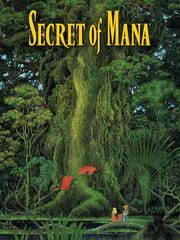
Initially released in Japan in 1993, Secret of Mana took the world by storm with its innovative real-time battle system and gorgeously rendered world. It continues to stand out among other action RPGs for its seamless gameplay that anyone from beginner to veteran can enjoy. One of the most memorable elements of the Mana series is the Ring Command menu system. With the single press of a button, a ring-shaped menu appears on the screen, where players can use items, change weapons, and do a variety of other actions without needing to switch screens. This Ring Command menu system for which the Mana series is so well known was first introduced in Secret of Mana and has since appeared in most games in the series. Play as Randi and his two companions, Primm and Popoi, as they adventure all around the world. At the center of our epic story is the mystical power of Mana. Battle the empire in its quest for control of Mana. Befriend the eight elementals who wield the forces of nature itself. Numerous encounters await at every turn.
83
/100
10
Secret of Mana (1993)
Initially released in Japan in 1993, Secret of Mana took the world by storm with its innovative real-time battle system and gorgeously rendered world. It continues to stand out among other action RPGs for its seamless gameplay that anyone from beginner to veteran can enjoy. One of the most memorable elements of the Mana series is the Ring Command menu system. With the single press of a button, a ring-shaped menu appears on the screen, where players can use items, change weapons, and do a variety of other actions without needing to switch screens. This Ring Command menu system for which the Mana series is so well known was first introduced in Secret of Mana and has since appeared in most games in the series. Play as Randi and his two companions, Primm and Popoi, as they adventure all around the world. At the center of our epic story is the mystical power of Mana. Battle the empire in its quest for control of Mana. Befriend the eight elementals who wield the forces of nature itself. Numerous encounters await at every turn.
83
/100
10
 Chrono Trigger
82
/100
11
Chrono Trigger
82
/100
11
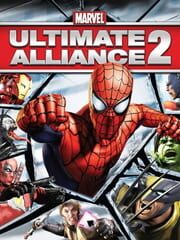 Marvel: Ultimate Alliance 2
81
/100
12
Marvel: Ultimate Alliance 2
81
/100
12
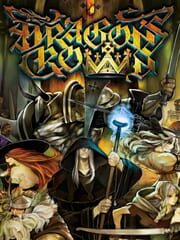 Dragon's Crown
81
/100
13
Dragon's Crown
81
/100
13
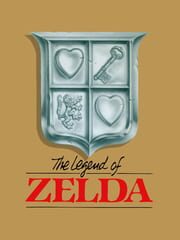 The Legend of Zelda
81
/100
14
The Legend of Zelda
81
/100
14
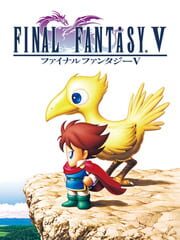 Final Fantasy V
80
/100
15
Final Fantasy V
80
/100
15
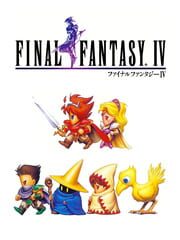 Final Fantasy IV (1991)
80
/100
16
Final Fantasy IV (1991)
80
/100
16
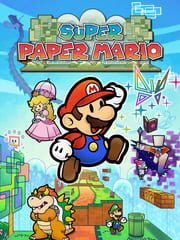 Super Paper Mario
78
/100
17
Super Paper Mario
78
/100
17
 Final Fantasy II
70
/100
18
Final Fantasy II
70
/100
18
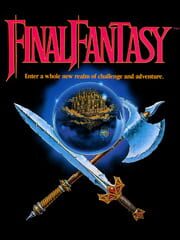 S
Final Fantasy (1987)
70
/100
19
S
Final Fantasy (1987)
70
/100
19
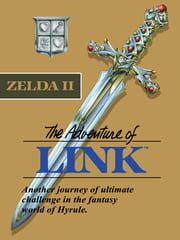 Zelda II: The Adventure of Link
66
/100
20
Zelda II: The Adventure of Link
66
/100
20
 Star Wars: The Force Unleashed
62
/100
21
Star Wars: The Force Unleashed
62
/100
21
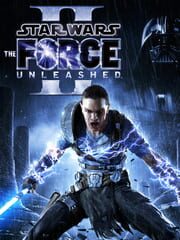 STAR WARS: The Force Unleashed II
59
/100
STAR WARS: The Force Unleashed II
59
/100
FINAL FANTASY VI
Final Fantasy VI is the sixth main installment in the Final Fantasy series, developed and published by Square. It was the final title in the series to feature two-dimensional graphics, and the first story that did not revolve around crystals. The game gives players up to fourteen playable characters, the largest cast in the series, and features the Active Time Battle pseudo-turn based menu command system. A party can consist of up to four characters, though some events require the player to assemble three different parties of up to four and switch between them. Each character has a unique command ability, such as Terra's Trance, Locke's Steal, Edgar's Tools or Sabin's Blitz, and can also learn Magic spells from earning AP from battles with magicite equipped. Each character's rare Desperation Attack will randomly activate after using the Attack command when at critical health.
92
/100
05
S
The Legend of Zelda: Ocarina of Time
The Legend of Zelda: Ocarina of Time is the fifth main installment of The Legend of Zelda series and the first to be released for the Nintendo 64. It was one of the most highly anticipated games of its age, and is listed among the greatest video games ever created by numerous websites and magazines. The gameplay of Ocarina of Time was revolutionary for its time, it has arguably made more of an impact on later games in the series than any of its predecessors even though they had the same cores of exploration, dungeons, puzzles and item usage. Among the gameplay mechanics, one of the most noteworthy is the time-traveling system. The game begins with the player controlling the child Link, but later on an adult Link becomes a playable character as well and each of them has certain unique abilities. Ocarina of Time also introduces the use of music to solve puzzles: as new songs are learned, they can be used to solve puzzles, gain access to new areas and warp to different locations. Dungeon exploration is somewhat more puzzle-oriented than in earlier games but they are not too complex.
92
/100
06
Super Mario RPG: Legend of the Seven Stars
A JRPG entry in the Super Mario franchise in which Mario meets many unlikely allies in order to jump and fight his way through the Mushroom Kingdom and collect stars to repair the Star Road, the pathway that grants people's wishes, which was destroyed by Smithy, the otherworldly entity that hijacked Bowser's castle and threw the Kingdom into disarray.
90
/100
07
Xenoblade Chronicles
Xenoblade Chronicles follows Shulk and his band of friends as they search for answers about the mysterious "Monado" sword and defend their homeland from violent robotic creatures known as the Mechon. The game contains an open world design and strongly emphasizes exploration due to the world's large size. The game was very well received by critics, with many citing it as a great example of innovation and improvement in Japanese role-playing video games. The game has spawned a sub-series of the larger "Xeno" series, including Xenoblade Chronicles X (Wii U) and Xenoblade Chronicles 2 (Switch).
89
/100
08
FINAL FANTASY IV: THE AFTER YEARS
FINAL FANTASY IV is a 3D remake of the classic Japanese RPG that was first released for SNES as FINAL FANTASY II in the North America. Unlike the many subsequent ports (to Playstation, GameBoy Advance, etc.), this release is a full remake, programmed from scratch with real-time 3D graphics. The characters have a "super-deformed" touch. There is also voice acting during cut-scenes. A new option has been added to the menu, which allows the player to read a conversation between party members and receive advice from them. It also features many gameplay additions. The difficulty level has been increased, not only beyond the difficulty of the Western SNES release (which was reduced compared to Japanese original and subsequent ports), but even beyond the original difficulty. The party members are still bound by class, but they can now hunt for so-called "augments", which can be found or stolen from enemies and which grant the characters additional bonus abilities, resistances, spells that their class would normally not allow, etc. Beside those major changes, there are also plenty of minor additions. It is possible to obtain bonus items after exploring every corner and filling 100% of an area map; Rydia, the summoner girl, has a new monster summon who can be customized in various ways; there is a new quest involving the "naming" moogle of the original game, etc.
87
/100
09
Secret of Mana (1993)
Initially released in Japan in 1993, Secret of Mana took the world by storm with its innovative real-time battle system and gorgeously rendered world. It continues to stand out among other action RPGs for its seamless gameplay that anyone from beginner to veteran can enjoy. One of the most memorable elements of the Mana series is the Ring Command menu system. With the single press of a button, a ring-shaped menu appears on the screen, where players can use items, change weapons, and do a variety of other actions without needing to switch screens. This Ring Command menu system for which the Mana series is so well known was first introduced in Secret of Mana and has since appeared in most games in the series. Play as Randi and his two companions, Primm and Popoi, as they adventure all around the world. At the center of our epic story is the mystical power of Mana. Battle the empire in its quest for control of Mana. Befriend the eight elementals who wield the forces of nature itself. Numerous encounters await at every turn.
83
/100
10
Chrono Trigger
82
/100
11
Marvel: Ultimate Alliance 2
81
/100
12
Dragon's Crown
81
/100
13
The Legend of Zelda
81
/100
14
Final Fantasy V
80
/100
15
Final Fantasy IV (1991)
80
/100
16
Super Paper Mario
78
/100
17
Final Fantasy II
70
/100
18
S
Final Fantasy (1987)
70
/100
19
Zelda II: The Adventure of Link
66
/100
20
Star Wars: The Force Unleashed
62
/100
21
STAR WARS: The Force Unleashed II
59
/100
Frequently asked questions
Qual é o melhor jogo de RPG em Wii?
The Legend of Zelda: Twilight Princess lidera atualmente a classificação com uma pontuação de 98/100 em 493 avaliações. Classificação atualizada em setembro 2026.
Como é construída esta classificação?
Os jogos são ordenados pela pontuação agregada da crítica em 100, com um limiar mínimo de votos para que uma única crítica entusiasta nunca ultrapasse um clássico consagrado; os grades de F a S da comunidade Tier são apresentados ao lado de cada jogo.