Melhores jogos
Melhores jogos de Fighting em Sega Genesis
Os 9 melhores jogos de Fighting em Sega Genesis, ordenados a partir de 2,236 avaliações da crítica e dos jogadores.
O melhor jogo de Fighting em Sega Genesis neste momento é Street Fighter II: The World Warrior (1991), com uma pontuação da crítica de 84/100 — atualizado em setembro 2026.
Como é construído este ranking
- Os jogos são ordenados pela nota agregada da crítica em 100 importada do IGDB e do Metacritic, nunca pelas notas próprias do Tier.
- Um jogo só entra no ranking a partir de 80 avaliações externas, para que uma única crítica entusiasta nunca ultrapasse um clássico consagrado.
- Cada jogo é classificado num único género, o que melhor o define, para que o mesmo título nunca lidere dois rankings de géneros diferentes.
- As notas da comunidade, de F a S, aparecem ao lado de cada jogo e só são afirmadas como facto acima de 5 avaliações no Tier.
- Período de lançamento abrangido: de 1970 a 2026.
- 9 jogos aparecem nesta página, com 2,236 avaliações no total.
- Os rankings são recalculados de hora a hora; este foi reconstruído a 29 setembro 2026.
Top 9
01
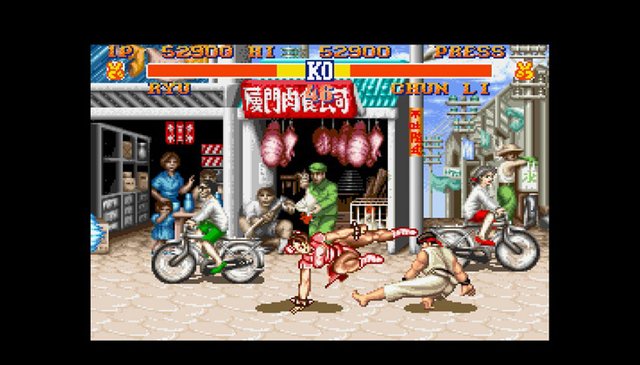 Street Fighter II: The World Warrior (1991)
84
/100
02
Street Fighter II: The World Warrior (1991)
84
/100
02
 Mortal Kombat
 is a side-scrolling fighting game. Fighting is set as one-on-one combat, allowing each player to perform a variety of punches, kicks, and special moves in order to defeat their opponent. When the opponent faces their second round loss, the winner can perform a finishing move called a "Fatality" on the loser. The Fatality is a move unique to each fighter that graphically kills the loser in a blood-soaked finale.
83
/100
03
Mortal Kombat
Mortal Kombat is a side-scrolling fighting game. Fighting is set as one-on-one combat, allowing each player to perform a variety of punches, kicks, and special moves in order to defeat their opponent. When the opponent faces their second round loss, the winner can perform a finishing move called a "Fatality" on the loser. The Fatality is a move unique to each fighter that graphically kills the loser in a blood-soaked finale.
83
/100
03
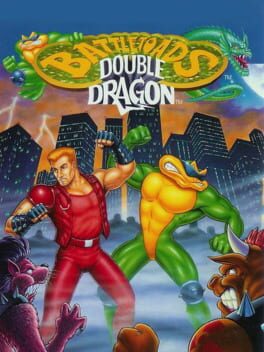 Battletoads & Double Dragon
 - The Ultimate Team is the fourth game in the Battletoads series. It is a crossover with the Double Dragon series of beat 'em up games developed by Technos Japan. It was released for the NES, with ports for the Super NES, Sega Mega Drive/Genesis, and Nintendo Game Boy. Despite the presence of the Double Dragon characters, Technos Japan had no actual role in the game's development.
81
/100
Battletoads & Double Dragon
Battletoads & Double Dragon - The Ultimate Team is the fourth game in the Battletoads series. It is a crossover with the Double Dragon series of beat 'em up games developed by Technos Japan. It was released for the NES, with ports for the Super NES, Sega Mega Drive/Genesis, and Nintendo Game Boy. Despite the presence of the Double Dragon characters, Technos Japan had no actual role in the game's development.
81
/100
Street Fighter II: The World Warrior (1991)
84
/100
02
Mortal Kombat
Mortal Kombat is a side-scrolling fighting game. Fighting is set as one-on-one combat, allowing each player to perform a variety of punches, kicks, and special moves in order to defeat their opponent. When the opponent faces their second round loss, the winner can perform a finishing move called a "Fatality" on the loser. The Fatality is a move unique to each fighter that graphically kills the loser in a blood-soaked finale.
83
/100
03
Battletoads & Double Dragon
Battletoads & Double Dragon - The Ultimate Team is the fourth game in the Battletoads series. It is a crossover with the Double Dragon series of beat 'em up games developed by Technos Japan. It was released for the NES, with ports for the Super NES, Sega Mega Drive/Genesis, and Nintendo Game Boy. Despite the presence of the Double Dragon characters, Technos Japan had no actual role in the game's development.
81
/100
04
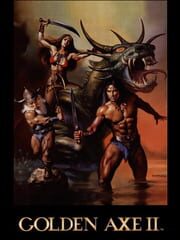 Golden Axe II (1991)
The Lord of Darkness, Dark Guld, has arisen again. Wielding the famous Golden Axe, he has destroyed entire countries with his evil clan, forcing the world into chaos. Once again, three brave warriors stand up to face the oppressors, and won’t rest until the Golden Axe is returned to its rightful place.
77
/100
05
Golden Axe II (1991)
The Lord of Darkness, Dark Guld, has arisen again. Wielding the famous Golden Axe, he has destroyed entire countries with his evil clan, forcing the world into chaos. Once again, three brave warriors stand up to face the oppressors, and won’t rest until the Golden Axe is returned to its rightful place.
77
/100
05
 Mortal Kombat II
 is a fighting game originally developed by Midway for arcades in 1993. It serves as the second main installment in the Mortal Kombat franchise and follows the success of its predecessor by enhancing the gameplay and further developing the original game's mythos. Mortal Kombat II introduces more varied finishing moves and several iconic characters, such as Kitana, Mileena, Kung Lao, the hidden character Noob Saibot, and the series' recurring villain, Shao Kahn.
76
/100
06
Mortal Kombat II
Mortal Kombat II is a fighting game originally developed by Midway for arcades in 1993. It serves as the second main installment in the Mortal Kombat franchise and follows the success of its predecessor by enhancing the gameplay and further developing the original game's mythos. Mortal Kombat II introduces more varied finishing moves and several iconic characters, such as Kitana, Mileena, Kung Lao, the hidden character Noob Saibot, and the series' recurring villain, Shao Kahn.
76
/100
06
 Mortal Kombat 2
To win the main tournament, the player must beat each of the other human players, before taking on Shang Tsung, Kintaro and finally Shao Kahn. Players have a range of punches and kicks available, as well as flying kicks, uppercuts, roundhouses, and the special moves, which vary for each player. These include throws, uppercuts, long-distance bullets, bicycle kicks and a teleport feature.
70
/100
07
Mortal Kombat 2
To win the main tournament, the player must beat each of the other human players, before taking on Shang Tsung, Kintaro and finally Shao Kahn. Players have a range of punches and kicks available, as well as flying kicks, uppercuts, roundhouses, and the special moves, which vary for each player. These include throws, uppercuts, long-distance bullets, bicycle kicks and a teleport feature.
70
/100
07
 Ultimate Mortal Kombat 3
 combines the best of all the Mortal Kombats into a single cartridge. 23 playable characters are immediately available, such as Reptile, Cyrax, Scorpion, Sub-Zero, Jax, Katana, Sonya, and more. There are two bosses that are unlockable, as well as additional characters and a variety of new levels, some of which are interactive. Players can go against the computer one-on-one, two-on-two, or take part in the 8-fighter tournament.
62
/100
08
Ultimate Mortal Kombat 3
Ultimate Mortal Kombat 3 combines the best of all the Mortal Kombats into a single cartridge. 23 playable characters are immediately available, such as Reptile, Cyrax, Scorpion, Sub-Zero, Jax, Katana, Sonya, and more. There are two bosses that are unlockable, as well as additional characters and a variety of new levels, some of which are interactive. Players can go against the computer one-on-one, two-on-two, or take part in the 8-fighter tournament.
62
/100
08
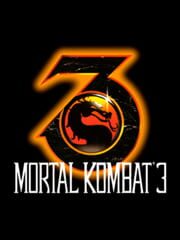 Mortal Kombat 3
 brings new elements to the 2D fighting series: multi-level playfields, "Dial-A-Combo" attacks, a "Run" button to speed up the battles, and "Vs." codes, which unlock new powers and abilities once both players enter a code sequence in pre-match-up screens. Also included are more stage fatalities and finishing moves as each warrior attempts to go one-on-one with the Centaurian enforcer Motaro, and Shao Kahn himself.
50
/100
09
Mortal Kombat 3
Mortal Kombat 3 brings new elements to the 2D fighting series: multi-level playfields, "Dial-A-Combo" attacks, a "Run" button to speed up the battles, and "Vs." codes, which unlock new powers and abilities once both players enter a code sequence in pre-match-up screens. Also included are more stage fatalities and finishing moves as each warrior attempts to go one-on-one with the Centaurian enforcer Motaro, and Shao Kahn himself.
50
/100
09
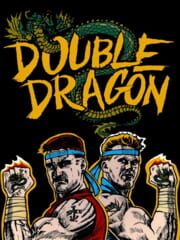 Double Dragon
 is a 1987 beat 'em up video game developed by Technōs Japan and distributed by Taito for arcades across Asia, North America and Europe. It is the first title in the Double Dragon franchise. The player character has a repertoire of martial arts techniques which they can perform using the joystick and three action buttons (kick, jump, and punch) individually or in combination. Techniques range from basic punches and kicks to more elaborate manoeuvres like hair-grabbing moves and elbow strikes. When playing with another player, one can assist the other by grabbing their partner's opponent from behind. Caution should be taken, though, as some enemies can do the same thing to the players. The player begins the game with a certain number of extra lives and a life gauge which depletes as the player takes hits. If the life gauge runs out or the time limit reaches zero, the player will lose a life. There is a small variety of enemy characters that the player will face through the course of the game. Certain enemies carry melee weapons, which can be knocked out of their hands and picked up to use against them. Available weapons include baseball bats, whips, throwing knives, and dynamite; in addition, rocks, oil drums, and boxes can be found in certain places. The game is divided into four stages or "missions," consisting of a city slum, a factory, the woods, and the gang's hideout. The game normally ends if a single player defeats the final boss alone. However, if two players complete the game together, they are forced to fight each other to determine who will win Marian's affections.
39
/100
Double Dragon
Double Dragon is a 1987 beat 'em up video game developed by Technōs Japan and distributed by Taito for arcades across Asia, North America and Europe. It is the first title in the Double Dragon franchise. The player character has a repertoire of martial arts techniques which they can perform using the joystick and three action buttons (kick, jump, and punch) individually or in combination. Techniques range from basic punches and kicks to more elaborate manoeuvres like hair-grabbing moves and elbow strikes. When playing with another player, one can assist the other by grabbing their partner's opponent from behind. Caution should be taken, though, as some enemies can do the same thing to the players. The player begins the game with a certain number of extra lives and a life gauge which depletes as the player takes hits. If the life gauge runs out or the time limit reaches zero, the player will lose a life. There is a small variety of enemy characters that the player will face through the course of the game. Certain enemies carry melee weapons, which can be knocked out of their hands and picked up to use against them. Available weapons include baseball bats, whips, throwing knives, and dynamite; in addition, rocks, oil drums, and boxes can be found in certain places. The game is divided into four stages or "missions," consisting of a city slum, a factory, the woods, and the gang's hideout. The game normally ends if a single player defeats the final boss alone. However, if two players complete the game together, they are forced to fight each other to determine who will win Marian's affections.
39
/100
Golden Axe II (1991)
The Lord of Darkness, Dark Guld, has arisen again. Wielding the famous Golden Axe, he has destroyed entire countries with his evil clan, forcing the world into chaos. Once again, three brave warriors stand up to face the oppressors, and won’t rest until the Golden Axe is returned to its rightful place.
77
/100
05
Mortal Kombat II
Mortal Kombat II is a fighting game originally developed by Midway for arcades in 1993. It serves as the second main installment in the Mortal Kombat franchise and follows the success of its predecessor by enhancing the gameplay and further developing the original game's mythos. Mortal Kombat II introduces more varied finishing moves and several iconic characters, such as Kitana, Mileena, Kung Lao, the hidden character Noob Saibot, and the series' recurring villain, Shao Kahn.
76
/100
06
Mortal Kombat 2
To win the main tournament, the player must beat each of the other human players, before taking on Shang Tsung, Kintaro and finally Shao Kahn. Players have a range of punches and kicks available, as well as flying kicks, uppercuts, roundhouses, and the special moves, which vary for each player. These include throws, uppercuts, long-distance bullets, bicycle kicks and a teleport feature.
70
/100
07
Ultimate Mortal Kombat 3
Ultimate Mortal Kombat 3 combines the best of all the Mortal Kombats into a single cartridge. 23 playable characters are immediately available, such as Reptile, Cyrax, Scorpion, Sub-Zero, Jax, Katana, Sonya, and more. There are two bosses that are unlockable, as well as additional characters and a variety of new levels, some of which are interactive. Players can go against the computer one-on-one, two-on-two, or take part in the 8-fighter tournament.
62
/100
08
Mortal Kombat 3
Mortal Kombat 3 brings new elements to the 2D fighting series: multi-level playfields, "Dial-A-Combo" attacks, a "Run" button to speed up the battles, and "Vs." codes, which unlock new powers and abilities once both players enter a code sequence in pre-match-up screens. Also included are more stage fatalities and finishing moves as each warrior attempts to go one-on-one with the Centaurian enforcer Motaro, and Shao Kahn himself.
50
/100
09
Double Dragon
Double Dragon is a 1987 beat 'em up video game developed by Technōs Japan and distributed by Taito for arcades across Asia, North America and Europe. It is the first title in the Double Dragon franchise. The player character has a repertoire of martial arts techniques which they can perform using the joystick and three action buttons (kick, jump, and punch) individually or in combination. Techniques range from basic punches and kicks to more elaborate manoeuvres like hair-grabbing moves and elbow strikes. When playing with another player, one can assist the other by grabbing their partner's opponent from behind. Caution should be taken, though, as some enemies can do the same thing to the players. The player begins the game with a certain number of extra lives and a life gauge which depletes as the player takes hits. If the life gauge runs out or the time limit reaches zero, the player will lose a life. There is a small variety of enemy characters that the player will face through the course of the game. Certain enemies carry melee weapons, which can be knocked out of their hands and picked up to use against them. Available weapons include baseball bats, whips, throwing knives, and dynamite; in addition, rocks, oil drums, and boxes can be found in certain places. The game is divided into four stages or "missions," consisting of a city slum, a factory, the woods, and the gang's hideout. The game normally ends if a single player defeats the final boss alone. However, if two players complete the game together, they are forced to fight each other to determine who will win Marian's affections.
39
/100
Frequently asked questions
Qual é o melhor jogo de Fighting em Sega Genesis?
Street Fighter II: The World Warrior (1991) lidera atualmente a classificação com uma pontuação de 84/100 em 103 avaliações. Classificação atualizada em setembro 2026.
Como é construída esta classificação?
Os jogos são ordenados pela pontuação agregada da crítica em 100, com um limiar mínimo de votos para que uma única crítica entusiasta nunca ultrapasse um clássico consagrado; os grades de F a S da comunidade Tier são apresentados ao lado de cada jogo.