Melhores jogos
Melhores jogos de Fighting em NES
Os 13 melhores jogos de Fighting em NES, ordenados a partir de 1,374 avaliações da crítica e dos jogadores.
O melhor jogo de Fighting em NES neste momento é Mike Tyson's Punch-Out!!, com uma pontuação da crítica de 83/100 — atualizado em setembro 2026.
Como é construído este ranking
- Os jogos são ordenados pela nota agregada da crítica em 100 importada do IGDB e do Metacritic, nunca pelas notas próprias do Tier.
- Um jogo só entra no ranking a partir de 30 avaliações externas, para que uma única crítica entusiasta nunca ultrapasse um clássico consagrado.
- Cada jogo é classificado num único género, o que melhor o define, para que o mesmo título nunca lidere dois rankings de géneros diferentes.
- As notas da comunidade, de F a S, aparecem ao lado de cada jogo e só são afirmadas como facto acima de 5 avaliações no Tier.
- Período de lançamento abrangido: de 1970 a 2026.
- 13 jogos aparecem nesta página, com 1,374 avaliações no total.
- Os rankings são recalculados de hora a hora; este foi reconstruído a 29 setembro 2026.
Top 13
01
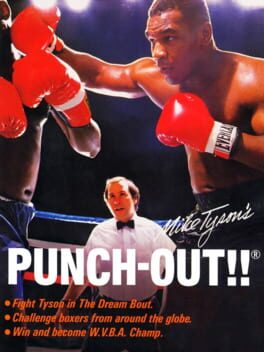 Mike Tyson's Punch-Out!!
Punch-Out!!, originally released in North America as Mike Tyson's Punch-Out!!, is a boxing sports fighting video game for the Nintendo Entertainment System (NES) developed and published by Nintendo in 1987. Part of the Punch-Out!! series, it is a port of both the Punch-Out!! and Super Punch-Out!! arcade games (particularly the latter) with some variations. Punch-Out!! features a boxer known as Little Mac working his way up the professional boxing circuits, facing a series of colorful, fictional boxers, leading to a final fight with real-life boxer, the then-World Heavyweight Champion, which is Mike Tyson in the original version and Mr. Dream in the later version. Little Mac has a limited repertoire compared to most of his opponents. His punches are limited to left and right jabs, left and right body blows, and a powerful uppercut. The uppercut can only be used once the player earns a star, which is typically accomplished by counter-punching the opponent directly before or after certain attacks are launched. The player can acquire up to three stars. To perform the uppercut, the player needs to press the start button once a star is earned. To defend, Mac can dodge left or right, duck, and block punches by putting up his guard. Little Mac also has a heart meter, which decreases by three upon being struck by an opponent and one upon blocking an attack or an opponent blocking/dodging the player's attack. When the heart meter decreases to zero, Little Mac temporarily turns pink and appears exhausted, leaving the player unable to attack but still able to dodge or block. At this point, Mac can regain some hearts (and his normal color palette) only by avoiding the opponent's punches. He immediately loses all of his hearts upon being knocked down, but can regain some by getting up. A bout can end by knockout (KO), if a fighter is unable to get up within ten seconds after being knocked down; by technical knockout (TKO), if a fighter is knocked down three times in one round; or by decision, if the bout lasts three full rounds without a clear winner. In order to win by decision, the player must accumulate higher than a certain point total by punching the opponent and/or knocking him down (different boxers require different point totals to win by decision). However, some bouts cannot be won in this manner and will automatically result in a loss for the player if the opponent is not knocked out. Mac can only get up three times during any one bout; if he is knocked down a fourth time, he will be unable to rise and thus lose by knockout. When Mac loses his first bout to a ranked opponent, he will have a chance to fight a rematch. However, if he loses a Title Bout, he will fall in the rankings - one place for the Minor or Major Circuits, two places for the World Circuit. Losing a rematch causes him to fall one place (unless he is already at the bottom of his circuit), forcing him to fight his way back up. A third loss (not necessarily a consecutive one) ends the game. The exception is the final fight against Mike Tyson/Mr. Dream; a loss to them automatically results in a game over.
83
/100
02
Mike Tyson's Punch-Out!!
Punch-Out!!, originally released in North America as Mike Tyson's Punch-Out!!, is a boxing sports fighting video game for the Nintendo Entertainment System (NES) developed and published by Nintendo in 1987. Part of the Punch-Out!! series, it is a port of both the Punch-Out!! and Super Punch-Out!! arcade games (particularly the latter) with some variations. Punch-Out!! features a boxer known as Little Mac working his way up the professional boxing circuits, facing a series of colorful, fictional boxers, leading to a final fight with real-life boxer, the then-World Heavyweight Champion, which is Mike Tyson in the original version and Mr. Dream in the later version. Little Mac has a limited repertoire compared to most of his opponents. His punches are limited to left and right jabs, left and right body blows, and a powerful uppercut. The uppercut can only be used once the player earns a star, which is typically accomplished by counter-punching the opponent directly before or after certain attacks are launched. The player can acquire up to three stars. To perform the uppercut, the player needs to press the start button once a star is earned. To defend, Mac can dodge left or right, duck, and block punches by putting up his guard. Little Mac also has a heart meter, which decreases by three upon being struck by an opponent and one upon blocking an attack or an opponent blocking/dodging the player's attack. When the heart meter decreases to zero, Little Mac temporarily turns pink and appears exhausted, leaving the player unable to attack but still able to dodge or block. At this point, Mac can regain some hearts (and his normal color palette) only by avoiding the opponent's punches. He immediately loses all of his hearts upon being knocked down, but can regain some by getting up. A bout can end by knockout (KO), if a fighter is unable to get up within ten seconds after being knocked down; by technical knockout (TKO), if a fighter is knocked down three times in one round; or by decision, if the bout lasts three full rounds without a clear winner. In order to win by decision, the player must accumulate higher than a certain point total by punching the opponent and/or knocking him down (different boxers require different point totals to win by decision). However, some bouts cannot be won in this manner and will automatically result in a loss for the player if the opponent is not knocked out. Mac can only get up three times during any one bout; if he is knocked down a fourth time, he will be unable to rise and thus lose by knockout. When Mac loses his first bout to a ranked opponent, he will have a chance to fight a rematch. However, if he loses a Title Bout, he will fall in the rankings - one place for the Minor or Major Circuits, two places for the World Circuit. Losing a rematch causes him to fall one place (unless he is already at the bottom of his circuit), forcing him to fight his way back up. A third loss (not necessarily a consecutive one) ends the game. The exception is the final fight against Mike Tyson/Mr. Dream; a loss to them automatically results in a game over.
83
/100
02
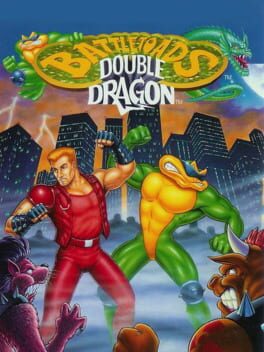 Battletoads & Double Dragon
 - The Ultimate Team is the fourth game in the Battletoads series. It is a crossover with the Double Dragon series of beat 'em up games developed by Technos Japan. It was released for the NES, with ports for the Super NES, Sega Mega Drive/Genesis, and Nintendo Game Boy. Despite the presence of the Double Dragon characters, Technos Japan had no actual role in the game's development.
81
/100
03
Battletoads & Double Dragon
Battletoads & Double Dragon - The Ultimate Team is the fourth game in the Battletoads series. It is a crossover with the Double Dragon series of beat 'em up games developed by Technos Japan. It was released for the NES, with ports for the Super NES, Sega Mega Drive/Genesis, and Nintendo Game Boy. Despite the presence of the Double Dragon characters, Technos Japan had no actual role in the game's development.
81
/100
03
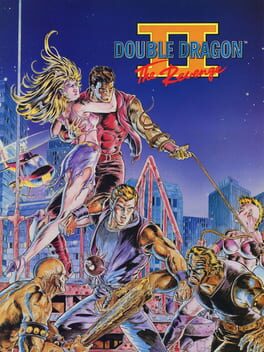 Double Dragon II: The Revenge
The original arcade version of "Double Dragon II" is essentially an improved version of the first game. The biggest change in the game's controls are in the replacement of the original's punch and kick buttons with two directional-based attack buttons (Left Attack and Right Attack) similar to Renegade. Pressing the attack button of the player's current direction will do a standard series of punches, while pressing the opposite attack button will perform a back kick. A few new moves are added as well, including a Hurricane Kick. Like in the original game, the arcade version of Double Dragon II is divided into four missions: a heliport, a lumber storehouse, a wheat field, and the new hideout of the boss. Each stage has its own boss character with his own theme. After defeating Willy (the final boss from the original game) in the fourth stage, the player will confront a double of their own character for the game's final battle. If two players reach the end together, then both will each to have to face their own clone for the final battle.
78
/100
Double Dragon II: The Revenge
The original arcade version of "Double Dragon II" is essentially an improved version of the first game. The biggest change in the game's controls are in the replacement of the original's punch and kick buttons with two directional-based attack buttons (Left Attack and Right Attack) similar to Renegade. Pressing the attack button of the player's current direction will do a standard series of punches, while pressing the opposite attack button will perform a back kick. A few new moves are added as well, including a Hurricane Kick. Like in the original game, the arcade version of Double Dragon II is divided into four missions: a heliport, a lumber storehouse, a wheat field, and the new hideout of the boss. Each stage has its own boss character with his own theme. After defeating Willy (the final boss from the original game) in the fourth stage, the player will confront a double of their own character for the game's final battle. If two players reach the end together, then both will each to have to face their own clone for the final battle.
78
/100
Mike Tyson's Punch-Out!!
Punch-Out!!, originally released in North America as Mike Tyson's Punch-Out!!, is a boxing sports fighting video game for the Nintendo Entertainment System (NES) developed and published by Nintendo in 1987. Part of the Punch-Out!! series, it is a port of both the Punch-Out!! and Super Punch-Out!! arcade games (particularly the latter) with some variations. Punch-Out!! features a boxer known as Little Mac working his way up the professional boxing circuits, facing a series of colorful, fictional boxers, leading to a final fight with real-life boxer, the then-World Heavyweight Champion, which is Mike Tyson in the original version and Mr. Dream in the later version. Little Mac has a limited repertoire compared to most of his opponents. His punches are limited to left and right jabs, left and right body blows, and a powerful uppercut. The uppercut can only be used once the player earns a star, which is typically accomplished by counter-punching the opponent directly before or after certain attacks are launched. The player can acquire up to three stars. To perform the uppercut, the player needs to press the start button once a star is earned. To defend, Mac can dodge left or right, duck, and block punches by putting up his guard. Little Mac also has a heart meter, which decreases by three upon being struck by an opponent and one upon blocking an attack or an opponent blocking/dodging the player's attack. When the heart meter decreases to zero, Little Mac temporarily turns pink and appears exhausted, leaving the player unable to attack but still able to dodge or block. At this point, Mac can regain some hearts (and his normal color palette) only by avoiding the opponent's punches. He immediately loses all of his hearts upon being knocked down, but can regain some by getting up. A bout can end by knockout (KO), if a fighter is unable to get up within ten seconds after being knocked down; by technical knockout (TKO), if a fighter is knocked down three times in one round; or by decision, if the bout lasts three full rounds without a clear winner. In order to win by decision, the player must accumulate higher than a certain point total by punching the opponent and/or knocking him down (different boxers require different point totals to win by decision). However, some bouts cannot be won in this manner and will automatically result in a loss for the player if the opponent is not knocked out. Mac can only get up three times during any one bout; if he is knocked down a fourth time, he will be unable to rise and thus lose by knockout. When Mac loses his first bout to a ranked opponent, he will have a chance to fight a rematch. However, if he loses a Title Bout, he will fall in the rankings - one place for the Minor or Major Circuits, two places for the World Circuit. Losing a rematch causes him to fall one place (unless he is already at the bottom of his circuit), forcing him to fight his way back up. A third loss (not necessarily a consecutive one) ends the game. The exception is the final fight against Mike Tyson/Mr. Dream; a loss to them automatically results in a game over.
83
/100
02
Battletoads & Double Dragon
Battletoads & Double Dragon - The Ultimate Team is the fourth game in the Battletoads series. It is a crossover with the Double Dragon series of beat 'em up games developed by Technos Japan. It was released for the NES, with ports for the Super NES, Sega Mega Drive/Genesis, and Nintendo Game Boy. Despite the presence of the Double Dragon characters, Technos Japan had no actual role in the game's development.
81
/100
03
Double Dragon II: The Revenge
The original arcade version of "Double Dragon II" is essentially an improved version of the first game. The biggest change in the game's controls are in the replacement of the original's punch and kick buttons with two directional-based attack buttons (Left Attack and Right Attack) similar to Renegade. Pressing the attack button of the player's current direction will do a standard series of punches, while pressing the opposite attack button will perform a back kick. A few new moves are added as well, including a Hurricane Kick. Like in the original game, the arcade version of Double Dragon II is divided into four missions: a heliport, a lumber storehouse, a wheat field, and the new hideout of the boss. Each stage has its own boss character with his own theme. After defeating Willy (the final boss from the original game) in the fourth stage, the player will confront a double of their own character for the game's final battle. If two players reach the end together, then both will each to have to face their own clone for the final battle.
78
/100
04
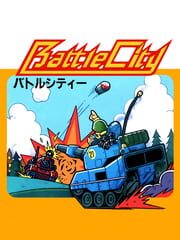 Battle City
, also known as Tank 1990 or Tank in some pirate multicart releases, is a multi-directional shooter video game for the Family Computer produced and published in 1985 by Namco. The game was later released for the Game Boy and was included in the Japanese version of Star Fox: Assault. It is a port of the arcade game Tank Battalion with additional features (including two player simultaneous play and a level edit feature). There was also a rendition for Nintendo's Vs. System arcade cabinets. The player, controlling a tank, must destroy enemy tanks in each level, which enter the playfield from the top of the screen. The enemy tanks attempt to destroy the player's base (represented on the map as a bird, eagle or Phoenix), as well as the human tank itself. A level is completed when the player destroys all 20 enemy tanks, but the game ends if the player's base is destroyed or the player loses all available lives.
78
/100
05
Battle City
Battle City, also known as Tank 1990 or Tank in some pirate multicart releases, is a multi-directional shooter video game for the Family Computer produced and published in 1985 by Namco. The game was later released for the Game Boy and was included in the Japanese version of Star Fox: Assault. It is a port of the arcade game Tank Battalion with additional features (including two player simultaneous play and a level edit feature). There was also a rendition for Nintendo's Vs. System arcade cabinets. The player, controlling a tank, must destroy enemy tanks in each level, which enter the playfield from the top of the screen. The enemy tanks attempt to destroy the player's base (represented on the map as a bird, eagle or Phoenix), as well as the human tank itself. A level is completed when the player destroys all 20 enemy tanks, but the game ends if the player's base is destroyed or the player loses all available lives.
78
/100
05
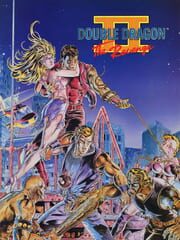 Double Dragon II: The Revenge
Technōs created once again a vastly different experience with Double Dragon II on the NES. The experience system was dropped, but the moveset still underwent a few changes. The elbow attack and turning jump kick are gone, but with the standard kick directed backwards they seemed a bit redundant anyway. There are two new ways to make enemies in a grapple suffer, elbow smashes to the head, and a high kick to propel them away. In the brief time window when the Lee brothers are crouching after a jump or after getting knocked down, it’s possible to perform a rising uppercut or a knee jump attack. The timing for these isn’t easy, but they are the most powerful moves in the game. On the NES, Double Dragon II is a much more innovative and unique sequel than in the arcade, but it marks also the time Double Dragon started its schizophrenic shifting between wildly different tones and gameplay styles. In a way it’s one of the best games to bear the Double Dragon name, but it’s hard to shake the feeling that Technōs had already started to loose a cohesive vision of what it meant to be Double Dragon, both in tone and in gameplay.
75
/100
06
Double Dragon II: The Revenge
Technōs created once again a vastly different experience with Double Dragon II on the NES. The experience system was dropped, but the moveset still underwent a few changes. The elbow attack and turning jump kick are gone, but with the standard kick directed backwards they seemed a bit redundant anyway. There are two new ways to make enemies in a grapple suffer, elbow smashes to the head, and a high kick to propel them away. In the brief time window when the Lee brothers are crouching after a jump or after getting knocked down, it’s possible to perform a rising uppercut or a knee jump attack. The timing for these isn’t easy, but they are the most powerful moves in the game. On the NES, Double Dragon II is a much more innovative and unique sequel than in the arcade, but it marks also the time Double Dragon started its schizophrenic shifting between wildly different tones and gameplay styles. In a way it’s one of the best games to bear the Double Dragon name, but it’s hard to shake the feeling that Technōs had already started to loose a cohesive vision of what it meant to be Double Dragon, both in tone and in gameplay.
75
/100
06
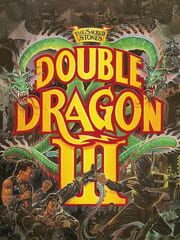 Double Dragon III: The Sacred Stones (1991)
Billy, Jimmy, and the whole Double Dragon gang fight for the Sacred Stones to save in the world in yet another beat-em-up.
73
/100
07
Double Dragon III: The Sacred Stones (1991)
Billy, Jimmy, and the whole Double Dragon gang fight for the Sacred Stones to save in the world in yet another beat-em-up.
73
/100
07
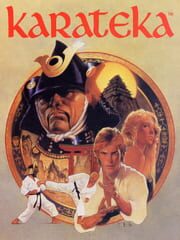 Karateka (1985)
Karateka is a 1984 beat'em up video game by Jordan Mechner, and was his first game created while attending Yale University. It was originally programmed for the Apple II, and was later ported to several other home computers and early gaming consoles. The game was published in North America by Brøderbund, and in Europe by Ariolasoft. The player controls an unnamed protagonist who is attempting to rescue his love interest, the Princess Mariko, from Akuma's castle fortress. The game exhibits a combination of a side-scrolling platform and fighting game elements. The player uses punches and kicks to defeat Akuma and his guards and make his way deeper into the fortress. The game, as with most at the time of development, lacked checkpoints or the ability to save the game, making it a challenge to complete in a single sitting. Karateka has been well-received, particularly for its realistic animations used for the game's characters. The game was considered a breakthrough success for Mechner, and would eventually result in his development of the Prince of Persia franchise. A high-definition remake, spearheaded by Mechner, was released as a downloadable title for the Xbox 360, Microsoft Windows, PlayStation 3, with planned ports for the iOS and Wii U systems.
70
/100
08
Karateka (1985)
Karateka is a 1984 beat'em up video game by Jordan Mechner, and was his first game created while attending Yale University. It was originally programmed for the Apple II, and was later ported to several other home computers and early gaming consoles. The game was published in North America by Brøderbund, and in Europe by Ariolasoft. The player controls an unnamed protagonist who is attempting to rescue his love interest, the Princess Mariko, from Akuma's castle fortress. The game exhibits a combination of a side-scrolling platform and fighting game elements. The player uses punches and kicks to defeat Akuma and his guards and make his way deeper into the fortress. The game, as with most at the time of development, lacked checkpoints or the ability to save the game, making it a challenge to complete in a single sitting. Karateka has been well-received, particularly for its realistic animations used for the game's characters. The game was considered a breakthrough success for Mechner, and would eventually result in his development of the Prince of Persia franchise. A high-definition remake, spearheaded by Mechner, was released as a downloadable title for the Xbox 360, Microsoft Windows, PlayStation 3, with planned ports for the iOS and Wii U systems.
70
/100
08
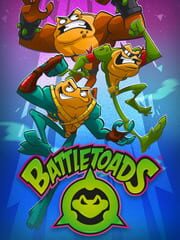 Battletoads
The wait is over! Rash, Zitz and Pimple are returning at last to smash-hit their way through an all-new action-packed adventure of choreographed chaos, and couch co-op may never be the same again. 1-3 players will take control of the Battletoads and team up to storm through wild and unpredictable stages with only one rule – expect the unexpected. Teamwork makes the dream work in a drop-in, drop-out gameplay blast, filled with over-the-top gameplay moments that anyone can enjoy, but only a True ‘Toad’ can master. With a unique hand-animated cartoon style and packed with memorable characters and locations, the Battletoads are back for a larger-than-life brawl across the universe that promises to be fun alone, and unforgettable together.
68
/100
09
Battletoads
The wait is over! Rash, Zitz and Pimple are returning at last to smash-hit their way through an all-new action-packed adventure of choreographed chaos, and couch co-op may never be the same again. 1-3 players will take control of the Battletoads and team up to storm through wild and unpredictable stages with only one rule – expect the unexpected. Teamwork makes the dream work in a drop-in, drop-out gameplay blast, filled with over-the-top gameplay moments that anyone can enjoy, but only a True ‘Toad’ can master. With a unique hand-animated cartoon style and packed with memorable characters and locations, the Battletoads are back for a larger-than-life brawl across the universe that promises to be fun alone, and unforgettable together.
68
/100
09
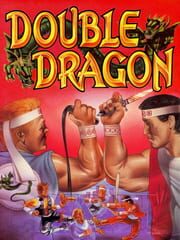 Double Dragon
The NES version of Double Dragon takes a wide range of liberties with the interpretation. The entire graphical style is more in line with Technōs’ Kunio-kun series, with characters that go for exaggerated expression rather than gritty realism. The biggest change, however, was reserved for the moveset. You start the game with only the punch, kick and headbutt available – all the other moves are obtained via an RPG-lite style experience system. Hitting enemies is now rewarded with a certain amount of experience points depending on the attack, and each time the counter goes above 999, you’re awarded an additional heart, which extends the range of possible actions. Two hearts add the uppercut and roundhouse kick combo finishers, and with three Billy can perform the jump kick maneuver. The fourth heart unlocks access to grappling moves.
66
/100
10
Double Dragon
The NES version of Double Dragon takes a wide range of liberties with the interpretation. The entire graphical style is more in line with Technōs’ Kunio-kun series, with characters that go for exaggerated expression rather than gritty realism. The biggest change, however, was reserved for the moveset. You start the game with only the punch, kick and headbutt available – all the other moves are obtained via an RPG-lite style experience system. Hitting enemies is now rewarded with a certain amount of experience points depending on the attack, and each time the counter goes above 999, you’re awarded an additional heart, which extends the range of possible actions. Two hearts add the uppercut and roundhouse kick combo finishers, and with three Billy can perform the jump kick maneuver. The fourth heart unlocks access to grappling moves.
66
/100
10
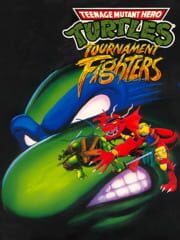 Teenage Mutant Ninja Turtles: Tournament Fighters
Trash the surf board and heave the 'za. It's a whole new breed of Turtles and they're fixated on fighting. We're dead serious, Tournament Fighters takes dude-on-dude demolition to new heights of intensity with 4 modes of pain-producing battles, deadly warriors, secret arenas, astounding graphics and sound effects that'll make you cringe! Clash with Krang-created clones of the Turtles, Casey Jones, April O'Neil, Ray Filet and Sisyphus, plus bosses Triceraton, Krang's Android and Karai. There's flying body presses, knee drops, head butts, rocket punches, elbow smashes, somersault throws, you'll feel and inflict them all. And the settings include Magma Ocean Planet, Jungle Planet, and every other bizarre corner of Dimension X!
66
/100
11
Teenage Mutant Ninja Turtles: Tournament Fighters
Trash the surf board and heave the 'za. It's a whole new breed of Turtles and they're fixated on fighting. We're dead serious, Tournament Fighters takes dude-on-dude demolition to new heights of intensity with 4 modes of pain-producing battles, deadly warriors, secret arenas, astounding graphics and sound effects that'll make you cringe! Clash with Krang-created clones of the Turtles, Casey Jones, April O'Neil, Ray Filet and Sisyphus, plus bosses Triceraton, Krang's Android and Karai. There's flying body presses, knee drops, head butts, rocket punches, elbow smashes, somersault throws, you'll feel and inflict them all. And the settings include Magma Ocean Planet, Jungle Planet, and every other bizarre corner of Dimension X!
66
/100
11
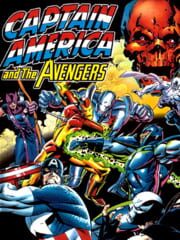 Captain America and The Avengers
65
/100
12
Captain America and The Avengers
65
/100
12
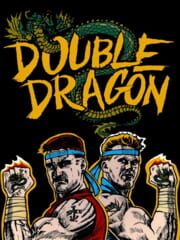 Double Dragon
39
/100
13
Double Dragon
39
/100
13
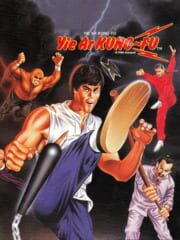 Yie Ar Kung-Fu (1985)
20
/100
Yie Ar Kung-Fu (1985)
20
/100
Battle City
Battle City, also known as Tank 1990 or Tank in some pirate multicart releases, is a multi-directional shooter video game for the Family Computer produced and published in 1985 by Namco. The game was later released for the Game Boy and was included in the Japanese version of Star Fox: Assault. It is a port of the arcade game Tank Battalion with additional features (including two player simultaneous play and a level edit feature). There was also a rendition for Nintendo's Vs. System arcade cabinets. The player, controlling a tank, must destroy enemy tanks in each level, which enter the playfield from the top of the screen. The enemy tanks attempt to destroy the player's base (represented on the map as a bird, eagle or Phoenix), as well as the human tank itself. A level is completed when the player destroys all 20 enemy tanks, but the game ends if the player's base is destroyed or the player loses all available lives.
78
/100
05
Double Dragon II: The Revenge
Technōs created once again a vastly different experience with Double Dragon II on the NES. The experience system was dropped, but the moveset still underwent a few changes. The elbow attack and turning jump kick are gone, but with the standard kick directed backwards they seemed a bit redundant anyway. There are two new ways to make enemies in a grapple suffer, elbow smashes to the head, and a high kick to propel them away. In the brief time window when the Lee brothers are crouching after a jump or after getting knocked down, it’s possible to perform a rising uppercut or a knee jump attack. The timing for these isn’t easy, but they are the most powerful moves in the game. On the NES, Double Dragon II is a much more innovative and unique sequel than in the arcade, but it marks also the time Double Dragon started its schizophrenic shifting between wildly different tones and gameplay styles. In a way it’s one of the best games to bear the Double Dragon name, but it’s hard to shake the feeling that Technōs had already started to loose a cohesive vision of what it meant to be Double Dragon, both in tone and in gameplay.
75
/100
06
Double Dragon III: The Sacred Stones (1991)
Billy, Jimmy, and the whole Double Dragon gang fight for the Sacred Stones to save in the world in yet another beat-em-up.
73
/100
07
Karateka (1985)
Karateka is a 1984 beat'em up video game by Jordan Mechner, and was his first game created while attending Yale University. It was originally programmed for the Apple II, and was later ported to several other home computers and early gaming consoles. The game was published in North America by Brøderbund, and in Europe by Ariolasoft. The player controls an unnamed protagonist who is attempting to rescue his love interest, the Princess Mariko, from Akuma's castle fortress. The game exhibits a combination of a side-scrolling platform and fighting game elements. The player uses punches and kicks to defeat Akuma and his guards and make his way deeper into the fortress. The game, as with most at the time of development, lacked checkpoints or the ability to save the game, making it a challenge to complete in a single sitting. Karateka has been well-received, particularly for its realistic animations used for the game's characters. The game was considered a breakthrough success for Mechner, and would eventually result in his development of the Prince of Persia franchise. A high-definition remake, spearheaded by Mechner, was released as a downloadable title for the Xbox 360, Microsoft Windows, PlayStation 3, with planned ports for the iOS and Wii U systems.
70
/100
08
Battletoads
The wait is over! Rash, Zitz and Pimple are returning at last to smash-hit their way through an all-new action-packed adventure of choreographed chaos, and couch co-op may never be the same again. 1-3 players will take control of the Battletoads and team up to storm through wild and unpredictable stages with only one rule – expect the unexpected. Teamwork makes the dream work in a drop-in, drop-out gameplay blast, filled with over-the-top gameplay moments that anyone can enjoy, but only a True ‘Toad’ can master. With a unique hand-animated cartoon style and packed with memorable characters and locations, the Battletoads are back for a larger-than-life brawl across the universe that promises to be fun alone, and unforgettable together.
68
/100
09
Double Dragon
The NES version of Double Dragon takes a wide range of liberties with the interpretation. The entire graphical style is more in line with Technōs’ Kunio-kun series, with characters that go for exaggerated expression rather than gritty realism. The biggest change, however, was reserved for the moveset. You start the game with only the punch, kick and headbutt available – all the other moves are obtained via an RPG-lite style experience system. Hitting enemies is now rewarded with a certain amount of experience points depending on the attack, and each time the counter goes above 999, you’re awarded an additional heart, which extends the range of possible actions. Two hearts add the uppercut and roundhouse kick combo finishers, and with three Billy can perform the jump kick maneuver. The fourth heart unlocks access to grappling moves.
66
/100
10
Teenage Mutant Ninja Turtles: Tournament Fighters
Trash the surf board and heave the 'za. It's a whole new breed of Turtles and they're fixated on fighting. We're dead serious, Tournament Fighters takes dude-on-dude demolition to new heights of intensity with 4 modes of pain-producing battles, deadly warriors, secret arenas, astounding graphics and sound effects that'll make you cringe! Clash with Krang-created clones of the Turtles, Casey Jones, April O'Neil, Ray Filet and Sisyphus, plus bosses Triceraton, Krang's Android and Karai. There's flying body presses, knee drops, head butts, rocket punches, elbow smashes, somersault throws, you'll feel and inflict them all. And the settings include Magma Ocean Planet, Jungle Planet, and every other bizarre corner of Dimension X!
66
/100
11
Captain America and The Avengers
65
/100
12
Double Dragon
39
/100
13
Yie Ar Kung-Fu (1985)
20
/100
Frequently asked questions
Qual é o melhor jogo de Fighting em NES?
Mike Tyson's Punch-Out!! lidera atualmente a classificação com uma pontuação de 83/100 em 114 avaliações. Classificação atualizada em setembro 2026.
Como é construída esta classificação?
Os jogos são ordenados pela pontuação agregada da crítica em 100, com um limiar mínimo de votos para que uma única crítica entusiasta nunca ultrapasse um clássico consagrado; os grades de F a S da comunidade Tier são apresentados ao lado de cada jogo.