
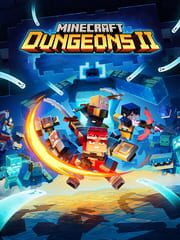
Is Minecraft Dungeons II different enough from the original to justify a fresh save file, or is it the same dungeon crawler with a new coat of paint? The short answer: the numbers say different. Gear slots have doubled, ammo has gone infinite, and the corridors of the first game have been replaced by an open world with fast-travel hubs. This is a structural rebuild, not a texture pack.
The Six-Slot Ceiling Is Gone
The first data point worth flagging is equipment capacity. The original Minecraft Dungeons capped players at 6 combat gear slots. Minecraft Dungeons II, released on September 29, 2026, pushes that to 12 — helmet, chestplate, leggings, boots, weapon, armor, plus a new talisman and artifact category. That's not a marginal buff; it's a full doubling of the build space, and it changes how loot decisions get made at every level-up.
Minecraft Dungeons II builds upon the systems of its predecessor by expanding the number of combat slots from 6 to 12, giving heroes more opportunities to create unique builds and experiment with different playstyles.
From Corridors to Open Regions
The predecessor ran on linear, mission-select dungeons. The sequel swaps that for a vibrant, interconnected open world: large regions carrying narrative events, settlements, structures, fast-travel hubs, and points of interest. Areas like caves and ruins now use variable layouts rather than fixed blueprints, and navigation runs through a world map with teleportation to friends. If the first game was a series of rooms, this one is a map you actually walk across.
Ammo, Enchanting, and the Arithmetic of Build Freedom
Two systems quietly do a lot of the heavy lifting here. Projectile weapons no longer require arrow farming — ammunition is now unlimited and recharges automatically over time, which removes a resource-management chore that used to eat inventory space. Enchanting has also been rebuilt: players collect enchantment books into a personal library and can apply them to any gear slot, then upgrade and level those enchantments over time.
Enchantments can also be upgraded and leveled up over time, allowing you to continually refine and strengthen your favorite builds.
Combine that with the 12-slot loadout and the practical effect is a much wider build matrix than the original game supported — more slots, more enchant flexibility, less busywork keeping quivers full.
Jumping Changes the Combat Equation
For a series built entirely on ground-level hack-and-slash, the addition of jumping is the single biggest mechanical departure. It's the first time the franchise has let players leave the floor, and it isn't purely cosmetic traversal.
Jumping isn't just useful for exploration; it can also play a role in combat, allowing you to strike from above and add some extra momentum to your attacks.
Expect early-game builds to start factoring vertical positioning into damage windows in a way the original's flat arenas never demanded.
Predecessor vs. Sequel, Side by Side
| Criterion | Minecraft Dungeons (original) | Minecraft Dungeons II |
|---|---|---|
| Combat gear slots | 6 | 12 |
| World structure | Linear mission dungeons | Interconnected open regions with fast travel |
| Ammo for projectile weapons | Finite, must be collected | Unlimited, auto-recharges |
| Vertical movement | None | Jumping, usable in combat |
| Enchanting | Fixed per-item enchant rolls | Library-based, transferable, upgradeable |
| Co-op support | Local and online co-op | Solo and up to 4-player co-op with cross-play, couch, and mixed sessions |
Where to Put Your First Hours
Given the systems above, the opening priorities shift compared to the original launch. On day one, it's worth treating the following as the actual critical path rather than optional side content:
- Bank early talisman drops rather than vendoring them — they're a brand-new passive category, not a reskinned trinket slot.
- Stop hoarding arrows; the recharge system means inventory space is better spent on armor and artifacts.
- Start an enchantment book library immediately, since upgrades compound over time rather than resetting per item.
- Test jump-attacks against early bosses before committing to a build — the combat math around aerial strikes is new territory for the franchise.
The Platform and Co-op Math
Minecraft Dungeons II launched simultaneously on PC, PlayStation 5, Xbox Series X|S, Nintendo Switch, and Nintendo Switch 2 — a five-platform day-one spread. Multiplayer supports solo play up to 4-player co-op, with online cross-play, local couch co-op, and mixed sessions letting players on the same console or PC join others online. Developed by Double Eleven and Mojang Studios, with Mojang Studios and Xbox Game Studios publishing, the sequel was previewed at gamescom 2026 with armor smithing and a new boss encounter shown ahead of launch. On every axis measured here — slots, world layout, ammo, verticality, enchanting, and platform reach — the sequel isn't iterating at the margins. It's recalibrating the baseline the first game set.
Sources :

Comments 0