Migliori giochi
Migliori giochi Fighting del 1997
I 9 migliori giochi Fighting usciti nel 1997, ordinati su 1,474 valutazioni di critica e giocatori.
Il miglior gioco Fighting del 1997 è Tekken 3, con un punteggio critico di 84/100 — aggiornato a settembre 2026.
Come è costruita questa classifica
- I giochi sono ordinati in base al voto aggregato della critica su 100 importato da IGDB e Metacritic, mai sui voti propri di Tier.
- Un gioco entra in classifica solo con almeno 30 voti esterni, così una singola recensione entusiasta non supera mai un classico affermato.
- Ogni gioco è classificato in un solo genere, quello che lo definisce meglio, così lo stesso titolo non guida mai due classifiche di generi diversi.
- I voti della community, da F a S, compaiono accanto a ogni gioco e vengono affermati come dato di fatto solo oltre 5 voti su Tier.
- Periodo di uscita coperto: 1997.
- 9 giochi sono elencati in questa pagina, con 1,474 voti in totale.
- Le classifiche sono ricalcolate ogni ora; questa è stata ricostruita il 29 settembre 2026.
Top 9
01
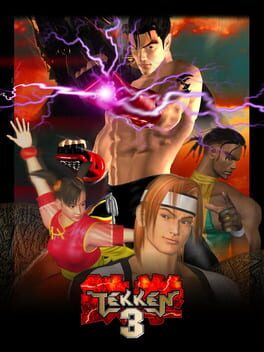 Tekken 3
 is the third installment in the Tekken series. It maintains the same core fighting system as its predecessors but brings many improvements, such as significantly more detailed graphics and animations, fifteen new characters added to the game's roster, more modern music and faster gameplay.
84
/100
02
Tekken 3
Tekken 3 is the third installment in the Tekken series. It maintains the same core fighting system as its predecessors but brings many improvements, such as significantly more detailed graphics and animations, fifteen new characters added to the game's roster, more modern music and faster gameplay.
84
/100
02
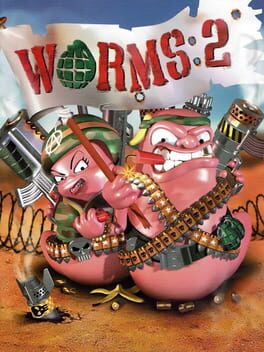 Worms 2
 is a turn-based strategy game, with each team moving in a randomly determined sequence across two-dimensional terrain. During a single turn, a team can only move one of its worms. Worms can crawl and jump, as well as swing by ninja-rope, parachute, teleport, and bungee when the appropriate items are available. The objective of a traditional match or campaign mission is to defeat all opposing teams by killing their worms. When hit with a weapon, the worm will lose health depending on the power of the weapon and the directness of the hit. A worm can be killed either by having its health reduced to zero or being knocked into the water around and below the level.
81
/100
03
Worms 2
Worms 2 is a turn-based strategy game, with each team moving in a randomly determined sequence across two-dimensional terrain. During a single turn, a team can only move one of its worms. Worms can crawl and jump, as well as swing by ninja-rope, parachute, teleport, and bungee when the appropriate items are available. The objective of a traditional match or campaign mission is to defeat all opposing teams by killing their worms. When hit with a weapon, the worm will lose health depending on the power of the weapon and the directness of the hit. A worm can be killed either by having its health reduced to zero or being knocked into the water around and below the level.
81
/100
03
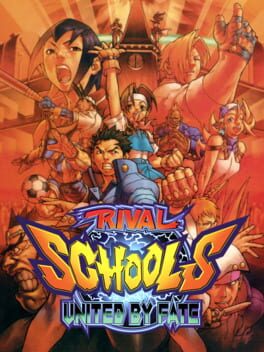 Rival Schools: United by Fate
The main fighting game is best described as a polygonal Marvel vs. Capcom game, with some notable differences. Control wise, the game varies from other Capcom fighting games by only having four buttons (two punches and two kicks, which is closer to the SNK game format) rather than the standard six. A player chooses a team of two characters, and fights against another two character team. The actual fights, however, are one-on-one fights, with the partner only participating by being called in when a player has enough 'vigor' for a Team Up attack, done by pressing a punch and kick button of the same pressure. The Team Ups would be some kind of double team attack by the character and partner, or (for most female characters' Team Ups) would heal the main character or give them more vigor. After the end of a round, a player (win or lose) has a choice to fight the next round with the partner from the previous round, or to keep their main character in play. The 'vigor' meter (essentially a super meter) could go up to 9 levels, with Team Ups costing two levels and super moves from a single person all costing one level of vigor. Much like the Marvel vs. Capcom games, launchers can be done that allow air combos to be performed, with all characters having universal low and high launchers. The game also had a few defensive techniques. Tardy Counters acted much like Alpha Counters from Street Fighter Alpha, allowing a player to immediately counter-attack from a blocking position. However, the restrictions on Tardy Counters are very lax; any hard normal, special or super attack can be used to Tardy counter (Alpha counters are only limited to certain special moves for each character), and Tardy Counters do not cost any extra vigor to perform (Alpha Counters required at least a level of Super Combo gauge to do). Attack Cancels allowed a player to cancel an incoming hit simply by timing their own hit with the attack, which would cancel out both attacks (though it does not nullify the remaining hits of a multi-hit move). Also, one additional level of vigor is awarded.
82
/100
Rival Schools: United by Fate
The main fighting game is best described as a polygonal Marvel vs. Capcom game, with some notable differences. Control wise, the game varies from other Capcom fighting games by only having four buttons (two punches and two kicks, which is closer to the SNK game format) rather than the standard six. A player chooses a team of two characters, and fights against another two character team. The actual fights, however, are one-on-one fights, with the partner only participating by being called in when a player has enough 'vigor' for a Team Up attack, done by pressing a punch and kick button of the same pressure. The Team Ups would be some kind of double team attack by the character and partner, or (for most female characters' Team Ups) would heal the main character or give them more vigor. After the end of a round, a player (win or lose) has a choice to fight the next round with the partner from the previous round, or to keep their main character in play. The 'vigor' meter (essentially a super meter) could go up to 9 levels, with Team Ups costing two levels and super moves from a single person all costing one level of vigor. Much like the Marvel vs. Capcom games, launchers can be done that allow air combos to be performed, with all characters having universal low and high launchers. The game also had a few defensive techniques. Tardy Counters acted much like Alpha Counters from Street Fighter Alpha, allowing a player to immediately counter-attack from a blocking position. However, the restrictions on Tardy Counters are very lax; any hard normal, special or super attack can be used to Tardy counter (Alpha counters are only limited to certain special moves for each character), and Tardy Counters do not cost any extra vigor to perform (Alpha Counters required at least a level of Super Combo gauge to do). Attack Cancels allowed a player to cancel an incoming hit simply by timing their own hit with the attack, which would cancel out both attacks (though it does not nullify the remaining hits of a multi-hit move). Also, one additional level of vigor is awarded.
82
/100
Tekken 3
Tekken 3 is the third installment in the Tekken series. It maintains the same core fighting system as its predecessors but brings many improvements, such as significantly more detailed graphics and animations, fifteen new characters added to the game's roster, more modern music and faster gameplay.
84
/100
02
Worms 2
Worms 2 is a turn-based strategy game, with each team moving in a randomly determined sequence across two-dimensional terrain. During a single turn, a team can only move one of its worms. Worms can crawl and jump, as well as swing by ninja-rope, parachute, teleport, and bungee when the appropriate items are available. The objective of a traditional match or campaign mission is to defeat all opposing teams by killing their worms. When hit with a weapon, the worm will lose health depending on the power of the weapon and the directness of the hit. A worm can be killed either by having its health reduced to zero or being knocked into the water around and below the level.
81
/100
03
Rival Schools: United by Fate
The main fighting game is best described as a polygonal Marvel vs. Capcom game, with some notable differences. Control wise, the game varies from other Capcom fighting games by only having four buttons (two punches and two kicks, which is closer to the SNK game format) rather than the standard six. A player chooses a team of two characters, and fights against another two character team. The actual fights, however, are one-on-one fights, with the partner only participating by being called in when a player has enough 'vigor' for a Team Up attack, done by pressing a punch and kick button of the same pressure. The Team Ups would be some kind of double team attack by the character and partner, or (for most female characters' Team Ups) would heal the main character or give them more vigor. After the end of a round, a player (win or lose) has a choice to fight the next round with the partner from the previous round, or to keep their main character in play. The 'vigor' meter (essentially a super meter) could go up to 9 levels, with Team Ups costing two levels and super moves from a single person all costing one level of vigor. Much like the Marvel vs. Capcom games, launchers can be done that allow air combos to be performed, with all characters having universal low and high launchers. The game also had a few defensive techniques. Tardy Counters acted much like Alpha Counters from Street Fighter Alpha, allowing a player to immediately counter-attack from a blocking position. However, the restrictions on Tardy Counters are very lax; any hard normal, special or super attack can be used to Tardy counter (Alpha counters are only limited to certain special moves for each character), and Tardy Counters do not cost any extra vigor to perform (Alpha Counters required at least a level of Super Combo gauge to do). Attack Cancels allowed a player to cancel an incoming hit simply by timing their own hit with the attack, which would cancel out both attacks (though it does not nullify the remaining hits of a multi-hit move). Also, one additional level of vigor is awarded.
82
/100
04
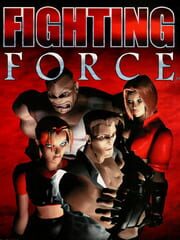 Fighting Force
 players control one of four characters. They move through urban and science fiction environments, battling waves of oncoming enemies with weapons ranging from fists and bottles to knives, chairs and guns. The player can make some choices as to which territory to travel through. The four characters have various reasons for taking on Dr. Zeng, a criminal mastermind with an army at his command. The action starts with a police cordon around Zeng's office skyscraper, moving to such locales as a shopping mall, subway and Coast Guard base before finally ending at the top of Zeng's island headquarters.
74
/100
05
Fighting Force
Fighting Force players control one of four characters. They move through urban and science fiction environments, battling waves of oncoming enemies with weapons ranging from fists and bottles to knives, chairs and guns. The player can make some choices as to which territory to travel through. The four characters have various reasons for taking on Dr. Zeng, a criminal mastermind with an army at his command. The action starts with a police cordon around Zeng's office skyscraper, moving to such locales as a shopping mall, subway and Coast Guard base before finally ending at the top of Zeng's island headquarters.
74
/100
05
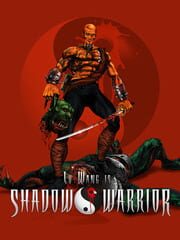 Shadow Warrior
 is a first-person shooter video game developed by 3D Realms and released on May 13, 1997 by GT Interactive. Shadow Warrior was developed using Ken Silverman's Build engine and improved on 3D Realms' previous Build engine game, Duke Nukem 3D. Mark Adams ported Shadow Warrior to Mac OS in August 1997. The game's improvements included introduction of true room-over-room situations, the use of 3D voxels instead of 2D sprites for weapons and usable inventory items, transparent water, climbable ladders, and assorted vehicles to drive (some armed with weapons). Although ultra-violent, the game emphasized tongue-in-cheek humor and contained some sexual themes (although less blatantly than in Duke Nukem 3D). A combination of Duke Nukem 3D and Shadow Warrior was published by GT Interactive in March 1998, titled East Meets West.
73
/100
06
Shadow Warrior
Shadow Warrior is a first-person shooter video game developed by 3D Realms and released on May 13, 1997 by GT Interactive. Shadow Warrior was developed using Ken Silverman's Build engine and improved on 3D Realms' previous Build engine game, Duke Nukem 3D. Mark Adams ported Shadow Warrior to Mac OS in August 1997. The game's improvements included introduction of true room-over-room situations, the use of 3D voxels instead of 2D sprites for weapons and usable inventory items, transparent water, climbable ladders, and assorted vehicles to drive (some armed with weapons). Although ultra-violent, the game emphasized tongue-in-cheek humor and contained some sexual themes (although less blatantly than in Duke Nukem 3D). A combination of Duke Nukem 3D and Shadow Warrior was published by GT Interactive in March 1998, titled East Meets West.
73
/100
06
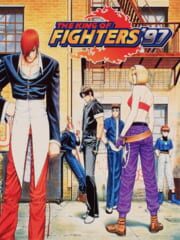 THE KING OF FIGHTERS '97
The King of Fighters '97 is a 1997 fighting game produced by SNK for the Neo Geo arcade and home console. It is the fourth game in The King of Fighters series. It was ported to the Neo-Geo CD, as well as the PlayStation and the Sega Saturn in Japan only.
71
/100
07
THE KING OF FIGHTERS '97
The King of Fighters '97 is a 1997 fighting game produced by SNK for the Neo Geo arcade and home console. It is the fourth game in The King of Fighters series. It was ported to the Neo-Geo CD, as well as the PlayStation and the Sega Saturn in Japan only.
71
/100
07
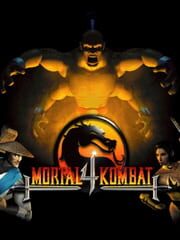 Mortal Kombat 4
 is 1 vs 1 fighting game, similar to the other Mortal Kombat games, but this is first game in series with 3D characters models. The player can choose from 15 different fighters at the start (and several unlockables later on). Many fighters from earlier games in the series make a comeback (like Scorpion, Sub Zero, Liu Kang, Sonya Blade, Johnny Cage etc.) while other new fighters join in, like Shinook (who is the main evil character in this game), Fujin, Jarek, and Kai. Goro returns as a boss.
69
/100
08
Mortal Kombat 4
Mortal Kombat 4 is 1 vs 1 fighting game, similar to the other Mortal Kombat games, but this is first game in series with 3D characters models. The player can choose from 15 different fighters at the start (and several unlockables later on). Many fighters from earlier games in the series make a comeback (like Scorpion, Sub Zero, Liu Kang, Sonya Blade, Johnny Cage etc.) while other new fighters join in, like Shinook (who is the main evil character in this game), Fujin, Jarek, and Kai. Goro returns as a boss.
69
/100
08
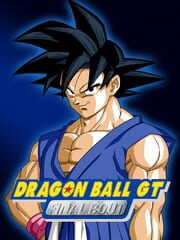 Dragon Ball GT: Final Bout
After achieving cult hit status around the globe, Dragon Ball GT has finally arrived in the U.S. This polygon rendered fighting game features 10 of the best warriors from the animated television series going head-to-head in a no-holds-barred tournament. Each player has devastating finishing moves, including the infamous "Meteor Smash", which can be countered by an opponent, resulting in some of the most incredible power struggles you'll ever see! There are also 8 playable hidden characters and a practice mode that lets you build up the skills of each fighter. Now, you can find out what gamers around the world already know -- Dragon Ball GT is the ultimate fighting game!
60
/100
09
Dragon Ball GT: Final Bout
After achieving cult hit status around the globe, Dragon Ball GT has finally arrived in the U.S. This polygon rendered fighting game features 10 of the best warriors from the animated television series going head-to-head in a no-holds-barred tournament. Each player has devastating finishing moves, including the infamous "Meteor Smash", which can be countered by an opponent, resulting in some of the most incredible power struggles you'll ever see! There are also 8 playable hidden characters and a practice mode that lets you build up the skills of each fighter. Now, you can find out what gamers around the world already know -- Dragon Ball GT is the ultimate fighting game!
60
/100
09
 Mortal Kombat Mythologies: Sub-Zero
 is a story-driven fighting game that casts you in the shoes of Sub-Zero, and chronicles a series of events that occurred prior to Mortal Kombat 1. It is the first Mortal Kombat game to feature side-scrolling gameplay. Gameplay wise the game takes the Mortal Kombat familiar 2D fighting environment and turns it into a hybrid fighter/platformer game, where you must travel trough hazardous levels running and jumping around as well as fighting your way against both digitized and polygonal enemies. Sub-Zero's interface is the same as in every MK game, with the addition of a "use" and "turn around" buttons and additions such as an inventory, and a slight RPG twist in which you get exp. for defeating opponents, which translates into new techniques and moves to execute in the game.
48
/100
Mortal Kombat Mythologies: Sub-Zero
Mortal Kombat Mythologies: Sub-Zero is a story-driven fighting game that casts you in the shoes of Sub-Zero, and chronicles a series of events that occurred prior to Mortal Kombat 1. It is the first Mortal Kombat game to feature side-scrolling gameplay. Gameplay wise the game takes the Mortal Kombat familiar 2D fighting environment and turns it into a hybrid fighter/platformer game, where you must travel trough hazardous levels running and jumping around as well as fighting your way against both digitized and polygonal enemies. Sub-Zero's interface is the same as in every MK game, with the addition of a "use" and "turn around" buttons and additions such as an inventory, and a slight RPG twist in which you get exp. for defeating opponents, which translates into new techniques and moves to execute in the game.
48
/100
Fighting Force
Fighting Force players control one of four characters. They move through urban and science fiction environments, battling waves of oncoming enemies with weapons ranging from fists and bottles to knives, chairs and guns. The player can make some choices as to which territory to travel through. The four characters have various reasons for taking on Dr. Zeng, a criminal mastermind with an army at his command. The action starts with a police cordon around Zeng's office skyscraper, moving to such locales as a shopping mall, subway and Coast Guard base before finally ending at the top of Zeng's island headquarters.
74
/100
05
Shadow Warrior
Shadow Warrior is a first-person shooter video game developed by 3D Realms and released on May 13, 1997 by GT Interactive. Shadow Warrior was developed using Ken Silverman's Build engine and improved on 3D Realms' previous Build engine game, Duke Nukem 3D. Mark Adams ported Shadow Warrior to Mac OS in August 1997. The game's improvements included introduction of true room-over-room situations, the use of 3D voxels instead of 2D sprites for weapons and usable inventory items, transparent water, climbable ladders, and assorted vehicles to drive (some armed with weapons). Although ultra-violent, the game emphasized tongue-in-cheek humor and contained some sexual themes (although less blatantly than in Duke Nukem 3D). A combination of Duke Nukem 3D and Shadow Warrior was published by GT Interactive in March 1998, titled East Meets West.
73
/100
06
THE KING OF FIGHTERS '97
The King of Fighters '97 is a 1997 fighting game produced by SNK for the Neo Geo arcade and home console. It is the fourth game in The King of Fighters series. It was ported to the Neo-Geo CD, as well as the PlayStation and the Sega Saturn in Japan only.
71
/100
07
Mortal Kombat 4
Mortal Kombat 4 is 1 vs 1 fighting game, similar to the other Mortal Kombat games, but this is first game in series with 3D characters models. The player can choose from 15 different fighters at the start (and several unlockables later on). Many fighters from earlier games in the series make a comeback (like Scorpion, Sub Zero, Liu Kang, Sonya Blade, Johnny Cage etc.) while other new fighters join in, like Shinook (who is the main evil character in this game), Fujin, Jarek, and Kai. Goro returns as a boss.
69
/100
08
Dragon Ball GT: Final Bout
After achieving cult hit status around the globe, Dragon Ball GT has finally arrived in the U.S. This polygon rendered fighting game features 10 of the best warriors from the animated television series going head-to-head in a no-holds-barred tournament. Each player has devastating finishing moves, including the infamous "Meteor Smash", which can be countered by an opponent, resulting in some of the most incredible power struggles you'll ever see! There are also 8 playable hidden characters and a practice mode that lets you build up the skills of each fighter. Now, you can find out what gamers around the world already know -- Dragon Ball GT is the ultimate fighting game!
60
/100
09
Mortal Kombat Mythologies: Sub-Zero
Mortal Kombat Mythologies: Sub-Zero is a story-driven fighting game that casts you in the shoes of Sub-Zero, and chronicles a series of events that occurred prior to Mortal Kombat 1. It is the first Mortal Kombat game to feature side-scrolling gameplay. Gameplay wise the game takes the Mortal Kombat familiar 2D fighting environment and turns it into a hybrid fighter/platformer game, where you must travel trough hazardous levels running and jumping around as well as fighting your way against both digitized and polygonal enemies. Sub-Zero's interface is the same as in every MK game, with the addition of a "use" and "turn around" buttons and additions such as an inventory, and a slight RPG twist in which you get exp. for defeating opponents, which translates into new techniques and moves to execute in the game.
48
/100
Domande frequenti
Qual è il miglior gioco Fighting del 1997?
Tekken 3 è attualmente in testa alla classifica con un punteggio di 84/100 su 553 valutazioni. Classifica aggiornata a settembre 2026.
Come viene costruita questa classifica?
I giochi sono ordinati in base al punteggio critico aggregato su 100, con una soglia minima di voti perché una singola recensione entusiasta non superi mai un classico consolidato; i gradi da F a S della community Tier sono mostrati accanto a ogni gioco.