Migliori giochi
Migliori giochi NES del 1987
I 10 migliori giochi NES usciti nel 1987, ordinati su 1,517 valutazioni di critica e giocatori.
Il miglior gioco NES del 1987 è Maniac Mansion, con un punteggio critico di 90/100 — aggiornato a settembre 2026.
Come è costruita questa classifica
- I giochi sono ordinati in base al voto aggregato della critica su 100 importato da IGDB e Metacritic, mai sui voti propri di Tier.
- Un gioco entra in classifica solo con almeno 30 voti esterni, così una singola recensione entusiasta non supera mai un classico affermato.
- I voti della community, da F a S, compaiono accanto a ogni gioco e vengono affermati come dato di fatto solo oltre 5 voti su Tier.
- Periodo di uscita coperto: 1987.
- 10 giochi sono elencati in questa pagina, con 1,517 voti in totale.
- Le classifiche sono ricalcolate ogni ora; questa è stata ricostruita il 29 settembre 2026.
Top 10
01
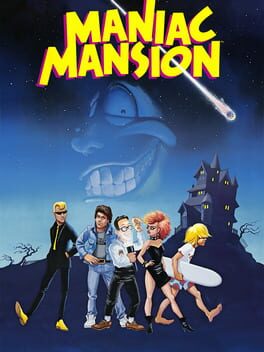 Maniac Mansion
 is a 1987 graphic adventure video game developed and published by Lucasfilm Games. It follows teenage protagonist Dave Miller as he attempts to rescue his girlfriend from a mad scientist, whose mind has been enslaved by a sentient meteor. The player uses a point-and-click interface to guide Dave and two of his six playable friends through the scientist's mansion while solving puzzles and avoiding dangers. Gameplay is nonlinear, and the game must be completed in different ways based on the player's choice of characters. Initially released for the Commodore 64 and Apple II, Maniac Mansion was Lucasfilm Games' first self-published product.
90
/100
02
Maniac Mansion
Maniac Mansion is a 1987 graphic adventure video game developed and published by Lucasfilm Games. It follows teenage protagonist Dave Miller as he attempts to rescue his girlfriend from a mad scientist, whose mind has been enslaved by a sentient meteor. The player uses a point-and-click interface to guide Dave and two of his six playable friends through the scientist's mansion while solving puzzles and avoiding dangers. Gameplay is nonlinear, and the game must be completed in different ways based on the player's choice of characters. Initially released for the Commodore 64 and Apple II, Maniac Mansion was Lucasfilm Games' first self-published product.
90
/100
02
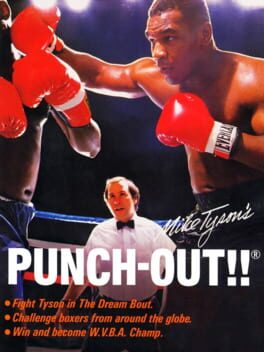 Mike Tyson's Punch-Out!!
Punch-Out!!, originally released in North America as Mike Tyson's Punch-Out!!, is a boxing sports fighting video game for the Nintendo Entertainment System (NES) developed and published by Nintendo in 1987. Part of the Punch-Out!! series, it is a port of both the Punch-Out!! and Super Punch-Out!! arcade games (particularly the latter) with some variations. Punch-Out!! features a boxer known as Little Mac working his way up the professional boxing circuits, facing a series of colorful, fictional boxers, leading to a final fight with real-life boxer, the then-World Heavyweight Champion, which is Mike Tyson in the original version and Mr. Dream in the later version. Little Mac has a limited repertoire compared to most of his opponents. His punches are limited to left and right jabs, left and right body blows, and a powerful uppercut. The uppercut can only be used once the player earns a star, which is typically accomplished by counter-punching the opponent directly before or after certain attacks are launched. The player can acquire up to three stars. To perform the uppercut, the player needs to press the start button once a star is earned. To defend, Mac can dodge left or right, duck, and block punches by putting up his guard. Little Mac also has a heart meter, which decreases by three upon being struck by an opponent and one upon blocking an attack or an opponent blocking/dodging the player's attack. When the heart meter decreases to zero, Little Mac temporarily turns pink and appears exhausted, leaving the player unable to attack but still able to dodge or block. At this point, Mac can regain some hearts (and his normal color palette) only by avoiding the opponent's punches. He immediately loses all of his hearts upon being knocked down, but can regain some by getting up. A bout can end by knockout (KO), if a fighter is unable to get up within ten seconds after being knocked down; by technical knockout (TKO), if a fighter is knocked down three times in one round; or by decision, if the bout lasts three full rounds without a clear winner. In order to win by decision, the player must accumulate higher than a certain point total by punching the opponent and/or knocking him down (different boxers require different point totals to win by decision). However, some bouts cannot be won in this manner and will automatically result in a loss for the player if the opponent is not knocked out. Mac can only get up three times during any one bout; if he is knocked down a fourth time, he will be unable to rise and thus lose by knockout. When Mac loses his first bout to a ranked opponent, he will have a chance to fight a rematch. However, if he loses a Title Bout, he will fall in the rankings - one place for the Minor or Major Circuits, two places for the World Circuit. Losing a rematch causes him to fall one place (unless he is already at the bottom of his circuit), forcing him to fight his way back up. A third loss (not necessarily a consecutive one) ends the game. The exception is the final fight against Mike Tyson/Mr. Dream; a loss to them automatically results in a game over.
83
/100
03
Mike Tyson's Punch-Out!!
Punch-Out!!, originally released in North America as Mike Tyson's Punch-Out!!, is a boxing sports fighting video game for the Nintendo Entertainment System (NES) developed and published by Nintendo in 1987. Part of the Punch-Out!! series, it is a port of both the Punch-Out!! and Super Punch-Out!! arcade games (particularly the latter) with some variations. Punch-Out!! features a boxer known as Little Mac working his way up the professional boxing circuits, facing a series of colorful, fictional boxers, leading to a final fight with real-life boxer, the then-World Heavyweight Champion, which is Mike Tyson in the original version and Mr. Dream in the later version. Little Mac has a limited repertoire compared to most of his opponents. His punches are limited to left and right jabs, left and right body blows, and a powerful uppercut. The uppercut can only be used once the player earns a star, which is typically accomplished by counter-punching the opponent directly before or after certain attacks are launched. The player can acquire up to three stars. To perform the uppercut, the player needs to press the start button once a star is earned. To defend, Mac can dodge left or right, duck, and block punches by putting up his guard. Little Mac also has a heart meter, which decreases by three upon being struck by an opponent and one upon blocking an attack or an opponent blocking/dodging the player's attack. When the heart meter decreases to zero, Little Mac temporarily turns pink and appears exhausted, leaving the player unable to attack but still able to dodge or block. At this point, Mac can regain some hearts (and his normal color palette) only by avoiding the opponent's punches. He immediately loses all of his hearts upon being knocked down, but can regain some by getting up. A bout can end by knockout (KO), if a fighter is unable to get up within ten seconds after being knocked down; by technical knockout (TKO), if a fighter is knocked down three times in one round; or by decision, if the bout lasts three full rounds without a clear winner. In order to win by decision, the player must accumulate higher than a certain point total by punching the opponent and/or knocking him down (different boxers require different point totals to win by decision). However, some bouts cannot be won in this manner and will automatically result in a loss for the player if the opponent is not knocked out. Mac can only get up three times during any one bout; if he is knocked down a fourth time, he will be unable to rise and thus lose by knockout. When Mac loses his first bout to a ranked opponent, he will have a chance to fight a rematch. However, if he loses a Title Bout, he will fall in the rankings - one place for the Minor or Major Circuits, two places for the World Circuit. Losing a rematch causes him to fall one place (unless he is already at the bottom of his circuit), forcing him to fight his way back up. A third loss (not necessarily a consecutive one) ends the game. The exception is the final fight against Mike Tyson/Mr. Dream; a loss to them automatically results in a game over.
83
/100
03
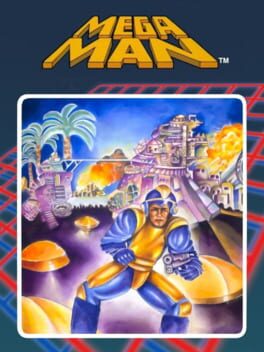 Mega Man (1987)
Experience the game that started it all! Play as cybernetic hero Mega Man as you battle to stop the evil scientist Dr. Wily and his Robot Masters from taking over the world! A classic platformer in every sense of the word, Mega Man features timeless 8-bit graphics, a memorable soundtrack, and balanced but challenging gameplay that combine to create one of the most iconic video games of all time. Mega Man, known as Rockman in Japan, is a 1987 action-platform video game developed and published by Capcom for the Nintendo Entertainment System (NES). It was directed by Akira Kitamura, with Nobuyuki Matsushima as lead programmer, and is the first game of the Mega Man franchise and the original video game series. Mega Man was produced by a small team specifically for the home console market, a first for Capcom, who previously focused on arcade titles.
76
/100
Mega Man (1987)
Experience the game that started it all! Play as cybernetic hero Mega Man as you battle to stop the evil scientist Dr. Wily and his Robot Masters from taking over the world! A classic platformer in every sense of the word, Mega Man features timeless 8-bit graphics, a memorable soundtrack, and balanced but challenging gameplay that combine to create one of the most iconic video games of all time. Mega Man, known as Rockman in Japan, is a 1987 action-platform video game developed and published by Capcom for the Nintendo Entertainment System (NES). It was directed by Akira Kitamura, with Nobuyuki Matsushima as lead programmer, and is the first game of the Mega Man franchise and the original video game series. Mega Man was produced by a small team specifically for the home console market, a first for Capcom, who previously focused on arcade titles.
76
/100
Maniac Mansion
Maniac Mansion is a 1987 graphic adventure video game developed and published by Lucasfilm Games. It follows teenage protagonist Dave Miller as he attempts to rescue his girlfriend from a mad scientist, whose mind has been enslaved by a sentient meteor. The player uses a point-and-click interface to guide Dave and two of his six playable friends through the scientist's mansion while solving puzzles and avoiding dangers. Gameplay is nonlinear, and the game must be completed in different ways based on the player's choice of characters. Initially released for the Commodore 64 and Apple II, Maniac Mansion was Lucasfilm Games' first self-published product.
90
/100
02
Mike Tyson's Punch-Out!!
Punch-Out!!, originally released in North America as Mike Tyson's Punch-Out!!, is a boxing sports fighting video game for the Nintendo Entertainment System (NES) developed and published by Nintendo in 1987. Part of the Punch-Out!! series, it is a port of both the Punch-Out!! and Super Punch-Out!! arcade games (particularly the latter) with some variations. Punch-Out!! features a boxer known as Little Mac working his way up the professional boxing circuits, facing a series of colorful, fictional boxers, leading to a final fight with real-life boxer, the then-World Heavyweight Champion, which is Mike Tyson in the original version and Mr. Dream in the later version. Little Mac has a limited repertoire compared to most of his opponents. His punches are limited to left and right jabs, left and right body blows, and a powerful uppercut. The uppercut can only be used once the player earns a star, which is typically accomplished by counter-punching the opponent directly before or after certain attacks are launched. The player can acquire up to three stars. To perform the uppercut, the player needs to press the start button once a star is earned. To defend, Mac can dodge left or right, duck, and block punches by putting up his guard. Little Mac also has a heart meter, which decreases by three upon being struck by an opponent and one upon blocking an attack or an opponent blocking/dodging the player's attack. When the heart meter decreases to zero, Little Mac temporarily turns pink and appears exhausted, leaving the player unable to attack but still able to dodge or block. At this point, Mac can regain some hearts (and his normal color palette) only by avoiding the opponent's punches. He immediately loses all of his hearts upon being knocked down, but can regain some by getting up. A bout can end by knockout (KO), if a fighter is unable to get up within ten seconds after being knocked down; by technical knockout (TKO), if a fighter is knocked down three times in one round; or by decision, if the bout lasts three full rounds without a clear winner. In order to win by decision, the player must accumulate higher than a certain point total by punching the opponent and/or knocking him down (different boxers require different point totals to win by decision). However, some bouts cannot be won in this manner and will automatically result in a loss for the player if the opponent is not knocked out. Mac can only get up three times during any one bout; if he is knocked down a fourth time, he will be unable to rise and thus lose by knockout. When Mac loses his first bout to a ranked opponent, he will have a chance to fight a rematch. However, if he loses a Title Bout, he will fall in the rankings - one place for the Minor or Major Circuits, two places for the World Circuit. Losing a rematch causes him to fall one place (unless he is already at the bottom of his circuit), forcing him to fight his way back up. A third loss (not necessarily a consecutive one) ends the game. The exception is the final fight against Mike Tyson/Mr. Dream; a loss to them automatically results in a game over.
83
/100
03
Mega Man (1987)
Experience the game that started it all! Play as cybernetic hero Mega Man as you battle to stop the evil scientist Dr. Wily and his Robot Masters from taking over the world! A classic platformer in every sense of the word, Mega Man features timeless 8-bit graphics, a memorable soundtrack, and balanced but challenging gameplay that combine to create one of the most iconic video games of all time. Mega Man, known as Rockman in Japan, is a 1987 action-platform video game developed and published by Capcom for the Nintendo Entertainment System (NES). It was directed by Akira Kitamura, with Nobuyuki Matsushima as lead programmer, and is the first game of the Mega Man franchise and the original video game series. Mega Man was produced by a small team specifically for the home console market, a first for Capcom, who previously focused on arcade titles.
76
/100
04
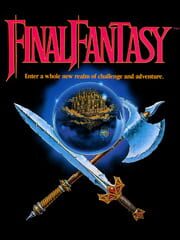 S
Final Fantasy (1987)
Final Fantasy, also known as FFI in re-releases, is the first role-playing game title in Square's flagship Final Fantasy series. The game puts players in control of four characters known as the Warriors of Light, and begins by asking the player to select the classes and names of each. The Warriors of Light can traverse the maps of dungeons and towns, which are connected by a world map, and will run into random encounters with enemies or fight bosses.
70
/100
05
S
Final Fantasy (1987)
Final Fantasy, also known as FFI in re-releases, is the first role-playing game title in Square's flagship Final Fantasy series. The game puts players in control of four characters known as the Warriors of Light, and begins by asking the player to select the classes and names of each. The Warriors of Light can traverse the maps of dungeons and towns, which are connected by a world map, and will run into random encounters with enemies or fight bosses.
70
/100
05
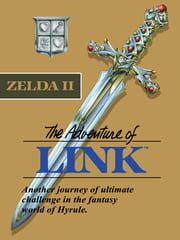 Zelda II: The Adventure of Link
 is the second major installment in The Legend of Zelda series and the direct sequel to the first game. Like its predecessor, it features dungeons that must be located in the overworld and searched for an item that will prove useful. However, the game presents many very important gameplay changes compared to the previous one, affecting especially the movements and the combat. Moving around the world map involves encounters with enemies that take place on a side-scrolling playfield rather than the top-down perspective for which the series became known.
66
/100
06
Zelda II: The Adventure of Link
Zelda II: The Adventure of Link is the second major installment in The Legend of Zelda series and the direct sequel to the first game. Like its predecessor, it features dungeons that must be located in the overworld and searched for an item that will prove useful. However, the game presents many very important gameplay changes compared to the previous one, affecting especially the movements and the combat. Moving around the world map involves encounters with enemies that take place on a side-scrolling playfield rather than the top-down perspective for which the series became known.
66
/100
06
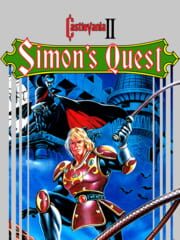 Castlevania II: Simon's Quest (1987)
Castlevania was a cakewalk compared to this bloody curse. You thought you had the Prince of Darkness defanged - eh, Simon Belmont? Well think again, 'cause according to a damsel in distress, evil Count Dracula has left a horrifying curse in his wake. And the only hope you have of ending the terror is to destroy his missing body parts! Talk about your frightening quest, searching a maze of mansions, graveyards and dark, eerie forests - each guarded by man-eating werewolves, fire-throwing zombies and other devilish demons. Your grim chances are kept alive in Transylvania, where cowardly villagers offer clues to the whereabouts of Dracula's remains. And where you'll purchase magic weapons, including silver knives and flame whips. But beware the night. For when the sun disappears, Dracula's curse grows deadlier. And your chances grow dimmer and dimmer.
62
/100
07
Castlevania II: Simon's Quest (1987)
Castlevania was a cakewalk compared to this bloody curse. You thought you had the Prince of Darkness defanged - eh, Simon Belmont? Well think again, 'cause according to a damsel in distress, evil Count Dracula has left a horrifying curse in his wake. And the only hope you have of ending the terror is to destroy his missing body parts! Talk about your frightening quest, searching a maze of mansions, graveyards and dark, eerie forests - each guarded by man-eating werewolves, fire-throwing zombies and other devilish demons. Your grim chances are kept alive in Transylvania, where cowardly villagers offer clues to the whereabouts of Dracula's remains. And where you'll purchase magic weapons, including silver knives and flame whips. But beware the night. For when the sun disappears, Dracula's curse grows deadlier. And your chances grow dimmer and dimmer.
62
/100
07
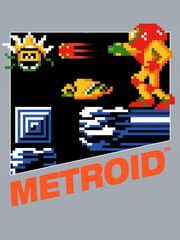 Metroid
It's you against the evil Mother Brain in the thrilling battle of Metroid! You're inside the fortress planet Zebes. The planet of endless secret passageways where the Metroid are multiplying. Left alone the Metroid are harmless. But in the wrong hands they could destroy the galaxy. It's up to you to prevent the Mother Brain that controls Zebes from using the Metroid for evil purposes. But that won't be easy. You'll have to use your spacesuit to absorb valuable energy for your search to gain the use of power items like the Ice Beam, Wave Beam, High Jump Boots and Varia. If you survive, it will be you and your acquired powers against the Mother Brain.
60
/100
08
Metroid
It's you against the evil Mother Brain in the thrilling battle of Metroid! You're inside the fortress planet Zebes. The planet of endless secret passageways where the Metroid are multiplying. Left alone the Metroid are harmless. But in the wrong hands they could destroy the galaxy. It's up to you to prevent the Mother Brain that controls Zebes from using the Metroid for evil purposes. But that won't be easy. You'll have to use your spacesuit to absorb valuable energy for your search to gain the use of power items like the Ice Beam, Wave Beam, High Jump Boots and Varia. If you survive, it will be you and your acquired powers against the Mother Brain.
60
/100
08
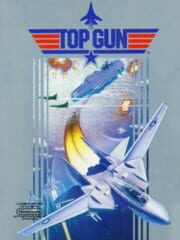 Top Gun (1987)
Top Gun was released in 1987 for the PC, Commodore 64, ZX Spectrum and Nintendo Entertainment System (NES) (with an equivalent version for Nintendo Vs. Series arcade cabinets). The Commodore and Spectrum versions were developed by Ocean while Thunder Mountain handled the PC version of the game. Konami developed the Nintendo version. The NES version was released on November 1987 in North America, December 11, 1987 in Japan and on November 30, 1988 in Europe and Australia. According to Game Over by David Sheff, the NES version sold over 2 million copies. Many of the people who've played the NES version have complained about the difficulty, and lack of action in the game. The NES version had a sequel called Top Gun: The Second Mission.
55
/100
09
Top Gun (1987)
Top Gun was released in 1987 for the PC, Commodore 64, ZX Spectrum and Nintendo Entertainment System (NES) (with an equivalent version for Nintendo Vs. Series arcade cabinets). The Commodore and Spectrum versions were developed by Ocean while Thunder Mountain handled the PC version of the game. Konami developed the Nintendo version. The NES version was released on November 1987 in North America, December 11, 1987 in Japan and on November 30, 1988 in Europe and Australia. According to Game Over by David Sheff, the NES version sold over 2 million copies. Many of the people who've played the NES version have complained about the difficulty, and lack of action in the game. The NES version had a sequel called Top Gun: The Second Mission.
55
/100
09
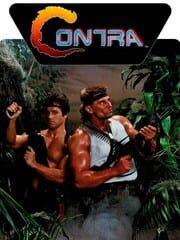 Contra
 (also known as Gryzor in Oceania and Europe), is a 1987 run and gun action game developed and published by Konami originally released as a coin-operated arcade game on February 20, 1987. The game had multiple ports, including for various computer formats. Several Contra sequels were produced following the original game.
50
/100
10
Contra
Contra (also known as Gryzor in Oceania and Europe), is a 1987 run and gun action game developed and published by Konami originally released as a coin-operated arcade game on February 20, 1987. The game had multiple ports, including for various computer formats. Several Contra sequels were produced following the original game.
50
/100
10
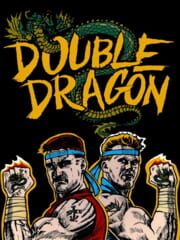 Double Dragon
 is a 1987 beat 'em up video game developed by Technōs Japan and distributed by Taito for arcades across Asia, North America and Europe. It is the first title in the Double Dragon franchise. The player character has a repertoire of martial arts techniques which they can perform using the joystick and three action buttons (kick, jump, and punch) individually or in combination. Techniques range from basic punches and kicks to more elaborate manoeuvres like hair-grabbing moves and elbow strikes. When playing with another player, one can assist the other by grabbing their partner's opponent from behind. Caution should be taken, though, as some enemies can do the same thing to the players. The player begins the game with a certain number of extra lives and a life gauge which depletes as the player takes hits. If the life gauge runs out or the time limit reaches zero, the player will lose a life. There is a small variety of enemy characters that the player will face through the course of the game. Certain enemies carry melee weapons, which can be knocked out of their hands and picked up to use against them. Available weapons include baseball bats, whips, throwing knives, and dynamite; in addition, rocks, oil drums, and boxes can be found in certain places. The game is divided into four stages or "missions," consisting of a city slum, a factory, the woods, and the gang's hideout. The game normally ends if a single player defeats the final boss alone. However, if two players complete the game together, they are forced to fight each other to determine who will win Marian's affections.
39
/100
Double Dragon
Double Dragon is a 1987 beat 'em up video game developed by Technōs Japan and distributed by Taito for arcades across Asia, North America and Europe. It is the first title in the Double Dragon franchise. The player character has a repertoire of martial arts techniques which they can perform using the joystick and three action buttons (kick, jump, and punch) individually or in combination. Techniques range from basic punches and kicks to more elaborate manoeuvres like hair-grabbing moves and elbow strikes. When playing with another player, one can assist the other by grabbing their partner's opponent from behind. Caution should be taken, though, as some enemies can do the same thing to the players. The player begins the game with a certain number of extra lives and a life gauge which depletes as the player takes hits. If the life gauge runs out or the time limit reaches zero, the player will lose a life. There is a small variety of enemy characters that the player will face through the course of the game. Certain enemies carry melee weapons, which can be knocked out of their hands and picked up to use against them. Available weapons include baseball bats, whips, throwing knives, and dynamite; in addition, rocks, oil drums, and boxes can be found in certain places. The game is divided into four stages or "missions," consisting of a city slum, a factory, the woods, and the gang's hideout. The game normally ends if a single player defeats the final boss alone. However, if two players complete the game together, they are forced to fight each other to determine who will win Marian's affections.
39
/100
S
Final Fantasy (1987)
Final Fantasy, also known as FFI in re-releases, is the first role-playing game title in Square's flagship Final Fantasy series. The game puts players in control of four characters known as the Warriors of Light, and begins by asking the player to select the classes and names of each. The Warriors of Light can traverse the maps of dungeons and towns, which are connected by a world map, and will run into random encounters with enemies or fight bosses.
70
/100
05
Zelda II: The Adventure of Link
Zelda II: The Adventure of Link is the second major installment in The Legend of Zelda series and the direct sequel to the first game. Like its predecessor, it features dungeons that must be located in the overworld and searched for an item that will prove useful. However, the game presents many very important gameplay changes compared to the previous one, affecting especially the movements and the combat. Moving around the world map involves encounters with enemies that take place on a side-scrolling playfield rather than the top-down perspective for which the series became known.
66
/100
06
Castlevania II: Simon's Quest (1987)
Castlevania was a cakewalk compared to this bloody curse. You thought you had the Prince of Darkness defanged - eh, Simon Belmont? Well think again, 'cause according to a damsel in distress, evil Count Dracula has left a horrifying curse in his wake. And the only hope you have of ending the terror is to destroy his missing body parts! Talk about your frightening quest, searching a maze of mansions, graveyards and dark, eerie forests - each guarded by man-eating werewolves, fire-throwing zombies and other devilish demons. Your grim chances are kept alive in Transylvania, where cowardly villagers offer clues to the whereabouts of Dracula's remains. And where you'll purchase magic weapons, including silver knives and flame whips. But beware the night. For when the sun disappears, Dracula's curse grows deadlier. And your chances grow dimmer and dimmer.
62
/100
07
Metroid
It's you against the evil Mother Brain in the thrilling battle of Metroid! You're inside the fortress planet Zebes. The planet of endless secret passageways where the Metroid are multiplying. Left alone the Metroid are harmless. But in the wrong hands they could destroy the galaxy. It's up to you to prevent the Mother Brain that controls Zebes from using the Metroid for evil purposes. But that won't be easy. You'll have to use your spacesuit to absorb valuable energy for your search to gain the use of power items like the Ice Beam, Wave Beam, High Jump Boots and Varia. If you survive, it will be you and your acquired powers against the Mother Brain.
60
/100
08
Top Gun (1987)
Top Gun was released in 1987 for the PC, Commodore 64, ZX Spectrum and Nintendo Entertainment System (NES) (with an equivalent version for Nintendo Vs. Series arcade cabinets). The Commodore and Spectrum versions were developed by Ocean while Thunder Mountain handled the PC version of the game. Konami developed the Nintendo version. The NES version was released on November 1987 in North America, December 11, 1987 in Japan and on November 30, 1988 in Europe and Australia. According to Game Over by David Sheff, the NES version sold over 2 million copies. Many of the people who've played the NES version have complained about the difficulty, and lack of action in the game. The NES version had a sequel called Top Gun: The Second Mission.
55
/100
09
Contra
Contra (also known as Gryzor in Oceania and Europe), is a 1987 run and gun action game developed and published by Konami originally released as a coin-operated arcade game on February 20, 1987. The game had multiple ports, including for various computer formats. Several Contra sequels were produced following the original game.
50
/100
10
Double Dragon
Double Dragon is a 1987 beat 'em up video game developed by Technōs Japan and distributed by Taito for arcades across Asia, North America and Europe. It is the first title in the Double Dragon franchise. The player character has a repertoire of martial arts techniques which they can perform using the joystick and three action buttons (kick, jump, and punch) individually or in combination. Techniques range from basic punches and kicks to more elaborate manoeuvres like hair-grabbing moves and elbow strikes. When playing with another player, one can assist the other by grabbing their partner's opponent from behind. Caution should be taken, though, as some enemies can do the same thing to the players. The player begins the game with a certain number of extra lives and a life gauge which depletes as the player takes hits. If the life gauge runs out or the time limit reaches zero, the player will lose a life. There is a small variety of enemy characters that the player will face through the course of the game. Certain enemies carry melee weapons, which can be knocked out of their hands and picked up to use against them. Available weapons include baseball bats, whips, throwing knives, and dynamite; in addition, rocks, oil drums, and boxes can be found in certain places. The game is divided into four stages or "missions," consisting of a city slum, a factory, the woods, and the gang's hideout. The game normally ends if a single player defeats the final boss alone. However, if two players complete the game together, they are forced to fight each other to determine who will win Marian's affections.
39
/100
Domande frequenti
Qual è il miglior gioco NES del 1987?
Maniac Mansion è attualmente in testa alla classifica con un punteggio di 90/100 su 61 valutazioni. Classifica aggiornata a settembre 2026.
Come viene costruita questa classifica?
I giochi sono ordinati in base al punteggio critico aggregato su 100, con una soglia minima di voti perché una singola recensione entusiasta non superi mai un classico consolidato; i gradi da F a S della community Tier sono mostrati accanto a ogni gioco.