Migliori giochi
Migliori giochi Fighting su Arcade
I 29 migliori giochi Fighting su Arcade, ordinati su 5,635 valutazioni di critica e giocatori.
Il miglior gioco Fighting su Arcade in questo momento è SoulCalibur II, con un punteggio critico di 95/100 — aggiornato a settembre 2026.
Come è costruita questa classifica
- I giochi sono ordinati in base al voto aggregato della critica su 100 importato da IGDB e Metacritic, mai sui voti propri di Tier.
- Un gioco entra in classifica solo con almeno 80 voti esterni, così una singola recensione entusiasta non supera mai un classico affermato.
- Ogni gioco è classificato in un solo genere, quello che lo definisce meglio, così lo stesso titolo non guida mai due classifiche di generi diversi.
- I voti della community, da F a S, compaiono accanto a ogni gioco e vengono affermati come dato di fatto solo oltre 5 voti su Tier.
- Periodo di uscita coperto: da 1970 a 2026.
- 29 giochi sono elencati in questa pagina, con 5,635 voti in totale.
- Le classifiche sono ricalcolate ogni ora; questa è stata ricostruita il 29 settembre 2026.
Top 29
01
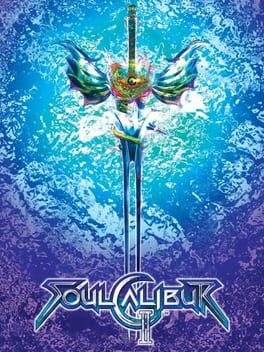 SoulCalibur II
 is the third installment in the Soul series and continues the tradition of his predecessors with improved graphics, new characters and new levels. A majority of the action takes place in Weapon Master mode where you have to choose a character and travel a set map to fight the many other warriors through different levels and challenges. Console ports were released, including guest characters from other franchises. The Arcade version has a unique mode called "Conquest Mode". This mode, which uses a name and password system to save data, allows the player to select one army among four. The player then fights against enemies in a series of eight 1-round battles, win or lose (the first seven are based on the player's rank, and the eighth is chosen by the player – this can only be interrupted by a Versus challenger.) After each round, the player earns EXP and can be promoted, and the game also rates the player in four categories: Soul, Power, Wisdom and Skill. The game also keeps track of which moves the player knows and uses most often. After the eight battles, territory control is updated and the player has the option to fight a bonus round against their character played by the AI.
95
/100
02
SoulCalibur II
SoulCalibur II is the third installment in the Soul series and continues the tradition of his predecessors with improved graphics, new characters and new levels. A majority of the action takes place in Weapon Master mode where you have to choose a character and travel a set map to fight the many other warriors through different levels and challenges. Console ports were released, including guest characters from other franchises. The Arcade version has a unique mode called "Conquest Mode". This mode, which uses a name and password system to save data, allows the player to select one army among four. The player then fights against enemies in a series of eight 1-round battles, win or lose (the first seven are based on the player's rank, and the eighth is chosen by the player – this can only be interrupted by a Versus challenger.) After each round, the player earns EXP and can be promoted, and the game also rates the player in four categories: Soul, Power, Wisdom and Skill. The game also keeps track of which moves the player knows and uses most often. After the eight battles, territory control is updated and the player has the option to fight a bonus round against their character played by the AI.
95
/100
02
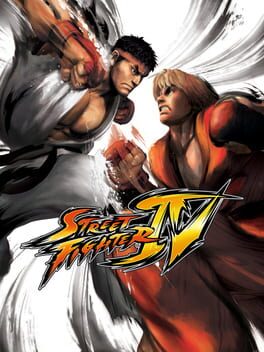 Street Fighter IV
 brings the legendary fighting series back to its roots by taking the beloved fighting moves and techniques of the original Street Fighter II, and infusing them with Capcom’s latest advancements in next generation technology to create a truly extraordinary experience that will re-introduce the world to the time-honored art of virtual martial arts. Newcomers: - Abel - C.Viper - Rufus - El Fuerte - Gouken
91
/100
03
Street Fighter IV
Street Fighter IV brings the legendary fighting series back to its roots by taking the beloved fighting moves and techniques of the original Street Fighter II, and infusing them with Capcom’s latest advancements in next generation technology to create a truly extraordinary experience that will re-introduce the world to the time-honored art of virtual martial arts. Newcomers: - Abel - C.Viper - Rufus - El Fuerte - Gouken
91
/100
03
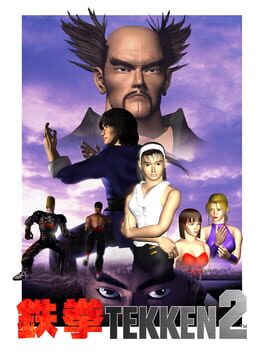 Tekken 2 (1995)
Tekken 2 is the second game in the Tekken series, it made various improvements over its predecessor in terms of graphics and features. All the characters from Tekken returned and eight new characters were added to the character roster along with new moves and combos.
89
/100
Tekken 2 (1995)
Tekken 2 is the second game in the Tekken series, it made various improvements over its predecessor in terms of graphics and features. All the characters from Tekken returned and eight new characters were added to the character roster along with new moves and combos.
89
/100
SoulCalibur II
SoulCalibur II is the third installment in the Soul series and continues the tradition of his predecessors with improved graphics, new characters and new levels. A majority of the action takes place in Weapon Master mode where you have to choose a character and travel a set map to fight the many other warriors through different levels and challenges. Console ports were released, including guest characters from other franchises. The Arcade version has a unique mode called "Conquest Mode". This mode, which uses a name and password system to save data, allows the player to select one army among four. The player then fights against enemies in a series of eight 1-round battles, win or lose (the first seven are based on the player's rank, and the eighth is chosen by the player – this can only be interrupted by a Versus challenger.) After each round, the player earns EXP and can be promoted, and the game also rates the player in four categories: Soul, Power, Wisdom and Skill. The game also keeps track of which moves the player knows and uses most often. After the eight battles, territory control is updated and the player has the option to fight a bonus round against their character played by the AI.
95
/100
02
Street Fighter IV
Street Fighter IV brings the legendary fighting series back to its roots by taking the beloved fighting moves and techniques of the original Street Fighter II, and infusing them with Capcom’s latest advancements in next generation technology to create a truly extraordinary experience that will re-introduce the world to the time-honored art of virtual martial arts. Newcomers: - Abel - C.Viper - Rufus - El Fuerte - Gouken
91
/100
03
Tekken 2 (1995)
Tekken 2 is the second game in the Tekken series, it made various improvements over its predecessor in terms of graphics and features. All the characters from Tekken returned and eight new characters were added to the character roster along with new moves and combos.
89
/100
04
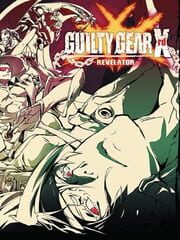 Guilty Gear Xrd -REVELATOR
Guilty Gear Xrd: Revelator is a Japanese fighting game and the updated version of Guilty Gear Xrd: Sign. The updated version adds new characters Jack-O, Johnny, and Jam Kuradoberi, as well as updated mechanics, balancing, systems, M.O.M. Mode, and more.
86
/100
05
Guilty Gear Xrd -REVELATOR
Guilty Gear Xrd: Revelator is a Japanese fighting game and the updated version of Guilty Gear Xrd: Sign. The updated version adds new characters Jack-O, Johnny, and Jam Kuradoberi, as well as updated mechanics, balancing, systems, M.O.M. Mode, and more.
86
/100
05
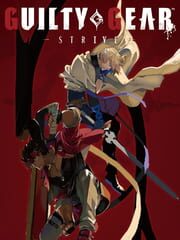 Guilty Gear -Strive
Discover the Smell of the Game with Guilty Gear: Strive! Immerse yourself in new gameplay mechanics designed to be simple and welcoming for fighting game newcomers, yet deep and creative for veterans. Ride the Fire into a heavy metal inspired alternate future full of over-the-top action, style and fun!
85
/100
06
Guilty Gear -Strive
Discover the Smell of the Game with Guilty Gear: Strive! Immerse yourself in new gameplay mechanics designed to be simple and welcoming for fighting game newcomers, yet deep and creative for veterans. Ride the Fire into a heavy metal inspired alternate future full of over-the-top action, style and fun!
85
/100
06
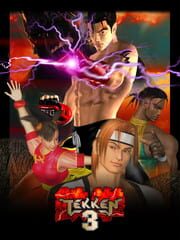 Tekken 3
 is the third installment in the Tekken series. It maintains the same core fighting system as its predecessors but brings many improvements, such as significantly more detailed graphics and animations, fifteen new characters added to the game's roster, more modern music and faster gameplay.
84
/100
07
Tekken 3
Tekken 3 is the third installment in the Tekken series. It maintains the same core fighting system as its predecessors but brings many improvements, such as significantly more detailed graphics and animations, fifteen new characters added to the game's roster, more modern music and faster gameplay.
84
/100
07
 Mortal Kombat
 is a side-scrolling fighting game. Fighting is set as one-on-one combat, allowing each player to perform a variety of punches, kicks, and special moves in order to defeat their opponent. When the opponent faces their second round loss, the winner can perform a finishing move called a "Fatality" on the loser. The Fatality is a move unique to each fighter that graphically kills the loser in a blood-soaked finale.
83
/100
08
Mortal Kombat
Mortal Kombat is a side-scrolling fighting game. Fighting is set as one-on-one combat, allowing each player to perform a variety of punches, kicks, and special moves in order to defeat their opponent. When the opponent faces their second round loss, the winner can perform a finishing move called a "Fatality" on the loser. The Fatality is a move unique to each fighter that graphically kills the loser in a blood-soaked finale.
83
/100
08
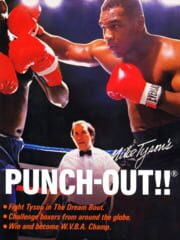 Mike Tyson's Punch-Out!!
Punch-Out!!, originally released in North America as Mike Tyson's Punch-Out!!, is a boxing sports fighting video game for the Nintendo Entertainment System (NES) developed and published by Nintendo in 1987. Part of the Punch-Out!! series, it is a port of both the Punch-Out!! and Super Punch-Out!! arcade games (particularly the latter) with some variations. Punch-Out!! features a boxer known as Little Mac working his way up the professional boxing circuits, facing a series of colorful, fictional boxers, leading to a final fight with real-life boxer, the then-World Heavyweight Champion, which is Mike Tyson in the original version and Mr. Dream in the later version. Little Mac has a limited repertoire compared to most of his opponents. His punches are limited to left and right jabs, left and right body blows, and a powerful uppercut. The uppercut can only be used once the player earns a star, which is typically accomplished by counter-punching the opponent directly before or after certain attacks are launched. The player can acquire up to three stars. To perform the uppercut, the player needs to press the start button once a star is earned. To defend, Mac can dodge left or right, duck, and block punches by putting up his guard. Little Mac also has a heart meter, which decreases by three upon being struck by an opponent and one upon blocking an attack or an opponent blocking/dodging the player's attack. When the heart meter decreases to zero, Little Mac temporarily turns pink and appears exhausted, leaving the player unable to attack but still able to dodge or block. At this point, Mac can regain some hearts (and his normal color palette) only by avoiding the opponent's punches. He immediately loses all of his hearts upon being knocked down, but can regain some by getting up. A bout can end by knockout (KO), if a fighter is unable to get up within ten seconds after being knocked down; by technical knockout (TKO), if a fighter is knocked down three times in one round; or by decision, if the bout lasts three full rounds without a clear winner. In order to win by decision, the player must accumulate higher than a certain point total by punching the opponent and/or knocking him down (different boxers require different point totals to win by decision). However, some bouts cannot be won in this manner and will automatically result in a loss for the player if the opponent is not knocked out. Mac can only get up three times during any one bout; if he is knocked down a fourth time, he will be unable to rise and thus lose by knockout. When Mac loses his first bout to a ranked opponent, he will have a chance to fight a rematch. However, if he loses a Title Bout, he will fall in the rankings - one place for the Minor or Major Circuits, two places for the World Circuit. Losing a rematch causes him to fall one place (unless he is already at the bottom of his circuit), forcing him to fight his way back up. A third loss (not necessarily a consecutive one) ends the game. The exception is the final fight against Mike Tyson/Mr. Dream; a loss to them automatically results in a game over.
83
/100
09
Mike Tyson's Punch-Out!!
Punch-Out!!, originally released in North America as Mike Tyson's Punch-Out!!, is a boxing sports fighting video game for the Nintendo Entertainment System (NES) developed and published by Nintendo in 1987. Part of the Punch-Out!! series, it is a port of both the Punch-Out!! and Super Punch-Out!! arcade games (particularly the latter) with some variations. Punch-Out!! features a boxer known as Little Mac working his way up the professional boxing circuits, facing a series of colorful, fictional boxers, leading to a final fight with real-life boxer, the then-World Heavyweight Champion, which is Mike Tyson in the original version and Mr. Dream in the later version. Little Mac has a limited repertoire compared to most of his opponents. His punches are limited to left and right jabs, left and right body blows, and a powerful uppercut. The uppercut can only be used once the player earns a star, which is typically accomplished by counter-punching the opponent directly before or after certain attacks are launched. The player can acquire up to three stars. To perform the uppercut, the player needs to press the start button once a star is earned. To defend, Mac can dodge left or right, duck, and block punches by putting up his guard. Little Mac also has a heart meter, which decreases by three upon being struck by an opponent and one upon blocking an attack or an opponent blocking/dodging the player's attack. When the heart meter decreases to zero, Little Mac temporarily turns pink and appears exhausted, leaving the player unable to attack but still able to dodge or block. At this point, Mac can regain some hearts (and his normal color palette) only by avoiding the opponent's punches. He immediately loses all of his hearts upon being knocked down, but can regain some by getting up. A bout can end by knockout (KO), if a fighter is unable to get up within ten seconds after being knocked down; by technical knockout (TKO), if a fighter is knocked down three times in one round; or by decision, if the bout lasts three full rounds without a clear winner. In order to win by decision, the player must accumulate higher than a certain point total by punching the opponent and/or knocking him down (different boxers require different point totals to win by decision). However, some bouts cannot be won in this manner and will automatically result in a loss for the player if the opponent is not knocked out. Mac can only get up three times during any one bout; if he is knocked down a fourth time, he will be unable to rise and thus lose by knockout. When Mac loses his first bout to a ranked opponent, he will have a chance to fight a rematch. However, if he loses a Title Bout, he will fall in the rankings - one place for the Minor or Major Circuits, two places for the World Circuit. Losing a rematch causes him to fall one place (unless he is already at the bottom of his circuit), forcing him to fight his way back up. A third loss (not necessarily a consecutive one) ends the game. The exception is the final fight against Mike Tyson/Mr. Dream; a loss to them automatically results in a game over.
83
/100
09
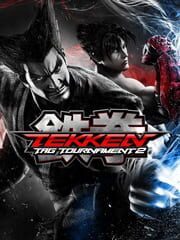 Tekken Tag Tournament 2
The console release added new characters and stages.
83
/100
10
Tekken Tag Tournament 2
The console release added new characters and stages.
83
/100
10
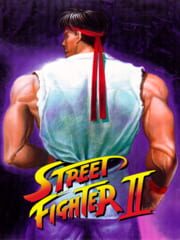 B
Street Fighter II
A sequel to Street Fighter, Street Fighter II improved upon the many concepts introduced in the first game, including the use of command-based special moves and a six-button configuration, while offering players a selection of multiple playable characters, each with their own unique fighting style and special moves. Street Fighter II is credited for starting the fighting game boom during the 1990s. Its success led to the production of several updated versions, each offering additional features and characters over previous versions, as well as many home versions. Some of the home versions of the Street Fighter II games have sold millions of copies, with the SNES port of the first Street Fighter II being Capcom's best-selling consumer game of all-time as of 2008. Street Fighter II follows several of the conventions and rules already established by its original 1987 predecessor. The player engages opponents in one-on-one close quarter combat in a series of best-two-out-of-three matches. The objective of each round is to deplete the opponent's vitality before the timer runs out. If both opponents knock each other out at the same time or the timer runs out with both fighters having an equal amount of vitality left, a "double KO" or "draw game" is declared and additional rounds will be played until sudden death. In the first Street Fighter II, a match could last up to ten rounds if there was no clear winner; this was reduced to four rounds in Champion Edition and onward. If there is no clear winner by the end of the final round, then either the computer-controlled opponent will win by default in a single-player match or both fighters will lose in a 2-player match. After every third match in the single player mode, the player will participate in a "bonus game" for additional points. The bonus games includes (in order) a car-breaking event; a barrel breaking bonus game where the barrels are dropped off from a conveyor belt above the player; and a drum-breaking bonus game where drums are flammable and piled over each other. The bonus games were removed from the arcade version of Super Street Fighter II Turbo. Like in the original, the game's controls uses a configuration of an eight-directional joystick and six attack buttons. The player uses the joystick to jump, crouch and move the character towards or away from the opponent, as well as to guard the character from an opponent's attacks. There are three punch buttons and three kick buttons of differing strength and speed (Light, Medium and Heavy). The player can perform a variety of basic moves in any position, including grabbing/throwing attacks, which were not featured in the original Street Fighter. Like in the original, the player can perform special moves by inputting a combination of directional and button-based commands. Street Fighter II differs from the original due to the selection of multiple playable characters, each with their distinct fighting styles and special moves. Additionally, the player can also "cancel" during animation by performing another move, allowing for a combination of several basic and special moves. Both of these features would be expanded upon in subsequent installments.
83
/100
11
B
Street Fighter II
A sequel to Street Fighter, Street Fighter II improved upon the many concepts introduced in the first game, including the use of command-based special moves and a six-button configuration, while offering players a selection of multiple playable characters, each with their own unique fighting style and special moves. Street Fighter II is credited for starting the fighting game boom during the 1990s. Its success led to the production of several updated versions, each offering additional features and characters over previous versions, as well as many home versions. Some of the home versions of the Street Fighter II games have sold millions of copies, with the SNES port of the first Street Fighter II being Capcom's best-selling consumer game of all-time as of 2008. Street Fighter II follows several of the conventions and rules already established by its original 1987 predecessor. The player engages opponents in one-on-one close quarter combat in a series of best-two-out-of-three matches. The objective of each round is to deplete the opponent's vitality before the timer runs out. If both opponents knock each other out at the same time or the timer runs out with both fighters having an equal amount of vitality left, a "double KO" or "draw game" is declared and additional rounds will be played until sudden death. In the first Street Fighter II, a match could last up to ten rounds if there was no clear winner; this was reduced to four rounds in Champion Edition and onward. If there is no clear winner by the end of the final round, then either the computer-controlled opponent will win by default in a single-player match or both fighters will lose in a 2-player match. After every third match in the single player mode, the player will participate in a "bonus game" for additional points. The bonus games includes (in order) a car-breaking event; a barrel breaking bonus game where the barrels are dropped off from a conveyor belt above the player; and a drum-breaking bonus game where drums are flammable and piled over each other. The bonus games were removed from the arcade version of Super Street Fighter II Turbo. Like in the original, the game's controls uses a configuration of an eight-directional joystick and six attack buttons. The player uses the joystick to jump, crouch and move the character towards or away from the opponent, as well as to guard the character from an opponent's attacks. There are three punch buttons and three kick buttons of differing strength and speed (Light, Medium and Heavy). The player can perform a variety of basic moves in any position, including grabbing/throwing attacks, which were not featured in the original Street Fighter. Like in the original, the player can perform special moves by inputting a combination of directional and button-based commands. Street Fighter II differs from the original due to the selection of multiple playable characters, each with their distinct fighting styles and special moves. Additionally, the player can also "cancel" during animation by performing another move, allowing for a combination of several basic and special moves. Both of these features would be expanded upon in subsequent installments.
83
/100
11
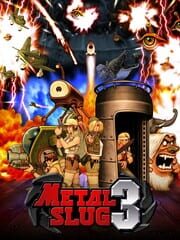 Metal Slug 3
82
/100
12
Metal Slug 3
82
/100
12
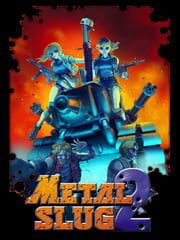 METAL SLUG 2
82
/100
13
METAL SLUG 2
82
/100
13
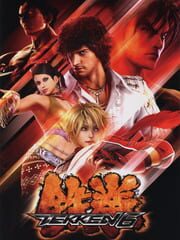 TEKKEN 6
80
/100
14
TEKKEN 6
80
/100
14
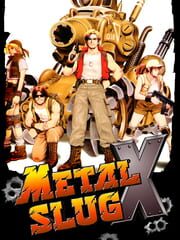 Metal Slug X
80
/100
15
Metal Slug X
80
/100
15
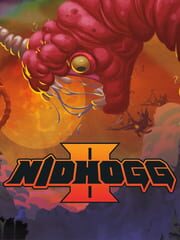 Nidhogg 2
80
/100
16
Nidhogg 2
80
/100
16
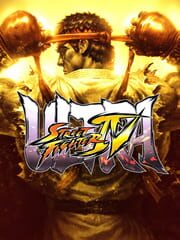 Ultra Street Fighter IV
79
/100
17
Ultra Street Fighter IV
79
/100
17
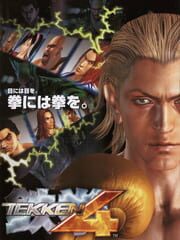 Tekken 4
79
/100
18
Tekken 4
79
/100
18
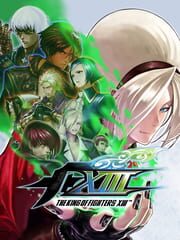 The King of Fighters XIII
79
/100
19
The King of Fighters XIII
79
/100
19
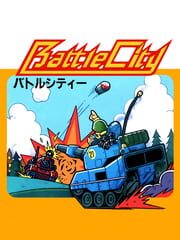 Battle City
78
/100
20
Battle City
78
/100
20
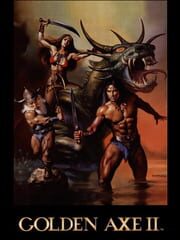 Golden Axe II (1991)
77
/100
21
Golden Axe II (1991)
77
/100
21
 Mortal Kombat II
76
/100
22
Mortal Kombat II
76
/100
22
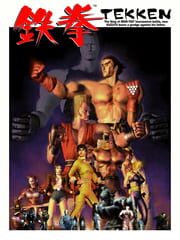 Tekken (1994)
75
/100
23
Tekken (1994)
75
/100
23
 Mortal Kombat 4
69
/100
24
Mortal Kombat 4
69
/100
24
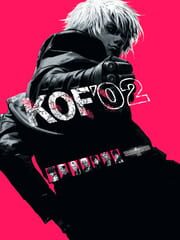 THE KING OF FIGHTERS 2002
67
/100
25
THE KING OF FIGHTERS 2002
67
/100
25
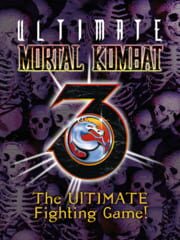 Ultimate Mortal Kombat 3
62
/100
26
Ultimate Mortal Kombat 3
62
/100
26
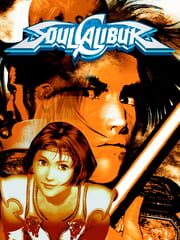 SoulCalibur
60
/100
27
SoulCalibur
60
/100
27
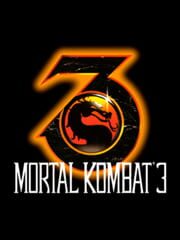 Mortal Kombat 3
50
/100
28
Mortal Kombat 3
50
/100
28
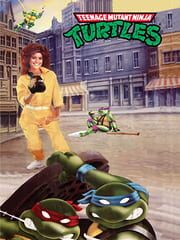 Teenage Mutant Ninja Turtles
45
/100
29
Teenage Mutant Ninja Turtles
45
/100
29
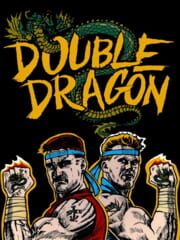 Double Dragon
39
/100
Double Dragon
39
/100
Guilty Gear Xrd -REVELATOR
Guilty Gear Xrd: Revelator is a Japanese fighting game and the updated version of Guilty Gear Xrd: Sign. The updated version adds new characters Jack-O, Johnny, and Jam Kuradoberi, as well as updated mechanics, balancing, systems, M.O.M. Mode, and more.
86
/100
05
Guilty Gear -Strive
Discover the Smell of the Game with Guilty Gear: Strive! Immerse yourself in new gameplay mechanics designed to be simple and welcoming for fighting game newcomers, yet deep and creative for veterans. Ride the Fire into a heavy metal inspired alternate future full of over-the-top action, style and fun!
85
/100
06
Tekken 3
Tekken 3 is the third installment in the Tekken series. It maintains the same core fighting system as its predecessors but brings many improvements, such as significantly more detailed graphics and animations, fifteen new characters added to the game's roster, more modern music and faster gameplay.
84
/100
07
Mortal Kombat
Mortal Kombat is a side-scrolling fighting game. Fighting is set as one-on-one combat, allowing each player to perform a variety of punches, kicks, and special moves in order to defeat their opponent. When the opponent faces their second round loss, the winner can perform a finishing move called a "Fatality" on the loser. The Fatality is a move unique to each fighter that graphically kills the loser in a blood-soaked finale.
83
/100
08
Mike Tyson's Punch-Out!!
Punch-Out!!, originally released in North America as Mike Tyson's Punch-Out!!, is a boxing sports fighting video game for the Nintendo Entertainment System (NES) developed and published by Nintendo in 1987. Part of the Punch-Out!! series, it is a port of both the Punch-Out!! and Super Punch-Out!! arcade games (particularly the latter) with some variations. Punch-Out!! features a boxer known as Little Mac working his way up the professional boxing circuits, facing a series of colorful, fictional boxers, leading to a final fight with real-life boxer, the then-World Heavyweight Champion, which is Mike Tyson in the original version and Mr. Dream in the later version. Little Mac has a limited repertoire compared to most of his opponents. His punches are limited to left and right jabs, left and right body blows, and a powerful uppercut. The uppercut can only be used once the player earns a star, which is typically accomplished by counter-punching the opponent directly before or after certain attacks are launched. The player can acquire up to three stars. To perform the uppercut, the player needs to press the start button once a star is earned. To defend, Mac can dodge left or right, duck, and block punches by putting up his guard. Little Mac also has a heart meter, which decreases by three upon being struck by an opponent and one upon blocking an attack or an opponent blocking/dodging the player's attack. When the heart meter decreases to zero, Little Mac temporarily turns pink and appears exhausted, leaving the player unable to attack but still able to dodge or block. At this point, Mac can regain some hearts (and his normal color palette) only by avoiding the opponent's punches. He immediately loses all of his hearts upon being knocked down, but can regain some by getting up. A bout can end by knockout (KO), if a fighter is unable to get up within ten seconds after being knocked down; by technical knockout (TKO), if a fighter is knocked down three times in one round; or by decision, if the bout lasts three full rounds without a clear winner. In order to win by decision, the player must accumulate higher than a certain point total by punching the opponent and/or knocking him down (different boxers require different point totals to win by decision). However, some bouts cannot be won in this manner and will automatically result in a loss for the player if the opponent is not knocked out. Mac can only get up three times during any one bout; if he is knocked down a fourth time, he will be unable to rise and thus lose by knockout. When Mac loses his first bout to a ranked opponent, he will have a chance to fight a rematch. However, if he loses a Title Bout, he will fall in the rankings - one place for the Minor or Major Circuits, two places for the World Circuit. Losing a rematch causes him to fall one place (unless he is already at the bottom of his circuit), forcing him to fight his way back up. A third loss (not necessarily a consecutive one) ends the game. The exception is the final fight against Mike Tyson/Mr. Dream; a loss to them automatically results in a game over.
83
/100
09
Tekken Tag Tournament 2
The console release added new characters and stages.
83
/100
10
B
Street Fighter II
A sequel to Street Fighter, Street Fighter II improved upon the many concepts introduced in the first game, including the use of command-based special moves and a six-button configuration, while offering players a selection of multiple playable characters, each with their own unique fighting style and special moves. Street Fighter II is credited for starting the fighting game boom during the 1990s. Its success led to the production of several updated versions, each offering additional features and characters over previous versions, as well as many home versions. Some of the home versions of the Street Fighter II games have sold millions of copies, with the SNES port of the first Street Fighter II being Capcom's best-selling consumer game of all-time as of 2008. Street Fighter II follows several of the conventions and rules already established by its original 1987 predecessor. The player engages opponents in one-on-one close quarter combat in a series of best-two-out-of-three matches. The objective of each round is to deplete the opponent's vitality before the timer runs out. If both opponents knock each other out at the same time or the timer runs out with both fighters having an equal amount of vitality left, a "double KO" or "draw game" is declared and additional rounds will be played until sudden death. In the first Street Fighter II, a match could last up to ten rounds if there was no clear winner; this was reduced to four rounds in Champion Edition and onward. If there is no clear winner by the end of the final round, then either the computer-controlled opponent will win by default in a single-player match or both fighters will lose in a 2-player match. After every third match in the single player mode, the player will participate in a "bonus game" for additional points. The bonus games includes (in order) a car-breaking event; a barrel breaking bonus game where the barrels are dropped off from a conveyor belt above the player; and a drum-breaking bonus game where drums are flammable and piled over each other. The bonus games were removed from the arcade version of Super Street Fighter II Turbo. Like in the original, the game's controls uses a configuration of an eight-directional joystick and six attack buttons. The player uses the joystick to jump, crouch and move the character towards or away from the opponent, as well as to guard the character from an opponent's attacks. There are three punch buttons and three kick buttons of differing strength and speed (Light, Medium and Heavy). The player can perform a variety of basic moves in any position, including grabbing/throwing attacks, which were not featured in the original Street Fighter. Like in the original, the player can perform special moves by inputting a combination of directional and button-based commands. Street Fighter II differs from the original due to the selection of multiple playable characters, each with their distinct fighting styles and special moves. Additionally, the player can also "cancel" during animation by performing another move, allowing for a combination of several basic and special moves. Both of these features would be expanded upon in subsequent installments.
83
/100
11
Metal Slug 3
82
/100
12
METAL SLUG 2
82
/100
13
TEKKEN 6
80
/100
14
Metal Slug X
80
/100
15
Nidhogg 2
80
/100
16
Ultra Street Fighter IV
79
/100
17
Tekken 4
79
/100
18
The King of Fighters XIII
79
/100
19
Battle City
78
/100
20
Golden Axe II (1991)
77
/100
21
Mortal Kombat II
76
/100
22
Tekken (1994)
75
/100
23
Mortal Kombat 4
69
/100
24
THE KING OF FIGHTERS 2002
67
/100
25
Ultimate Mortal Kombat 3
62
/100
26
SoulCalibur
60
/100
27
Mortal Kombat 3
50
/100
28
Teenage Mutant Ninja Turtles
45
/100
29
Double Dragon
39
/100
Domande frequenti
Qual è il miglior gioco Fighting su Arcade?
SoulCalibur II è attualmente in testa alla classifica con un punteggio di 95/100 su 187 valutazioni. Classifica aggiornata a settembre 2026.
Come viene costruita questa classifica?
I giochi sono ordinati in base al punteggio critico aggregato su 100, con una soglia minima di voti perché una singola recensione entusiasta non superi mai un classico consolidato; i gradi da F a S della community Tier sono mostrati accanto a ogni gioco.