
Migliori giochi
Migliori giochi Adventure del 1987
I 9 migliori giochi Adventure usciti nel 1987, ordinati su 1,215 valutazioni di critica e giocatori.
Il miglior gioco Adventure del 1987 è Maniac Mansion, con un punteggio critico di 90/100 — aggiornato a settembre 2026.
Come è costruita questa classifica
- I giochi sono ordinati in base al voto aggregato della critica su 100 importato da IGDB e Metacritic, mai sui voti propri di Tier.
- Un gioco entra in classifica solo con almeno 30 voti esterni, così una singola recensione entusiasta non supera mai un classico affermato.
- I voti della community, da F a S, compaiono accanto a ogni gioco e vengono affermati come dato di fatto solo oltre 5 voti su Tier.
- Periodo di uscita coperto: 1987.
- 9 giochi sono elencati in questa pagina, con 1,215 voti in totale.
- Le classifiche sono ricalcolate ogni ora; questa è stata ricostruita il 29 settembre 2026.
Top 9
01
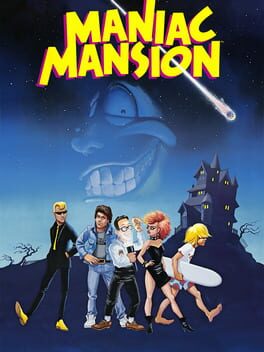 Maniac Mansion
 is a 1987 graphic adventure video game developed and published by Lucasfilm Games. It follows teenage protagonist Dave Miller as he attempts to rescue his girlfriend from a mad scientist, whose mind has been enslaved by a sentient meteor. The player uses a point-and-click interface to guide Dave and two of his six playable friends through the scientist's mansion while solving puzzles and avoiding dangers. Gameplay is nonlinear, and the game must be completed in different ways based on the player's choice of characters. Initially released for the Commodore 64 and Apple II, Maniac Mansion was Lucasfilm Games' first self-published product.
90
/100
02
Maniac Mansion
Maniac Mansion is a 1987 graphic adventure video game developed and published by Lucasfilm Games. It follows teenage protagonist Dave Miller as he attempts to rescue his girlfriend from a mad scientist, whose mind has been enslaved by a sentient meteor. The player uses a point-and-click interface to guide Dave and two of his six playable friends through the scientist's mansion while solving puzzles and avoiding dangers. Gameplay is nonlinear, and the game must be completed in different ways based on the player's choice of characters. Initially released for the Commodore 64 and Apple II, Maniac Mansion was Lucasfilm Games' first self-published product.
90
/100
02
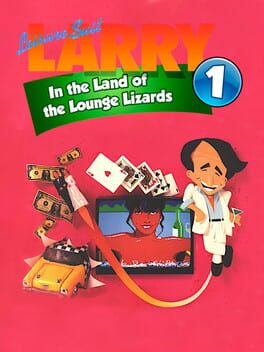 Leisure Suit Larry in the Land of the Lounge Lizards
A middle-aged male virgin named Larry Laffer desperately tries to "get lucky" in the fictional American city of Lost Wages. Your goal in Leisure Suit Larry in the Land of the Lounge Lizards is to find and seduce the girl of your dreams. This goal won't come easy, because you only have one night, and unfortunately, you are stuck with Larry's looks. Other problems, such as lack of money, lack of opportunity, and bad breath can complicate things significantly. Your interaction with the game controls the outcome of each situation. For example, having your character sign on with a major league baseball team or start a successful men's magazine could be beneficial to your ultimate goal. On the other hand, catching a fatal disease or losing all your cash can only impede your progress. A combination of common sense, logical thinking, and downright sheer luck is needed to achieve your goal.
75
/100
03
Leisure Suit Larry in the Land of the Lounge Lizards
A middle-aged male virgin named Larry Laffer desperately tries to "get lucky" in the fictional American city of Lost Wages. Your goal in Leisure Suit Larry in the Land of the Lounge Lizards is to find and seduce the girl of your dreams. This goal won't come easy, because you only have one night, and unfortunately, you are stuck with Larry's looks. Other problems, such as lack of money, lack of opportunity, and bad breath can complicate things significantly. Your interaction with the game controls the outcome of each situation. For example, having your character sign on with a major league baseball team or start a successful men's magazine could be beneficial to your ultimate goal. On the other hand, catching a fatal disease or losing all your cash can only impede your progress. A combination of common sense, logical thinking, and downright sheer luck is needed to achieve your goal.
75
/100
03
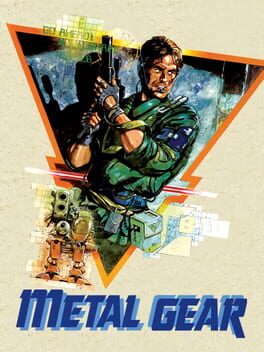 Metal Gear
 is considered to be the progenitor of the stealth game genre, it was also the first video game designed by Hideo Kojima, who also directed many of the later Metal Gear sequels. The game revolves around a special forces operative codenamed Solid Snake who goes into a solo infiltration mission into the fortified state of Outer Heaven to destroy Metal Gear, a bipedal walking tank capable of launching nuclear missiles from anywhere in the world. The player must navigate the main character, a military operative codenamed Solid Snake, through various locations, while avoiding visual contact and direct confrontation with patrolling guards. If the player is seen, the game enters the "Alert Mode." In this situation, Snake must escape from enemy's sight in order to resume infiltration. The method of escaping varies depending on the circumstances behind discovery: If Snake is seen and only a single exclamation mark appears over an enemy's head, only the enemies in the player's present screen will attack and Snake can escape by simply moving to an adjacent screen. However, if two exclamation marks appear over the enemy (or the player triggers an alarm by being spotted by a camera, infrared sensor or by using an unsuppressed weapon), reinforcements from off-screen will appear as well. Snake can only escape by eliminating all incoming enemies, going outdoors, or by entering an elevator. The player starts the game unarmed, but eventually acquires firearms such as a Beretta 92F and an M79 grenade launcher, as well as explosives such as remote control missiles and landmines. Ammo and supplies for weapons are limited, but are replenished by picking up ammunition caches or additional supplies. Weapons can not only be used to kill enemies, but also to clear obstacles such as hollow walls and electrified floors. Snake can also use his fists to punch and defeat patrolling enemies. Occasionally, if the player defeats a guard with punches without alerting anyone, the defeated guard will yield a single unit of rations or an ammo box that can be picked up. In addition to enemy guards, the player will also be confronted by mercenaries who will challenge the player to combat, serving as the boss characters. The enemy base consists of three different buildings, with multiple floors (including basement levels) within them. The player uses key cards and other items to unlock doors and explore new areas. Each door will only open to its corresponding key cards. Information can be obtained by rescuing hostages being held within the buildings. After rescuing five hostages, the player's rank will increase by one star (with the maximum rank being four stars), allowing for increased carrying capacity and maximum health. However, if a hostage is killed, the player is demoted to the previous rank. A transceiver is available for the player to communicate with their commanding officer, Big Boss, or one of the resistance members operating covertly near Outer Heaven (Schneider, Diane, and Jennifer). Each of Snake's allies specializes in a specific subject. The player must keep track of their allies' frequency numbers in order to contact them. All of the radio messages are dependent on the rooms where the player is located.
73
/100
Metal Gear
Metal Gear is considered to be the progenitor of the stealth game genre, it was also the first video game designed by Hideo Kojima, who also directed many of the later Metal Gear sequels. The game revolves around a special forces operative codenamed Solid Snake who goes into a solo infiltration mission into the fortified state of Outer Heaven to destroy Metal Gear, a bipedal walking tank capable of launching nuclear missiles from anywhere in the world. The player must navigate the main character, a military operative codenamed Solid Snake, through various locations, while avoiding visual contact and direct confrontation with patrolling guards. If the player is seen, the game enters the "Alert Mode." In this situation, Snake must escape from enemy's sight in order to resume infiltration. The method of escaping varies depending on the circumstances behind discovery: If Snake is seen and only a single exclamation mark appears over an enemy's head, only the enemies in the player's present screen will attack and Snake can escape by simply moving to an adjacent screen. However, if two exclamation marks appear over the enemy (or the player triggers an alarm by being spotted by a camera, infrared sensor or by using an unsuppressed weapon), reinforcements from off-screen will appear as well. Snake can only escape by eliminating all incoming enemies, going outdoors, or by entering an elevator. The player starts the game unarmed, but eventually acquires firearms such as a Beretta 92F and an M79 grenade launcher, as well as explosives such as remote control missiles and landmines. Ammo and supplies for weapons are limited, but are replenished by picking up ammunition caches or additional supplies. Weapons can not only be used to kill enemies, but also to clear obstacles such as hollow walls and electrified floors. Snake can also use his fists to punch and defeat patrolling enemies. Occasionally, if the player defeats a guard with punches without alerting anyone, the defeated guard will yield a single unit of rations or an ammo box that can be picked up. In addition to enemy guards, the player will also be confronted by mercenaries who will challenge the player to combat, serving as the boss characters. The enemy base consists of three different buildings, with multiple floors (including basement levels) within them. The player uses key cards and other items to unlock doors and explore new areas. Each door will only open to its corresponding key cards. Information can be obtained by rescuing hostages being held within the buildings. After rescuing five hostages, the player's rank will increase by one star (with the maximum rank being four stars), allowing for increased carrying capacity and maximum health. However, if a hostage is killed, the player is demoted to the previous rank. A transceiver is available for the player to communicate with their commanding officer, Big Boss, or one of the resistance members operating covertly near Outer Heaven (Schneider, Diane, and Jennifer). Each of Snake's allies specializes in a specific subject. The player must keep track of their allies' frequency numbers in order to contact them. All of the radio messages are dependent on the rooms where the player is located.
73
/100
Maniac Mansion
Maniac Mansion is a 1987 graphic adventure video game developed and published by Lucasfilm Games. It follows teenage protagonist Dave Miller as he attempts to rescue his girlfriend from a mad scientist, whose mind has been enslaved by a sentient meteor. The player uses a point-and-click interface to guide Dave and two of his six playable friends through the scientist's mansion while solving puzzles and avoiding dangers. Gameplay is nonlinear, and the game must be completed in different ways based on the player's choice of characters. Initially released for the Commodore 64 and Apple II, Maniac Mansion was Lucasfilm Games' first self-published product.
90
/100
02
Leisure Suit Larry in the Land of the Lounge Lizards
A middle-aged male virgin named Larry Laffer desperately tries to "get lucky" in the fictional American city of Lost Wages. Your goal in Leisure Suit Larry in the Land of the Lounge Lizards is to find and seduce the girl of your dreams. This goal won't come easy, because you only have one night, and unfortunately, you are stuck with Larry's looks. Other problems, such as lack of money, lack of opportunity, and bad breath can complicate things significantly. Your interaction with the game controls the outcome of each situation. For example, having your character sign on with a major league baseball team or start a successful men's magazine could be beneficial to your ultimate goal. On the other hand, catching a fatal disease or losing all your cash can only impede your progress. A combination of common sense, logical thinking, and downright sheer luck is needed to achieve your goal.
75
/100
03
Metal Gear
Metal Gear is considered to be the progenitor of the stealth game genre, it was also the first video game designed by Hideo Kojima, who also directed many of the later Metal Gear sequels. The game revolves around a special forces operative codenamed Solid Snake who goes into a solo infiltration mission into the fortified state of Outer Heaven to destroy Metal Gear, a bipedal walking tank capable of launching nuclear missiles from anywhere in the world. The player must navigate the main character, a military operative codenamed Solid Snake, through various locations, while avoiding visual contact and direct confrontation with patrolling guards. If the player is seen, the game enters the "Alert Mode." In this situation, Snake must escape from enemy's sight in order to resume infiltration. The method of escaping varies depending on the circumstances behind discovery: If Snake is seen and only a single exclamation mark appears over an enemy's head, only the enemies in the player's present screen will attack and Snake can escape by simply moving to an adjacent screen. However, if two exclamation marks appear over the enemy (or the player triggers an alarm by being spotted by a camera, infrared sensor or by using an unsuppressed weapon), reinforcements from off-screen will appear as well. Snake can only escape by eliminating all incoming enemies, going outdoors, or by entering an elevator. The player starts the game unarmed, but eventually acquires firearms such as a Beretta 92F and an M79 grenade launcher, as well as explosives such as remote control missiles and landmines. Ammo and supplies for weapons are limited, but are replenished by picking up ammunition caches or additional supplies. Weapons can not only be used to kill enemies, but also to clear obstacles such as hollow walls and electrified floors. Snake can also use his fists to punch and defeat patrolling enemies. Occasionally, if the player defeats a guard with punches without alerting anyone, the defeated guard will yield a single unit of rations or an ammo box that can be picked up. In addition to enemy guards, the player will also be confronted by mercenaries who will challenge the player to combat, serving as the boss characters. The enemy base consists of three different buildings, with multiple floors (including basement levels) within them. The player uses key cards and other items to unlock doors and explore new areas. Each door will only open to its corresponding key cards. Information can be obtained by rescuing hostages being held within the buildings. After rescuing five hostages, the player's rank will increase by one star (with the maximum rank being four stars), allowing for increased carrying capacity and maximum health. However, if a hostage is killed, the player is demoted to the previous rank. A transceiver is available for the player to communicate with their commanding officer, Big Boss, or one of the resistance members operating covertly near Outer Heaven (Schneider, Diane, and Jennifer). Each of Snake's allies specializes in a specific subject. The player must keep track of their allies' frequency numbers in order to contact them. All of the radio messages are dependent on the rooms where the player is located.
73
/100
04
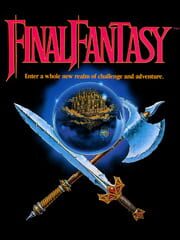 S
Final Fantasy (1987)
Final Fantasy, also known as FFI in re-releases, is the first role-playing game title in Square's flagship Final Fantasy series. The game puts players in control of four characters known as the Warriors of Light, and begins by asking the player to select the classes and names of each. The Warriors of Light can traverse the maps of dungeons and towns, which are connected by a world map, and will run into random encounters with enemies or fight bosses.
70
/100
05
S
Final Fantasy (1987)
Final Fantasy, also known as FFI in re-releases, is the first role-playing game title in Square's flagship Final Fantasy series. The game puts players in control of four characters known as the Warriors of Light, and begins by asking the player to select the classes and names of each. The Warriors of Light can traverse the maps of dungeons and towns, which are connected by a world map, and will run into random encounters with enemies or fight bosses.
70
/100
05
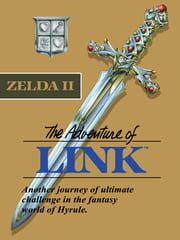 Zelda II: The Adventure of Link
 is the second major installment in The Legend of Zelda series and the direct sequel to the first game. Like its predecessor, it features dungeons that must be located in the overworld and searched for an item that will prove useful. However, the game presents many very important gameplay changes compared to the previous one, affecting especially the movements and the combat. Moving around the world map involves encounters with enemies that take place on a side-scrolling playfield rather than the top-down perspective for which the series became known.
66
/100
06
Zelda II: The Adventure of Link
Zelda II: The Adventure of Link is the second major installment in The Legend of Zelda series and the direct sequel to the first game. Like its predecessor, it features dungeons that must be located in the overworld and searched for an item that will prove useful. However, the game presents many very important gameplay changes compared to the previous one, affecting especially the movements and the combat. Moving around the world map involves encounters with enemies that take place on a side-scrolling playfield rather than the top-down perspective for which the series became known.
66
/100
06
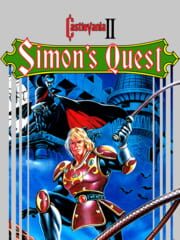 Castlevania II: Simon's Quest (1987)
Castlevania was a cakewalk compared to this bloody curse. You thought you had the Prince of Darkness defanged - eh, Simon Belmont? Well think again, 'cause according to a damsel in distress, evil Count Dracula has left a horrifying curse in his wake. And the only hope you have of ending the terror is to destroy his missing body parts! Talk about your frightening quest, searching a maze of mansions, graveyards and dark, eerie forests - each guarded by man-eating werewolves, fire-throwing zombies and other devilish demons. Your grim chances are kept alive in Transylvania, where cowardly villagers offer clues to the whereabouts of Dracula's remains. And where you'll purchase magic weapons, including silver knives and flame whips. But beware the night. For when the sun disappears, Dracula's curse grows deadlier. And your chances grow dimmer and dimmer.
62
/100
07
Castlevania II: Simon's Quest (1987)
Castlevania was a cakewalk compared to this bloody curse. You thought you had the Prince of Darkness defanged - eh, Simon Belmont? Well think again, 'cause according to a damsel in distress, evil Count Dracula has left a horrifying curse in his wake. And the only hope you have of ending the terror is to destroy his missing body parts! Talk about your frightening quest, searching a maze of mansions, graveyards and dark, eerie forests - each guarded by man-eating werewolves, fire-throwing zombies and other devilish demons. Your grim chances are kept alive in Transylvania, where cowardly villagers offer clues to the whereabouts of Dracula's remains. And where you'll purchase magic weapons, including silver knives and flame whips. But beware the night. For when the sun disappears, Dracula's curse grows deadlier. And your chances grow dimmer and dimmer.
62
/100
07
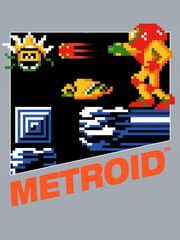 Metroid
It's you against the evil Mother Brain in the thrilling battle of Metroid! You're inside the fortress planet Zebes. The planet of endless secret passageways where the Metroid are multiplying. Left alone the Metroid are harmless. But in the wrong hands they could destroy the galaxy. It's up to you to prevent the Mother Brain that controls Zebes from using the Metroid for evil purposes. But that won't be easy. You'll have to use your spacesuit to absorb valuable energy for your search to gain the use of power items like the Ice Beam, Wave Beam, High Jump Boots and Varia. If you survive, it will be you and your acquired powers against the Mother Brain.
60
/100
08
Metroid
It's you against the evil Mother Brain in the thrilling battle of Metroid! You're inside the fortress planet Zebes. The planet of endless secret passageways where the Metroid are multiplying. Left alone the Metroid are harmless. But in the wrong hands they could destroy the galaxy. It's up to you to prevent the Mother Brain that controls Zebes from using the Metroid for evil purposes. But that won't be easy. You'll have to use your spacesuit to absorb valuable energy for your search to gain the use of power items like the Ice Beam, Wave Beam, High Jump Boots and Varia. If you survive, it will be you and your acquired powers against the Mother Brain.
60
/100
08
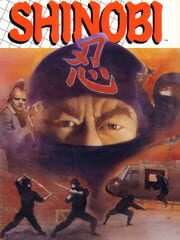 Shinobi
The five missions in the game are each three or four stages long. Several hostages are being held in each stage; Joe must rescue all of them before he is allowed to finish the stage. The last stage in each mission has no hostages, but instead features a powerful boss character whom Joe must defeat. After completing each of the first four missions the player is taken to a bonus stage, where he can earn an extra life if he is able to kill all of the ninjas leaping towards him. Completing the fifth mission ends the game. Also, once the fifth mission begins, continues are no longer allowed; the player has to finish the game with however many lives he has left at that point. If the player earns a place on the high score board, the number of credits it took him to get that score is displayed along with his score. Joe's standard weapons are an unlimited supply of shuriken, along with punches and kicks when attacking at close range. One hostage per stage gives him a power-up. When powered-up, his throwing stars are replaced by a gun that fires large, explosive bullets, and his close-range attack becomes a katana slash. Joe can also perform "ninja magic," which may be used only once per stage and kills (or damages, in the case of bosses) all enemies on the screen. The game also allows the enemies to hide behind boxes or use shields to block Musashi's shurikens.[4] Joe can be killed with one hit, provided he is hit by a projectile or melee attack, but if he does not find himself in those situations, the player can touch regular enemies and just be pushed back without being damaged. Since most enemies appear in the same place on each level, it is possible to master the game by memorizing their locations and devising patterns to defeat them. At the end of each stage, the player receives score bonuses based on performance. Completing the stage without using ninja magic or without using any throwing stars or bullets earns the player a point bonus. The player has three minutes to complete each stage; remaining time at the end of the stage is also converted to bonus points and added to the player's score.
60
/100
09
Shinobi
The five missions in the game are each three or four stages long. Several hostages are being held in each stage; Joe must rescue all of them before he is allowed to finish the stage. The last stage in each mission has no hostages, but instead features a powerful boss character whom Joe must defeat. After completing each of the first four missions the player is taken to a bonus stage, where he can earn an extra life if he is able to kill all of the ninjas leaping towards him. Completing the fifth mission ends the game. Also, once the fifth mission begins, continues are no longer allowed; the player has to finish the game with however many lives he has left at that point. If the player earns a place on the high score board, the number of credits it took him to get that score is displayed along with his score. Joe's standard weapons are an unlimited supply of shuriken, along with punches and kicks when attacking at close range. One hostage per stage gives him a power-up. When powered-up, his throwing stars are replaced by a gun that fires large, explosive bullets, and his close-range attack becomes a katana slash. Joe can also perform "ninja magic," which may be used only once per stage and kills (or damages, in the case of bosses) all enemies on the screen. The game also allows the enemies to hide behind boxes or use shields to block Musashi's shurikens.[4] Joe can be killed with one hit, provided he is hit by a projectile or melee attack, but if he does not find himself in those situations, the player can touch regular enemies and just be pushed back without being damaged. Since most enemies appear in the same place on each level, it is possible to master the game by memorizing their locations and devising patterns to defeat them. At the end of each stage, the player receives score bonuses based on performance. Completing the stage without using ninja magic or without using any throwing stars or bullets earns the player a point bonus. The player has three minutes to complete each stage; remaining time at the end of the stage is also converted to bonus points and added to the player's score.
60
/100
09
 Double Dragon
 is a 1987 beat 'em up video game developed by Technōs Japan and distributed by Taito for arcades across Asia, North America and Europe. It is the first title in the Double Dragon franchise. The player character has a repertoire of martial arts techniques which they can perform using the joystick and three action buttons (kick, jump, and punch) individually or in combination. Techniques range from basic punches and kicks to more elaborate manoeuvres like hair-grabbing moves and elbow strikes. When playing with another player, one can assist the other by grabbing their partner's opponent from behind. Caution should be taken, though, as some enemies can do the same thing to the players. The player begins the game with a certain number of extra lives and a life gauge which depletes as the player takes hits. If the life gauge runs out or the time limit reaches zero, the player will lose a life. There is a small variety of enemy characters that the player will face through the course of the game. Certain enemies carry melee weapons, which can be knocked out of their hands and picked up to use against them. Available weapons include baseball bats, whips, throwing knives, and dynamite; in addition, rocks, oil drums, and boxes can be found in certain places. The game is divided into four stages or "missions," consisting of a city slum, a factory, the woods, and the gang's hideout. The game normally ends if a single player defeats the final boss alone. However, if two players complete the game together, they are forced to fight each other to determine who will win Marian's affections.
39
/100
Double Dragon
Double Dragon is a 1987 beat 'em up video game developed by Technōs Japan and distributed by Taito for arcades across Asia, North America and Europe. It is the first title in the Double Dragon franchise. The player character has a repertoire of martial arts techniques which they can perform using the joystick and three action buttons (kick, jump, and punch) individually or in combination. Techniques range from basic punches and kicks to more elaborate manoeuvres like hair-grabbing moves and elbow strikes. When playing with another player, one can assist the other by grabbing their partner's opponent from behind. Caution should be taken, though, as some enemies can do the same thing to the players. The player begins the game with a certain number of extra lives and a life gauge which depletes as the player takes hits. If the life gauge runs out or the time limit reaches zero, the player will lose a life. There is a small variety of enemy characters that the player will face through the course of the game. Certain enemies carry melee weapons, which can be knocked out of their hands and picked up to use against them. Available weapons include baseball bats, whips, throwing knives, and dynamite; in addition, rocks, oil drums, and boxes can be found in certain places. The game is divided into four stages or "missions," consisting of a city slum, a factory, the woods, and the gang's hideout. The game normally ends if a single player defeats the final boss alone. However, if two players complete the game together, they are forced to fight each other to determine who will win Marian's affections.
39
/100
S
Final Fantasy (1987)
Final Fantasy, also known as FFI in re-releases, is the first role-playing game title in Square's flagship Final Fantasy series. The game puts players in control of four characters known as the Warriors of Light, and begins by asking the player to select the classes and names of each. The Warriors of Light can traverse the maps of dungeons and towns, which are connected by a world map, and will run into random encounters with enemies or fight bosses.
70
/100
05
Zelda II: The Adventure of Link
Zelda II: The Adventure of Link is the second major installment in The Legend of Zelda series and the direct sequel to the first game. Like its predecessor, it features dungeons that must be located in the overworld and searched for an item that will prove useful. However, the game presents many very important gameplay changes compared to the previous one, affecting especially the movements and the combat. Moving around the world map involves encounters with enemies that take place on a side-scrolling playfield rather than the top-down perspective for which the series became known.
66
/100
06
Castlevania II: Simon's Quest (1987)
Castlevania was a cakewalk compared to this bloody curse. You thought you had the Prince of Darkness defanged - eh, Simon Belmont? Well think again, 'cause according to a damsel in distress, evil Count Dracula has left a horrifying curse in his wake. And the only hope you have of ending the terror is to destroy his missing body parts! Talk about your frightening quest, searching a maze of mansions, graveyards and dark, eerie forests - each guarded by man-eating werewolves, fire-throwing zombies and other devilish demons. Your grim chances are kept alive in Transylvania, where cowardly villagers offer clues to the whereabouts of Dracula's remains. And where you'll purchase magic weapons, including silver knives and flame whips. But beware the night. For when the sun disappears, Dracula's curse grows deadlier. And your chances grow dimmer and dimmer.
62
/100
07
Metroid
It's you against the evil Mother Brain in the thrilling battle of Metroid! You're inside the fortress planet Zebes. The planet of endless secret passageways where the Metroid are multiplying. Left alone the Metroid are harmless. But in the wrong hands they could destroy the galaxy. It's up to you to prevent the Mother Brain that controls Zebes from using the Metroid for evil purposes. But that won't be easy. You'll have to use your spacesuit to absorb valuable energy for your search to gain the use of power items like the Ice Beam, Wave Beam, High Jump Boots and Varia. If you survive, it will be you and your acquired powers against the Mother Brain.
60
/100
08
Shinobi
The five missions in the game are each three or four stages long. Several hostages are being held in each stage; Joe must rescue all of them before he is allowed to finish the stage. The last stage in each mission has no hostages, but instead features a powerful boss character whom Joe must defeat. After completing each of the first four missions the player is taken to a bonus stage, where he can earn an extra life if he is able to kill all of the ninjas leaping towards him. Completing the fifth mission ends the game. Also, once the fifth mission begins, continues are no longer allowed; the player has to finish the game with however many lives he has left at that point. If the player earns a place on the high score board, the number of credits it took him to get that score is displayed along with his score. Joe's standard weapons are an unlimited supply of shuriken, along with punches and kicks when attacking at close range. One hostage per stage gives him a power-up. When powered-up, his throwing stars are replaced by a gun that fires large, explosive bullets, and his close-range attack becomes a katana slash. Joe can also perform "ninja magic," which may be used only once per stage and kills (or damages, in the case of bosses) all enemies on the screen. The game also allows the enemies to hide behind boxes or use shields to block Musashi's shurikens.[4] Joe can be killed with one hit, provided he is hit by a projectile or melee attack, but if he does not find himself in those situations, the player can touch regular enemies and just be pushed back without being damaged. Since most enemies appear in the same place on each level, it is possible to master the game by memorizing their locations and devising patterns to defeat them. At the end of each stage, the player receives score bonuses based on performance. Completing the stage without using ninja magic or without using any throwing stars or bullets earns the player a point bonus. The player has three minutes to complete each stage; remaining time at the end of the stage is also converted to bonus points and added to the player's score.
60
/100
09
Double Dragon
Double Dragon is a 1987 beat 'em up video game developed by Technōs Japan and distributed by Taito for arcades across Asia, North America and Europe. It is the first title in the Double Dragon franchise. The player character has a repertoire of martial arts techniques which they can perform using the joystick and three action buttons (kick, jump, and punch) individually or in combination. Techniques range from basic punches and kicks to more elaborate manoeuvres like hair-grabbing moves and elbow strikes. When playing with another player, one can assist the other by grabbing their partner's opponent from behind. Caution should be taken, though, as some enemies can do the same thing to the players. The player begins the game with a certain number of extra lives and a life gauge which depletes as the player takes hits. If the life gauge runs out or the time limit reaches zero, the player will lose a life. There is a small variety of enemy characters that the player will face through the course of the game. Certain enemies carry melee weapons, which can be knocked out of their hands and picked up to use against them. Available weapons include baseball bats, whips, throwing knives, and dynamite; in addition, rocks, oil drums, and boxes can be found in certain places. The game is divided into four stages or "missions," consisting of a city slum, a factory, the woods, and the gang's hideout. The game normally ends if a single player defeats the final boss alone. However, if two players complete the game together, they are forced to fight each other to determine who will win Marian's affections.
39
/100
Domande frequenti
Qual è il miglior gioco Adventure del 1987?
Maniac Mansion è attualmente in testa alla classifica con un punteggio di 90/100 su 61 valutazioni. Classifica aggiornata a settembre 2026.
Come viene costruita questa classifica?
I giochi sono ordinati in base al punteggio critico aggregato su 100, con una soglia minima di voti perché una singola recensione entusiasta non superi mai un classico consolidato; i gradi da F a S della community Tier sono mostrati accanto a ogni gioco.