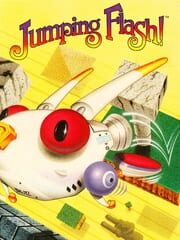

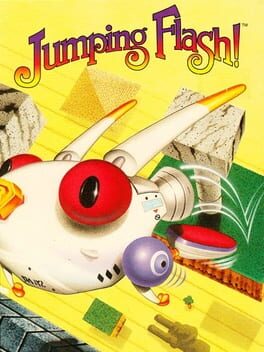
Jumping Flash! (1995)
Pas encore de tier communautaire. Sois le premier à noter ce jeu.
À propos de Jumping Flash! (1995)
Jumping Flash! (1995) est un jeu action et plateforme développé par Exact et édité par Sony Computer Entertainment, sorti le 28 avril 1995.
Jumping Flash! is a platform video game published by Sony Computer Entertainment and developed by Exact Co., Ltd. and Ultra Co., Ltd for the PlayStation in 1995. The game follows the robotic rabbit named 'Robbit' as he searches for the missing Jet Pods which were scattered by the game's astrophysicist antagonist, Baron Aloha. The game is presented in a first-person perspective, in which Robbit must explore each world to retrieve all the hidden Jet Pods, stop Aloha, and save the world from desolate emptiness.
Lire plus
Specs
Liens affiliés : nous pouvons percevoir une commission.
Médias
Toute la série Jumping Flash!
Sur quelles plateformes Jumping Flash! (1995) est-il disponible ?
Jumping Flash! (1995) est disponible sur Android, PlayStation 5, PlayStation 4, PlayStation 3, PlayStation, PlayStation Portable.
Quand Jumping Flash! (1995) est-il sorti ?
Jumping Flash! (1995) est sorti le 28 avril 1995, développé par Exact.