
Meilleurs jeux
Les meilleurs jeux Square Product Development Division 1
Les 7 meilleurs jeux de Square Product Development Division 1, classés à partir de 4,913 notes de la critique et des joueurs.
Le meilleur jeu Square Product Development Division 1 est Final Fantasy X, avec une note de la critique de 95/100. Mis à jour en septembre 2026.
- Les sorties classées vont de 1997 à 2003.
- Note moyenne de la critique sur les 7 jeux classés : 86/100.
- 4,913 notes de la critique et des joueurs derrière ce classement.
Comment ce classement est construit
- Les jeux sont classés sur le score presse agrégé sur 100 importé d'IGDB et Metacritic, jamais sur les grades propres à Tier.
- Un jeu n'entre au classement qu'à partir de 80 notes externes : une seule critique enthousiaste ne dépassera jamais un classique confirmé.
- Les grades de la communauté, de F à S, s'affichent à côté de chaque jeu et ne sont énoncés comme un fait qu'au-delà de 5 notes Tier.
- Fenêtre de sortie couverte : de 1970 à 2026.
- 7 jeux figurent sur cette page, pour 4,913 notes au total.
- Les classements sont recalculés toutes les heures ; celui-ci a été reconstruit le 29 septembre 2026.
Top 7
01
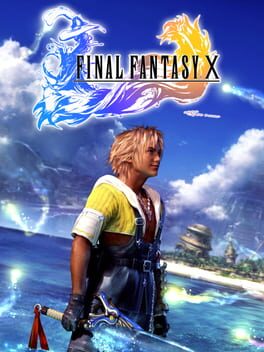 S
Final Fantasy X
Final Fantasy X is the tenth main installment in the FF series and the first title released on sixth-generation consoles. It was also the first game to feature fully three-dimensional areas rather than including pre-rendered backdrops, and the first to include voice acting. Final Fantasy X tells the story of a star blitzball player, Tidus, who journeys with a young and beautiful summoner named Yuna on her quest to save the world of Spira from an endless cycle of destruction wrought by the colossal menace Sin.
95
/100
02
S
Final Fantasy X
Final Fantasy X is the tenth main installment in the FF series and the first title released on sixth-generation consoles. It was also the first game to feature fully three-dimensional areas rather than including pre-rendered backdrops, and the first to include voice acting. Final Fantasy X tells the story of a star blitzball player, Tidus, who journeys with a young and beautiful summoner named Yuna on her quest to save the world of Spira from an endless cycle of destruction wrought by the colossal menace Sin.
95
/100
02
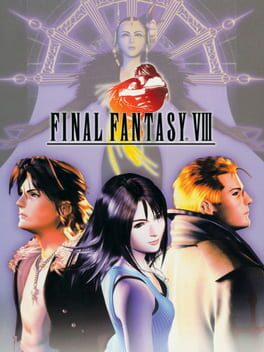 Final Fantasy VIII
 is the eighth main installment in the Final Fantasy series. The gameplay makes a departure from many series standards. While it still uses the Active Time Battle system, it deviates from the series' traditional means of boosting a character's power via leveling, although levels are not completely abandoned as they were in Final Fantasy II. In addition, it does not have a Magic Point-based system for spell-casting. Instead, magic is collected, drawn, and created from items, and is used to power up the characters via the junction system.
90
/100
03
Final Fantasy VIII
Final Fantasy VIII is the eighth main installment in the Final Fantasy series. The gameplay makes a departure from many series standards. While it still uses the Active Time Battle system, it deviates from the series' traditional means of boosting a character's power via leveling, although levels are not completely abandoned as they were in Final Fantasy II. In addition, it does not have a Magic Point-based system for spell-casting. Instead, magic is collected, drawn, and created from items, and is used to power up the characters via the junction system.
90
/100
03
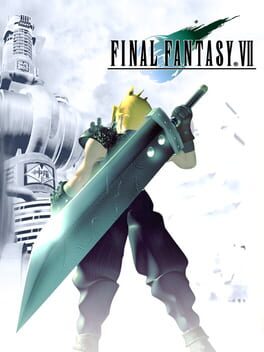 S
Final Fantasy VII
The Western release of Final Fantasy VII (released as Final Fantasy VII International in Japan) included additional elements and alterations, such as streamlining of the menu and Materia system, reducing the health of enemies, new visual cues to help with navigation across the world map, and additional cutscenes relating to Cloud's past.
85
/100
S
Final Fantasy VII
The Western release of Final Fantasy VII (released as Final Fantasy VII International in Japan) included additional elements and alterations, such as streamlining of the menu and Materia system, reducing the health of enemies, new visual cues to help with navigation across the world map, and additional cutscenes relating to Cloud's past.
85
/100
S
Final Fantasy X
Final Fantasy X is the tenth main installment in the FF series and the first title released on sixth-generation consoles. It was also the first game to feature fully three-dimensional areas rather than including pre-rendered backdrops, and the first to include voice acting. Final Fantasy X tells the story of a star blitzball player, Tidus, who journeys with a young and beautiful summoner named Yuna on her quest to save the world of Spira from an endless cycle of destruction wrought by the colossal menace Sin.
95
/100
02
Final Fantasy VIII
Final Fantasy VIII is the eighth main installment in the Final Fantasy series. The gameplay makes a departure from many series standards. While it still uses the Active Time Battle system, it deviates from the series' traditional means of boosting a character's power via leveling, although levels are not completely abandoned as they were in Final Fantasy II. In addition, it does not have a Magic Point-based system for spell-casting. Instead, magic is collected, drawn, and created from items, and is used to power up the characters via the junction system.
90
/100
03
S
Final Fantasy VII
The Western release of Final Fantasy VII (released as Final Fantasy VII International in Japan) included additional elements and alterations, such as streamlining of the menu and Materia system, reducing the health of enemies, new visual cues to help with navigation across the world map, and additional cutscenes relating to Cloud's past.
85
/100
04
 Final Fantasy X-2
 is the direct sequel to Final Fantasy X, developed and published by Square Enix. It was the first direct sequel game in the Final Fantasy series and the first to feature an all-female playable cast. It also returned to the job system not seen in the main series since Final Fantasy V. The game uses a character class system where the equipped dressphere determines her abilities and stats. Party members can switch to any dressphere in their Garment Grid to swap to new skills and adapt to different opponents. It makes use of the Active Time Battle system that was absent from Final Fantasy X. The party has access to all locations early on and can visit them through the Celsius, complete several minigames and sidequests in a chapter before progressing through the story to the next one.
85
/100
05
Final Fantasy X-2
Final Fantasy X-2 is the direct sequel to Final Fantasy X, developed and published by Square Enix. It was the first direct sequel game in the Final Fantasy series and the first to feature an all-female playable cast. It also returned to the job system not seen in the main series since Final Fantasy V. The game uses a character class system where the equipped dressphere determines her abilities and stats. Party members can switch to any dressphere in their Garment Grid to swap to new skills and adapt to different opponents. It makes use of the Active Time Battle system that was absent from Final Fantasy X. The party has access to all locations early on and can visit them through the Celsius, complete several minigames and sidequests in a chapter before progressing through the story to the next one.
85
/100
05
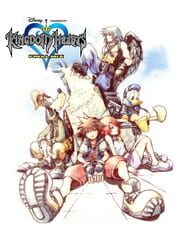 KINGDOM HEARTS FINAL MIX
Originally released only in Japan on December 26, 2002, Kingdom Hearts Final Mix has several events and a number of gameplay tweaks that are not in previous releases. Spoken dialogue is in English, with Japanese subtitles. New scenes, clarifying certain plot points, such as Riku's journey and foreshadowing of Kingdom Hearts II, were included, but no new dialogue was recorded. A gameplay option allows the player to skip cutscenes after seeing them once. The optional bosses first included in the English version were introduced to Japanese players for the first time, along with a new fight against "Unknown Man," in an attempt to raise interest for the sequel.
85
/100
06
KINGDOM HEARTS FINAL MIX
Originally released only in Japan on December 26, 2002, Kingdom Hearts Final Mix has several events and a number of gameplay tweaks that are not in previous releases. Spoken dialogue is in English, with Japanese subtitles. New scenes, clarifying certain plot points, such as Riku's journey and foreshadowing of Kingdom Hearts II, were included, but no new dialogue was recorded. A gameplay option allows the player to skip cutscenes after seeing them once. The optional bosses first included in the English version were introduced to Japanese players for the first time, along with a new fight against "Unknown Man," in an attempt to raise interest for the sequel.
85
/100
06
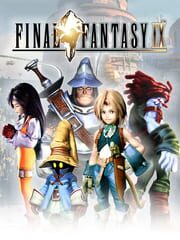 Final Fantasy IX
 is the ninth main installment in the FF series. The title is a return to the series's roots, with gameplay features and references to the past games featuring throughout, as well as a medieval fantasy setting and cartoonish art style as a break from the sci-fi slant style of Final Fantasy VII and Final Fantasy VIII.
84
/100
07
Final Fantasy IX
Final Fantasy IX is the ninth main installment in the FF series. The title is a return to the series's roots, with gameplay features and references to the past games featuring throughout, as well as a medieval fantasy setting and cartoonish art style as a break from the sci-fi slant style of Final Fantasy VII and Final Fantasy VIII.
84
/100
07
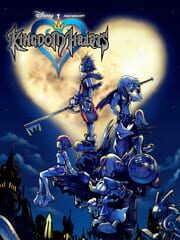 S
Kingdom Hearts
Kingdom Hearts is an action role-playing game developed and published by Squaresoft for the PlayStation 2. It is the result of a collaboration between Square and The Walt Disney Company. The game combines characters and settings from Disney's animated features with those from the Final Fantasy series, developed by Square. Kingdom Hearts was a departure from Square's standard role-playing games by introducing a substantial action-adventure element. In addition, it has an all-star voice cast which included many of the Disney characters' official voice actors. Kingdom Hearts was longtime Square character designer Tetsuya Nomura's first time in a directorial position. The game uses an experience based progression system, with experience gained by defeating foes. Experience gained rises in relation to the strength of the foe, and is consistent for each enemy over the course of the game. Levels are gained with experience, and provide increases to stat attributes in strength, defence, magic, hit points, magic points and ability points, with a new, predetermined ability unlocked approximately every four levels.
80
/100
S
Kingdom Hearts
Kingdom Hearts is an action role-playing game developed and published by Squaresoft for the PlayStation 2. It is the result of a collaboration between Square and The Walt Disney Company. The game combines characters and settings from Disney's animated features with those from the Final Fantasy series, developed by Square. Kingdom Hearts was a departure from Square's standard role-playing games by introducing a substantial action-adventure element. In addition, it has an all-star voice cast which included many of the Disney characters' official voice actors. Kingdom Hearts was longtime Square character designer Tetsuya Nomura's first time in a directorial position. The game uses an experience based progression system, with experience gained by defeating foes. Experience gained rises in relation to the strength of the foe, and is consistent for each enemy over the course of the game. Levels are gained with experience, and provide increases to stat attributes in strength, defence, magic, hit points, magic points and ability points, with a new, predetermined ability unlocked approximately every four levels.
80
/100
Final Fantasy X-2
Final Fantasy X-2 is the direct sequel to Final Fantasy X, developed and published by Square Enix. It was the first direct sequel game in the Final Fantasy series and the first to feature an all-female playable cast. It also returned to the job system not seen in the main series since Final Fantasy V. The game uses a character class system where the equipped dressphere determines her abilities and stats. Party members can switch to any dressphere in their Garment Grid to swap to new skills and adapt to different opponents. It makes use of the Active Time Battle system that was absent from Final Fantasy X. The party has access to all locations early on and can visit them through the Celsius, complete several minigames and sidequests in a chapter before progressing through the story to the next one.
85
/100
05
KINGDOM HEARTS FINAL MIX
Originally released only in Japan on December 26, 2002, Kingdom Hearts Final Mix has several events and a number of gameplay tweaks that are not in previous releases. Spoken dialogue is in English, with Japanese subtitles. New scenes, clarifying certain plot points, such as Riku's journey and foreshadowing of Kingdom Hearts II, were included, but no new dialogue was recorded. A gameplay option allows the player to skip cutscenes after seeing them once. The optional bosses first included in the English version were introduced to Japanese players for the first time, along with a new fight against "Unknown Man," in an attempt to raise interest for the sequel.
85
/100
06
Final Fantasy IX
Final Fantasy IX is the ninth main installment in the FF series. The title is a return to the series's roots, with gameplay features and references to the past games featuring throughout, as well as a medieval fantasy setting and cartoonish art style as a break from the sci-fi slant style of Final Fantasy VII and Final Fantasy VIII.
84
/100
07
S
Kingdom Hearts
Kingdom Hearts is an action role-playing game developed and published by Squaresoft for the PlayStation 2. It is the result of a collaboration between Square and The Walt Disney Company. The game combines characters and settings from Disney's animated features with those from the Final Fantasy series, developed by Square. Kingdom Hearts was a departure from Square's standard role-playing games by introducing a substantial action-adventure element. In addition, it has an all-star voice cast which included many of the Disney characters' official voice actors. Kingdom Hearts was longtime Square character designer Tetsuya Nomura's first time in a directorial position. The game uses an experience based progression system, with experience gained by defeating foes. Experience gained rises in relation to the strength of the foe, and is consistent for each enemy over the course of the game. Levels are gained with experience, and provide increases to stat attributes in strength, defence, magic, hit points, magic points and ability points, with a new, predetermined ability unlocked approximately every four levels.
80
/100
Questions fréquentes
Quel est le meilleur jeu Square Product Development Division 1 ?
Final Fantasy X domine actuellement le classement avec un score de 95/100 sur 1,068 notes. Classement mis à jour en septembre 2026.
Comment ce classement est-il construit ?
Les jeux sont classés sur leur score critique agrégé sur 100, avec un seuil minimum de votes pour qu'une seule critique dithyrambique ne passe jamais devant un classique confirmé ; les grades F à S de la communauté Tier sont affichés à côté de chaque jeu.