
Mejores juegos
Los mejores juegos de Revolution Software
Los 7 mejores juegos de Revolution Software, ordenados a partir de 1,001 valoraciones de la crítica y de los jugadores.
El mejor juego de Revolution Software es Beneath a Steel Sky, con una nota de la crítica de 91/100. Actualizado en septiembre 2026.
- Los lanzamientos del ranking van de 1992 a 2013.
- Nota media de la crítica en los 7 juegos del ranking: 76/100.
- 1,001 valoraciones de la crítica y de los jugadores detrás de este ranking.
Cómo se construye este ranking
- Los juegos se clasifican por la nota agregada de la crítica sobre 100 importada de IGDB y Metacritic, nunca por las notas propias de Tier.
- Un juego solo entra en el ranking a partir de 80 valoraciones externas, para que una única crítica entusiasta nunca supere a un clásico consolidado.
- Las notas de la comunidad, de F a S, aparecen junto a cada juego y solo se afirman como un hecho por encima de 5 valoraciones en Tier.
- Periodo de lanzamiento cubierto: de 1970 a 2026.
- 7 juegos aparecen en esta página, con 1,001 valoraciones en total.
- Los rankings se recalculan cada hora; este se reconstruyó el 29 septiembre 2026.
Top 7
01
 Beneath a Steel Sky
 is a cyberpunk, point and click, adventure game. You assume the role of Robert Foster and embark on a quest to make the world a better place, along with your robot companion Joey.
91
/100
02
Beneath a Steel Sky
Beneath a Steel Sky is a cyberpunk, point and click, adventure game. You assume the role of Robert Foster and embark on a quest to make the world a better place, along with your robot companion Joey.
91
/100
02
 Broken Sword: The Smoking Mirror
 is a 2D adventure game played from a third-person perspective. Via a point-and-click interface, the player guides protagonist George Stobbart through the game's world and interacts with the environment by selecting from multiple commands, while Nicole Collard is also a playable character in selected portions of the game. The player controls George's movements and can engage in dialogue with other characters through conversation trees to gain hints of what needs to be done to solve the puzzles or to progress the plot. He also have to collect objects that can be used with either other collectible objects, parts of the scenery or with other people in order to solve puzzles and progress in the game. By right-clicking on an object, the player gets a description and clues. The player character's death is possible if he makes a wrong decision.
83
/100
03
Broken Sword: The Smoking Mirror
Broken Sword: The Smoking Mirror is a 2D adventure game played from a third-person perspective. Via a point-and-click interface, the player guides protagonist George Stobbart through the game's world and interacts with the environment by selecting from multiple commands, while Nicole Collard is also a playable character in selected portions of the game. The player controls George's movements and can engage in dialogue with other characters through conversation trees to gain hints of what needs to be done to solve the puzzles or to progress the plot. He also have to collect objects that can be used with either other collectible objects, parts of the scenery or with other people in order to solve puzzles and progress in the game. By right-clicking on an object, the player gets a description and clues. The player character's death is possible if he makes a wrong decision.
83
/100
03
 Broken Sword 2 - The Smoking Mirror (Remastered)
Broken Sword: The Smoking Mirror - Remastered is a remastered edition of the original game. The game features the same basic story, but has additional features, including fully animated facial expressions, higher quality audio, an interactive comic book, cloud save support, context-sensitive hints, a game diary and a new user interface.
82
/100
Broken Sword 2 - The Smoking Mirror (Remastered)
Broken Sword: The Smoking Mirror - Remastered is a remastered edition of the original game. The game features the same basic story, but has additional features, including fully animated facial expressions, higher quality audio, an interactive comic book, cloud save support, context-sensitive hints, a game diary and a new user interface.
82
/100
Beneath a Steel Sky
Beneath a Steel Sky is a cyberpunk, point and click, adventure game. You assume the role of Robert Foster and embark on a quest to make the world a better place, along with your robot companion Joey.
91
/100
02
Broken Sword: The Smoking Mirror
Broken Sword: The Smoking Mirror is a 2D adventure game played from a third-person perspective. Via a point-and-click interface, the player guides protagonist George Stobbart through the game's world and interacts with the environment by selecting from multiple commands, while Nicole Collard is also a playable character in selected portions of the game. The player controls George's movements and can engage in dialogue with other characters through conversation trees to gain hints of what needs to be done to solve the puzzles or to progress the plot. He also have to collect objects that can be used with either other collectible objects, parts of the scenery or with other people in order to solve puzzles and progress in the game. By right-clicking on an object, the player gets a description and clues. The player character's death is possible if he makes a wrong decision.
83
/100
03
Broken Sword 2 - The Smoking Mirror (Remastered)
Broken Sword: The Smoking Mirror - Remastered is a remastered edition of the original game. The game features the same basic story, but has additional features, including fully animated facial expressions, higher quality audio, an interactive comic book, cloud save support, context-sensitive hints, a game diary and a new user interface.
82
/100
04
 Circle of Blood
 is a 2D adventure game played from a third-person perspective. The player uses a point-and-click interface to interact with the environment and to guide protagonist George Stobbart through the game's world. To solve puzzles and progress in the game, the player collects items that may be combined with one another, used on the environment, or given to non-player characters. The protagonist converses with NPCs via dialogue trees presented through "conversation icons" to learn about the game's puzzles and plot. Clues and other information are obtained by clicking on items in the inventory and on objects in the environment. The player navigates with a map, to which new locations are added as the story unfolds. Unlike in most adventure games at the time, the protagonist's death is possible, after which the player starts from the last save point.
75
/100
05
Circle of Blood
Circle of Blood is a 2D adventure game played from a third-person perspective. The player uses a point-and-click interface to interact with the environment and to guide protagonist George Stobbart through the game's world. To solve puzzles and progress in the game, the player collects items that may be combined with one another, used on the environment, or given to non-player characters. The protagonist converses with NPCs via dialogue trees presented through "conversation icons" to learn about the game's puzzles and plot. Clues and other information are obtained by clicking on items in the inventory and on objects in the environment. The player navigates with a map, to which new locations are added as the story unfolds. Unlike in most adventure games at the time, the protagonist's death is possible, after which the player starts from the last save point.
75
/100
05
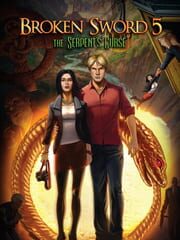 Broken Sword 5 - The Serpent's Curse
Broken Sword 5: The Serpent's Curse is a classical point & click adventure. It abandons 3D graphics and direct control which were used in the two predecessors and returns to the style of the first two games. The only major technical differences are a higher resolution and that the characters are modelled instead of drawn. The game uses an intelligent mouse cursor: a right click on a hotspot results in looking at the item and a left click triggers an item-specific action. Of course this is the main ingredient of the puzzles: collecting items and using them on other items in order to solve problems. On some occasions there are also logic puzzles from a zoomed-in view on an object, e.g. connecting cables of an engine in order to repair the car's horn. Another important part of the game are conversations with the various characters, some of them known from previous instalments. During the course of the game the controlled character switches between George and Nico. A help function supports players who are stuck.
71
/100
06
Broken Sword 5 - The Serpent's Curse
Broken Sword 5: The Serpent's Curse is a classical point & click adventure. It abandons 3D graphics and direct control which were used in the two predecessors and returns to the style of the first two games. The only major technical differences are a higher resolution and that the characters are modelled instead of drawn. The game uses an intelligent mouse cursor: a right click on a hotspot results in looking at the item and a left click triggers an item-specific action. Of course this is the main ingredient of the puzzles: collecting items and using them on other items in order to solve problems. On some occasions there are also logic puzzles from a zoomed-in view on an object, e.g. connecting cables of an engine in order to repair the car's horn. Another important part of the game are conversations with the various characters, some of them known from previous instalments. During the course of the game the controlled character switches between George and Nico. A help function supports players who are stuck.
71
/100
06
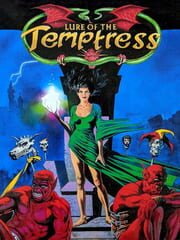 Lure of the Temptress
 is an Adventure game, developed by Revolution Software and published by Konami, which was released in 1992.
67
/100
07
Lure of the Temptress
Lure of the Temptress is an Adventure game, developed by Revolution Software and published by Konami, which was released in 1992.
67
/100
07
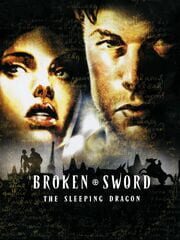 Broken Sword: The Sleeping Dragon
 moves away from the 2D point-and-click concept from the earlier games and features a full 3D world, with a camera that does not rotate, but uses fixed cinematic perspectives, combined with full 5.1 sound. For the Windows version the game is no longer controlled through the mouse, but now through the keyboard, for the movement of the characters as well as all the actions. The player alternately controls George or Nico. Next to typical adventure gameplay such as exploration, conversations, and searching and combining items, there are also a few action sequences. The characters can duck, sneak, hang from ledges and move crates to reach higher areas.
60
/100
Broken Sword: The Sleeping Dragon
Broken Sword: The Sleeping Dragon moves away from the 2D point-and-click concept from the earlier games and features a full 3D world, with a camera that does not rotate, but uses fixed cinematic perspectives, combined with full 5.1 sound. For the Windows version the game is no longer controlled through the mouse, but now through the keyboard, for the movement of the characters as well as all the actions. The player alternately controls George or Nico. Next to typical adventure gameplay such as exploration, conversations, and searching and combining items, there are also a few action sequences. The characters can duck, sneak, hang from ledges and move crates to reach higher areas.
60
/100
Circle of Blood
Circle of Blood is a 2D adventure game played from a third-person perspective. The player uses a point-and-click interface to interact with the environment and to guide protagonist George Stobbart through the game's world. To solve puzzles and progress in the game, the player collects items that may be combined with one another, used on the environment, or given to non-player characters. The protagonist converses with NPCs via dialogue trees presented through "conversation icons" to learn about the game's puzzles and plot. Clues and other information are obtained by clicking on items in the inventory and on objects in the environment. The player navigates with a map, to which new locations are added as the story unfolds. Unlike in most adventure games at the time, the protagonist's death is possible, after which the player starts from the last save point.
75
/100
05
Broken Sword 5 - The Serpent's Curse
Broken Sword 5: The Serpent's Curse is a classical point & click adventure. It abandons 3D graphics and direct control which were used in the two predecessors and returns to the style of the first two games. The only major technical differences are a higher resolution and that the characters are modelled instead of drawn. The game uses an intelligent mouse cursor: a right click on a hotspot results in looking at the item and a left click triggers an item-specific action. Of course this is the main ingredient of the puzzles: collecting items and using them on other items in order to solve problems. On some occasions there are also logic puzzles from a zoomed-in view on an object, e.g. connecting cables of an engine in order to repair the car's horn. Another important part of the game are conversations with the various characters, some of them known from previous instalments. During the course of the game the controlled character switches between George and Nico. A help function supports players who are stuck.
71
/100
06
Lure of the Temptress
Lure of the Temptress is an Adventure game, developed by Revolution Software and published by Konami, which was released in 1992.
67
/100
07
Broken Sword: The Sleeping Dragon
Broken Sword: The Sleeping Dragon moves away from the 2D point-and-click concept from the earlier games and features a full 3D world, with a camera that does not rotate, but uses fixed cinematic perspectives, combined with full 5.1 sound. For the Windows version the game is no longer controlled through the mouse, but now through the keyboard, for the movement of the characters as well as all the actions. The player alternately controls George or Nico. Next to typical adventure gameplay such as exploration, conversations, and searching and combining items, there are also a few action sequences. The characters can duck, sneak, hang from ledges and move crates to reach higher areas.
60
/100
Preguntas frecuentes
¿Cuál es el mejor juego de Revolution Software?
Beneath a Steel Sky encabeza actualmente la clasificación con una puntuación de 91/100 sobre 221 valoraciones. Clasificación actualizada en septiembre 2026.
¿Cómo se construye esta clasificación?
Los juegos se ordenan por su puntuación crítica agregada sobre 100, con un umbral mínimo de votos para que una sola crítica entusiasta nunca supere a un clásico consagrado; los grados de F a S de la comunidad Tier se muestran junto a cada juego.