
Mejores juegos
Mejores juegos de NES de 1985
Los 13 mejores juegos de NES lanzados en 1985, ordenados a partir de 2,339 valoraciones de la crítica y de los jugadores.
El mejor juego de NES de 1985 es Ultima IV: Quest of the Avatar, con una puntuación crítica de 88/100 — actualizado en septiembre 2026.
Cómo se construye este ranking
- Los juegos se clasifican por la nota agregada de la crítica sobre 100 importada de IGDB y Metacritic, nunca por las notas propias de Tier.
- Un juego solo entra en el ranking a partir de 30 valoraciones externas, para que una única crítica entusiasta nunca supere a un clásico consolidado.
- Las notas de la comunidad, de F a S, aparecen junto a cada juego y solo se afirman como un hecho por encima de 5 valoraciones en Tier.
- Periodo de lanzamiento cubierto: 1985.
- 13 juegos aparecen en esta página, con 2,339 valoraciones en total.
- Los rankings se recalculan cada hora; este se reconstruyó el 29 septiembre 2026.
Top 13
01
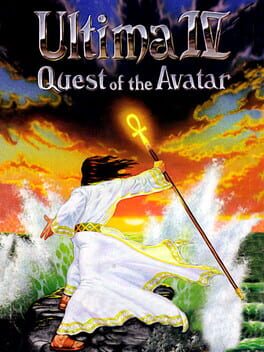 Ultima IV: Quest of the Avatar
Following the defeat of the evil triad in the previous three Ultima games, the world of Sosaria changed beyond recognition: continents rose and sank, and new cities were built, heralding the advent of a different civilization. Unified by the reign of the benevolent monarch Lord British, the new world was renamed Britannia. Lord British wished to base people's well-being on the ethical principles of Truth, Love, and Courage, proclaiming the Eight Virtues (Honesty, Compassion, Valor, Justice, Sacrifice, Honor, Spirituality, and Humility) as the ideal everyone should strive for. The person who could accomplish full understanding and realization of these virtues would serve as a spiritual leader and a moral example for the inhabitants of Britannia; he alone would be able to obtain holy artifacts, descend into the Stygian Abyss, and access the Codex of Ultimate Wisdom. This person is the Avatar. The fourth game in the Ultima series features an improved game engine, with color graphics and enhanced character interaction: the player can have conversations with non-playable characters by typing names of various topics. However, the main difference between Ultima IV and its predecessors in the series (as well as other role-playing games) lies in the game's objectives and the ways to fulfill them. Instead of building up a character by any means possible in order to face a villain in the end of the game, in Ultima IV the player is trying to become the Avatar, a role model for people. This means upholding the Eight Virtues, basically trying to become a better person. Making morally conscious decisions and helping other people is not done expecting a material reward, but because it is the actual goal of the game and the main focus of its gameplay. The game frowns on behavior typical of most other RPGs, such as backstabbing fleeing enemies or picking up everything that isn't nailed down even if it does not belong to the protagonist. This different approach established the game's reputation as the first "true" Ultima, influencing the design philosophy of later installments and the overall spirit of the series. Character creation is done by choosing responses to morally ambiguous questions. Each of the Eight Virtues corresponds to a character class; by determining the player's personal priorities in the virtues, the game assigns a class and a starting location for the Avatar. After emerging in Britannia, the player is free to explore it in various ways (on foot, moongate teleportation, on horseback, by ship, etc.). Certain items must be collected in any order to enter the Stygian Abyss and complete the game. The Avatar also has to reach the highest level in all virtues. This is achieved by various means: donating blood increases Sacrifice, not fleeing from combat increases Valor, etc. The process, however, is not irreversible: should the Avatar overpay a blind seller, he gains Compassion points; should he, on the other hand, cheat the seller by underpaying, his level in several virtues would decrease. These unorthodox features of the game co-exist with plenty of traditional RPG elements, such as dungeons to explore and hostile monsters to kill. Enemies are encountered on the world map as well as in dungeons; combat takes place on separate top-down screens, allowing player-controlled and enemy parties freely move on them. Characters accumulate experience points and level up, gaining higher amount of hit points and access to stronger magic spells. Like in the previous installments of the series, world map, town exploration and combat are presented from a top-down view, while the dungeons are pseudo-3D and are explored from first-person perspective. Ultima IV also introduces several new gameplay features to the series and role-playing games in general. A number of initially non-playable characters living in various areas of the game world are able to to join the party and fight alongside the hero, replacing traditional player-generated characters or mercenaries and adventurers available only in special locations. Additional new elements include buying and combining reagents in order to cast spells, puzzle rooms in dungeons, and others.
88
/100
02
Ultima IV: Quest of the Avatar
Following the defeat of the evil triad in the previous three Ultima games, the world of Sosaria changed beyond recognition: continents rose and sank, and new cities were built, heralding the advent of a different civilization. Unified by the reign of the benevolent monarch Lord British, the new world was renamed Britannia. Lord British wished to base people's well-being on the ethical principles of Truth, Love, and Courage, proclaiming the Eight Virtues (Honesty, Compassion, Valor, Justice, Sacrifice, Honor, Spirituality, and Humility) as the ideal everyone should strive for. The person who could accomplish full understanding and realization of these virtues would serve as a spiritual leader and a moral example for the inhabitants of Britannia; he alone would be able to obtain holy artifacts, descend into the Stygian Abyss, and access the Codex of Ultimate Wisdom. This person is the Avatar. The fourth game in the Ultima series features an improved game engine, with color graphics and enhanced character interaction: the player can have conversations with non-playable characters by typing names of various topics. However, the main difference between Ultima IV and its predecessors in the series (as well as other role-playing games) lies in the game's objectives and the ways to fulfill them. Instead of building up a character by any means possible in order to face a villain in the end of the game, in Ultima IV the player is trying to become the Avatar, a role model for people. This means upholding the Eight Virtues, basically trying to become a better person. Making morally conscious decisions and helping other people is not done expecting a material reward, but because it is the actual goal of the game and the main focus of its gameplay. The game frowns on behavior typical of most other RPGs, such as backstabbing fleeing enemies or picking up everything that isn't nailed down even if it does not belong to the protagonist. This different approach established the game's reputation as the first "true" Ultima, influencing the design philosophy of later installments and the overall spirit of the series. Character creation is done by choosing responses to morally ambiguous questions. Each of the Eight Virtues corresponds to a character class; by determining the player's personal priorities in the virtues, the game assigns a class and a starting location for the Avatar. After emerging in Britannia, the player is free to explore it in various ways (on foot, moongate teleportation, on horseback, by ship, etc.). Certain items must be collected in any order to enter the Stygian Abyss and complete the game. The Avatar also has to reach the highest level in all virtues. This is achieved by various means: donating blood increases Sacrifice, not fleeing from combat increases Valor, etc. The process, however, is not irreversible: should the Avatar overpay a blind seller, he gains Compassion points; should he, on the other hand, cheat the seller by underpaying, his level in several virtues would decrease. These unorthodox features of the game co-exist with plenty of traditional RPG elements, such as dungeons to explore and hostile monsters to kill. Enemies are encountered on the world map as well as in dungeons; combat takes place on separate top-down screens, allowing player-controlled and enemy parties freely move on them. Characters accumulate experience points and level up, gaining higher amount of hit points and access to stronger magic spells. Like in the previous installments of the series, world map, town exploration and combat are presented from a top-down view, while the dungeons are pseudo-3D and are explored from first-person perspective. Ultima IV also introduces several new gameplay features to the series and role-playing games in general. A number of initially non-playable characters living in various areas of the game world are able to to join the party and fight alongside the hero, replacing traditional player-generated characters or mercenaries and adventurers available only in special locations. Additional new elements include buying and combining reagents in order to cast spells, puzzle rooms in dungeons, and others.
88
/100
02
 Super Mario Bros.
A side scrolling 2D platformer and first entry in the Super Mario franchise, Super Mario Bros. follows Italian plumber Mario as he treks across many levels of platforming challenges featuring hostile enemies to rescue Princess Peach from the evil king Bowser.
84
/100
03
Super Mario Bros.
A side scrolling 2D platformer and first entry in the Super Mario franchise, Super Mario Bros. follows Italian plumber Mario as he treks across many levels of platforming challenges featuring hostile enemies to rescue Princess Peach from the evil king Bowser.
84
/100
03
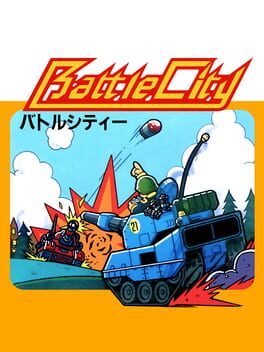 Battle City
, also known as Tank 1990 or Tank in some pirate multicart releases, is a multi-directional shooter video game for the Family Computer produced and published in 1985 by Namco. The game was later released for the Game Boy and was included in the Japanese version of Star Fox: Assault. It is a port of the arcade game Tank Battalion with additional features (including two player simultaneous play and a level edit feature). There was also a rendition for Nintendo's Vs. System arcade cabinets. The player, controlling a tank, must destroy enemy tanks in each level, which enter the playfield from the top of the screen. The enemy tanks attempt to destroy the player's base (represented on the map as a bird, eagle or Phoenix), as well as the human tank itself. A level is completed when the player destroys all 20 enemy tanks, but the game ends if the player's base is destroyed or the player loses all available lives.
78
/100
Battle City
Battle City, also known as Tank 1990 or Tank in some pirate multicart releases, is a multi-directional shooter video game for the Family Computer produced and published in 1985 by Namco. The game was later released for the Game Boy and was included in the Japanese version of Star Fox: Assault. It is a port of the arcade game Tank Battalion with additional features (including two player simultaneous play and a level edit feature). There was also a rendition for Nintendo's Vs. System arcade cabinets. The player, controlling a tank, must destroy enemy tanks in each level, which enter the playfield from the top of the screen. The enemy tanks attempt to destroy the player's base (represented on the map as a bird, eagle or Phoenix), as well as the human tank itself. A level is completed when the player destroys all 20 enemy tanks, but the game ends if the player's base is destroyed or the player loses all available lives.
78
/100
Ultima IV: Quest of the Avatar
Following the defeat of the evil triad in the previous three Ultima games, the world of Sosaria changed beyond recognition: continents rose and sank, and new cities were built, heralding the advent of a different civilization. Unified by the reign of the benevolent monarch Lord British, the new world was renamed Britannia. Lord British wished to base people's well-being on the ethical principles of Truth, Love, and Courage, proclaiming the Eight Virtues (Honesty, Compassion, Valor, Justice, Sacrifice, Honor, Spirituality, and Humility) as the ideal everyone should strive for. The person who could accomplish full understanding and realization of these virtues would serve as a spiritual leader and a moral example for the inhabitants of Britannia; he alone would be able to obtain holy artifacts, descend into the Stygian Abyss, and access the Codex of Ultimate Wisdom. This person is the Avatar. The fourth game in the Ultima series features an improved game engine, with color graphics and enhanced character interaction: the player can have conversations with non-playable characters by typing names of various topics. However, the main difference between Ultima IV and its predecessors in the series (as well as other role-playing games) lies in the game's objectives and the ways to fulfill them. Instead of building up a character by any means possible in order to face a villain in the end of the game, in Ultima IV the player is trying to become the Avatar, a role model for people. This means upholding the Eight Virtues, basically trying to become a better person. Making morally conscious decisions and helping other people is not done expecting a material reward, but because it is the actual goal of the game and the main focus of its gameplay. The game frowns on behavior typical of most other RPGs, such as backstabbing fleeing enemies or picking up everything that isn't nailed down even if it does not belong to the protagonist. This different approach established the game's reputation as the first "true" Ultima, influencing the design philosophy of later installments and the overall spirit of the series. Character creation is done by choosing responses to morally ambiguous questions. Each of the Eight Virtues corresponds to a character class; by determining the player's personal priorities in the virtues, the game assigns a class and a starting location for the Avatar. After emerging in Britannia, the player is free to explore it in various ways (on foot, moongate teleportation, on horseback, by ship, etc.). Certain items must be collected in any order to enter the Stygian Abyss and complete the game. The Avatar also has to reach the highest level in all virtues. This is achieved by various means: donating blood increases Sacrifice, not fleeing from combat increases Valor, etc. The process, however, is not irreversible: should the Avatar overpay a blind seller, he gains Compassion points; should he, on the other hand, cheat the seller by underpaying, his level in several virtues would decrease. These unorthodox features of the game co-exist with plenty of traditional RPG elements, such as dungeons to explore and hostile monsters to kill. Enemies are encountered on the world map as well as in dungeons; combat takes place on separate top-down screens, allowing player-controlled and enemy parties freely move on them. Characters accumulate experience points and level up, gaining higher amount of hit points and access to stronger magic spells. Like in the previous installments of the series, world map, town exploration and combat are presented from a top-down view, while the dungeons are pseudo-3D and are explored from first-person perspective. Ultima IV also introduces several new gameplay features to the series and role-playing games in general. A number of initially non-playable characters living in various areas of the game world are able to to join the party and fight alongside the hero, replacing traditional player-generated characters or mercenaries and adventurers available only in special locations. Additional new elements include buying and combining reagents in order to cast spells, puzzle rooms in dungeons, and others.
88
/100
02
Super Mario Bros.
A side scrolling 2D platformer and first entry in the Super Mario franchise, Super Mario Bros. follows Italian plumber Mario as he treks across many levels of platforming challenges featuring hostile enemies to rescue Princess Peach from the evil king Bowser.
84
/100
03
Battle City
Battle City, also known as Tank 1990 or Tank in some pirate multicart releases, is a multi-directional shooter video game for the Family Computer produced and published in 1985 by Namco. The game was later released for the Game Boy and was included in the Japanese version of Star Fox: Assault. It is a port of the arcade game Tank Battalion with additional features (including two player simultaneous play and a level edit feature). There was also a rendition for Nintendo's Vs. System arcade cabinets. The player, controlling a tank, must destroy enemy tanks in each level, which enter the playfield from the top of the screen. The enemy tanks attempt to destroy the player's base (represented on the map as a bird, eagle or Phoenix), as well as the human tank itself. A level is completed when the player destroys all 20 enemy tanks, but the game ends if the player's base is destroyed or the player loses all available lives.
78
/100
04
 Lunar Pool
 is the first advanced home video billiards game ever. Never before has the player been able to choose among 60 different "tables." Jump around to your favorite, or master each stage consecutively. Your score is kept automatically. You set up the electronic cue stick, aim the cue ball, choose the power you need and shoot! Then watch the ball ricochet around the "table" and land in the pocket. Learn to be a "hustler" by mastering all 60 stages (an expansion over the original PC-8801 32 stages).
76
/100
05
Lunar Pool
Lunar Pool is the first advanced home video billiards game ever. Never before has the player been able to choose among 60 different "tables." Jump around to your favorite, or master each stage consecutively. Your score is kept automatically. You set up the electronic cue stick, aim the cue ball, choose the power you need and shoot! Then watch the ball ricochet around the "table" and land in the pocket. Learn to be a "hustler" by mastering all 60 stages (an expansion over the original PC-8801 32 stages).
76
/100
05
 Gradius
One of the defining characteristics of the Gradius series is the use of a "power meter." The power meter is powered by a power-up item, whose purpose, when collected, is to move a highlight to the next power-up on the power meter. When a power-up that the player wants becomes highlighted, he or she may activate it, also causing the highlight to reset.
74
/100
06
Gradius
One of the defining characteristics of the Gradius series is the use of a "power meter." The power meter is powered by a power-up item, whose purpose, when collected, is to move a highlight to the next power-up on the power meter. When a power-up that the player wants becomes highlighted, he or she may activate it, also causing the highlight to reset.
74
/100
06
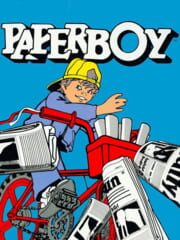 Paperboy
 is a 1985 arcade game by Atari Games originally developed in 1984 . The players take the role of a paperboy who delivers newspapers along a suburban street on his bicycle. The game was ported to numerous video game consoles and personal computers. Paperboy was innovative for its theme and novel controls. The player controls a paperboy on a bicycle delivering newspapers along a suburban street which is displayed in a cabinet perspective (or oblique projection) view. The player attempts to deliver a week of daily newspapers to subscribing customers, attempts to vandalize non-subscribers' homes and must avoid hazards along the street. Subscribers are lost by missing a delivery or damaging a subscriber's house.
71
/100
07
Paperboy
Paperboy is a 1985 arcade game by Atari Games originally developed in 1984 . The players take the role of a paperboy who delivers newspapers along a suburban street on his bicycle. The game was ported to numerous video game consoles and personal computers. Paperboy was innovative for its theme and novel controls. The player controls a paperboy on a bicycle delivering newspapers along a suburban street which is displayed in a cabinet perspective (or oblique projection) view. The player attempts to deliver a week of daily newspapers to subscribing customers, attempts to vandalize non-subscribers' homes and must avoid hazards along the street. Subscribers are lost by missing a delivery or damaging a subscriber's house.
71
/100
07
 Balloon Fight (1985)
Balloon Fight was developed and released by Nintendo, being the console port of the Arcade game VS. Balloon Fight (which was developed at the same time by another team, but released first). It was ported onto numerous other systems, and has more recently been released on the Nintendo Wii U. The game allowed for 1 player and 2 player gameplay, providing cooperative play to get past each stage.
69
/100
08
Balloon Fight (1985)
Balloon Fight was developed and released by Nintendo, being the console port of the Arcade game VS. Balloon Fight (which was developed at the same time by another team, but released first). It was ported onto numerous other systems, and has more recently been released on the Nintendo Wii U. The game allowed for 1 player and 2 player gameplay, providing cooperative play to get past each stage.
69
/100
08
 Gun.Smoke
 is very similar to Commando, another Capcom game, but with several differences. Whereas Commando is a run and gun game, this game is a scrolling shooter in which the screen scrolls upward automatically and players only have three ways to shoot, using three buttons for left, right, and center shooting. However, a player can also change the way the gunman shoots through button combinations. A player can still die by getting shot or struck by enemies like in Commando but improve protection by getting special items, including a horse, for protection up to three hits; boots, for speed of movement; bullets, for faster shots; and rifles, for shot length. These items are found by shooting barrels and rifles, boots, and bullets can stock up to five. It was brought to the Sega Master System in South Korea without a license by Prosoft in 1990.
69
/100
09
Gun.Smoke
Gun.Smoke is very similar to Commando, another Capcom game, but with several differences. Whereas Commando is a run and gun game, this game is a scrolling shooter in which the screen scrolls upward automatically and players only have three ways to shoot, using three buttons for left, right, and center shooting. However, a player can also change the way the gunman shoots through button combinations. A player can still die by getting shot or struck by enemies like in Commando but improve protection by getting special items, including a horse, for protection up to three hits; boots, for speed of movement; bullets, for faster shots; and rifles, for shot length. These items are found by shooting barrels and rifles, boots, and bullets can stock up to five. It was brought to the Sega Master System in South Korea without a license by Prosoft in 1990.
69
/100
09
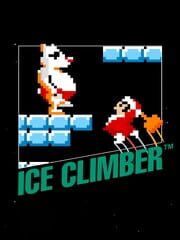 Ice Climber
If you can break through 8 levels of treacherous arctic ice, you'll reach the top of the mountain! But watch out. The Nitpickers, Condors, and Polar Bears don't want you up there. And they've got a bag of tricks that will test every ounce of your strength and courage. Are you going to let them stop you? No way! There are 32 mountains to choose from and endless thrills as you fight these arctic creatures alone or with a friend, and ascend to the top of the mountain in Ice Climber!
64
/100
10
Ice Climber
If you can break through 8 levels of treacherous arctic ice, you'll reach the top of the mountain! But watch out. The Nitpickers, Condors, and Polar Bears don't want you up there. And they've got a bag of tricks that will test every ounce of your strength and courage. Are you going to let them stop you? No way! There are 32 mountains to choose from and endless thrills as you fight these arctic creatures alone or with a friend, and ascend to the top of the mountain in Ice Climber!
64
/100
10
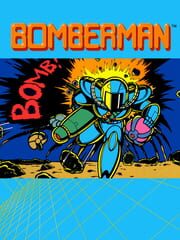 Bomberman (2005)
Bomberman is a robot engaged in the production of bombs. Like his fellow robots, he had been put to work in an underground compound by evil forces. Bomberman found it to be an unbearably dreary existence. One day, he heard an encouraging rumor. According to the rumor, any robot that could escape the underground compound and make it to the surface could become human. Bomberman leaped at the opportunity, but escape proved to be no small task. Alerted to Bomberman's betrayal, large numbers of the enemy set out in pursuit. Bomberman can rely only on bombs of his own production for his defense. Will he ever make it up to the surface? Once there, will he really become human?
58
/100
11
Bomberman (2005)
Bomberman is a robot engaged in the production of bombs. Like his fellow robots, he had been put to work in an underground compound by evil forces. Bomberman found it to be an unbearably dreary existence. One day, he heard an encouraging rumor. According to the rumor, any robot that could escape the underground compound and make it to the surface could become human. Bomberman leaped at the opportunity, but escape proved to be no small task. Alerted to Bomberman's betrayal, large numbers of the enemy set out in pursuit. Bomberman can rely only on bombs of his own production for his defense. Will he ever make it up to the surface? Once there, will he really become human?
58
/100
11
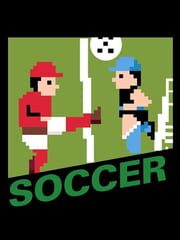 Soccer
57
/100
12
Soccer
57
/100
12
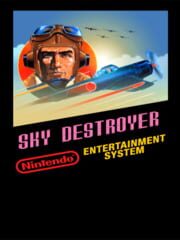 Sky Destroyer
56
/100
13
Sky Destroyer
56
/100
13
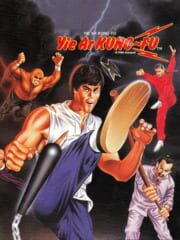 Yie Ar Kung-Fu (1985)
20
/100
Yie Ar Kung-Fu (1985)
20
/100
Lunar Pool
Lunar Pool is the first advanced home video billiards game ever. Never before has the player been able to choose among 60 different "tables." Jump around to your favorite, or master each stage consecutively. Your score is kept automatically. You set up the electronic cue stick, aim the cue ball, choose the power you need and shoot! Then watch the ball ricochet around the "table" and land in the pocket. Learn to be a "hustler" by mastering all 60 stages (an expansion over the original PC-8801 32 stages).
76
/100
05
Gradius
One of the defining characteristics of the Gradius series is the use of a "power meter." The power meter is powered by a power-up item, whose purpose, when collected, is to move a highlight to the next power-up on the power meter. When a power-up that the player wants becomes highlighted, he or she may activate it, also causing the highlight to reset.
74
/100
06
Paperboy
Paperboy is a 1985 arcade game by Atari Games originally developed in 1984 . The players take the role of a paperboy who delivers newspapers along a suburban street on his bicycle. The game was ported to numerous video game consoles and personal computers. Paperboy was innovative for its theme and novel controls. The player controls a paperboy on a bicycle delivering newspapers along a suburban street which is displayed in a cabinet perspective (or oblique projection) view. The player attempts to deliver a week of daily newspapers to subscribing customers, attempts to vandalize non-subscribers' homes and must avoid hazards along the street. Subscribers are lost by missing a delivery or damaging a subscriber's house.
71
/100
07
Balloon Fight (1985)
Balloon Fight was developed and released by Nintendo, being the console port of the Arcade game VS. Balloon Fight (which was developed at the same time by another team, but released first). It was ported onto numerous other systems, and has more recently been released on the Nintendo Wii U. The game allowed for 1 player and 2 player gameplay, providing cooperative play to get past each stage.
69
/100
08
Gun.Smoke
Gun.Smoke is very similar to Commando, another Capcom game, but with several differences. Whereas Commando is a run and gun game, this game is a scrolling shooter in which the screen scrolls upward automatically and players only have three ways to shoot, using three buttons for left, right, and center shooting. However, a player can also change the way the gunman shoots through button combinations. A player can still die by getting shot or struck by enemies like in Commando but improve protection by getting special items, including a horse, for protection up to three hits; boots, for speed of movement; bullets, for faster shots; and rifles, for shot length. These items are found by shooting barrels and rifles, boots, and bullets can stock up to five. It was brought to the Sega Master System in South Korea without a license by Prosoft in 1990.
69
/100
09
Ice Climber
If you can break through 8 levels of treacherous arctic ice, you'll reach the top of the mountain! But watch out. The Nitpickers, Condors, and Polar Bears don't want you up there. And they've got a bag of tricks that will test every ounce of your strength and courage. Are you going to let them stop you? No way! There are 32 mountains to choose from and endless thrills as you fight these arctic creatures alone or with a friend, and ascend to the top of the mountain in Ice Climber!
64
/100
10
Bomberman (2005)
Bomberman is a robot engaged in the production of bombs. Like his fellow robots, he had been put to work in an underground compound by evil forces. Bomberman found it to be an unbearably dreary existence. One day, he heard an encouraging rumor. According to the rumor, any robot that could escape the underground compound and make it to the surface could become human. Bomberman leaped at the opportunity, but escape proved to be no small task. Alerted to Bomberman's betrayal, large numbers of the enemy set out in pursuit. Bomberman can rely only on bombs of his own production for his defense. Will he ever make it up to the surface? Once there, will he really become human?
58
/100
11
Soccer
57
/100
12
Sky Destroyer
56
/100
13
Yie Ar Kung-Fu (1985)
20
/100
Preguntas frecuentes
¿Cuál es el mejor juego de NES de 1985?
Ultima IV: Quest of the Avatar encabeza actualmente la clasificación con una puntuación de 88/100 sobre 38 valoraciones. Clasificación actualizada en septiembre 2026.
¿Cómo se construye esta clasificación?
Los juegos se ordenan por su puntuación crítica agregada sobre 100, con un umbral mínimo de votos para que una sola crítica entusiasta nunca supere a un clásico consagrado; los grados de F a S de la comunidad Tier se muestran junto a cada juego.